Review
. 2022 Aug 19;10(8):1356.
doi: 10.3390/vaccines10081356.

Global Prevalence and Potential Influencing Factors of COVID-19 Vaccination Hesitancy: A Meta-Analysis

Affiliations
Review

Global Prevalence and Potential Influencing Factors of COVID-19 Vaccination Hesitancy: A Meta-Analysis

Jonny Karunia Fajar et al. Vaccines (Basel). .

Abstract

Countries worldwide have deployed mass COVID-19 vaccination drives, but there are people who are hesitant to receive the vaccine. Studies assessing the factors associated with COVID-19 vaccination hesitancy are inconclusive. This study aimed to assess the global prevalence of COVID-19 vaccination hesitancy and determine the potential factors associated with such hesitancy. We performed an organized search for relevant articles in PubMed, Scopus, and Web of Science. Extraction of the required information was performed for each study. A single-arm meta-analysis was performed to determine the global prevalence of COVID-19 vaccination hesitancy; the potential factors related to vaccine hesitancy were analyzed using a Z-test. A total of 56 articles were included in our analysis. We found that the global prevalence of COVID-19 vaccination hesitancy was 25%. Being a woman, being a 50-year-old or younger, being single, being unemployed, living in a household with five or more individuals, having an educational attainment lower than an undergraduate degree, having a non-healthcare-related job and considering COVID-19 vaccines to be unsafe were associated with a higher risk of vaccination hesitancy. In contrast, living with children at home, maintaining physical distancing norms, having ever tested for COVID-19, and having a history of influenza vaccination in the past few years were associated with a lower risk of hesitancy to COVID-19 vaccination. Our study provides valuable information on COVID-19 vaccination hesitancy, and we recommend special interventions in the sub-populations with increased risk to reduce COVID-19 vaccine hesitancy.

Keywords: COVID-19; acceptance; hesitancy; prevalence; vaccination.


Conflict of interest statement

The authors declare no conflict of interest.

Figures
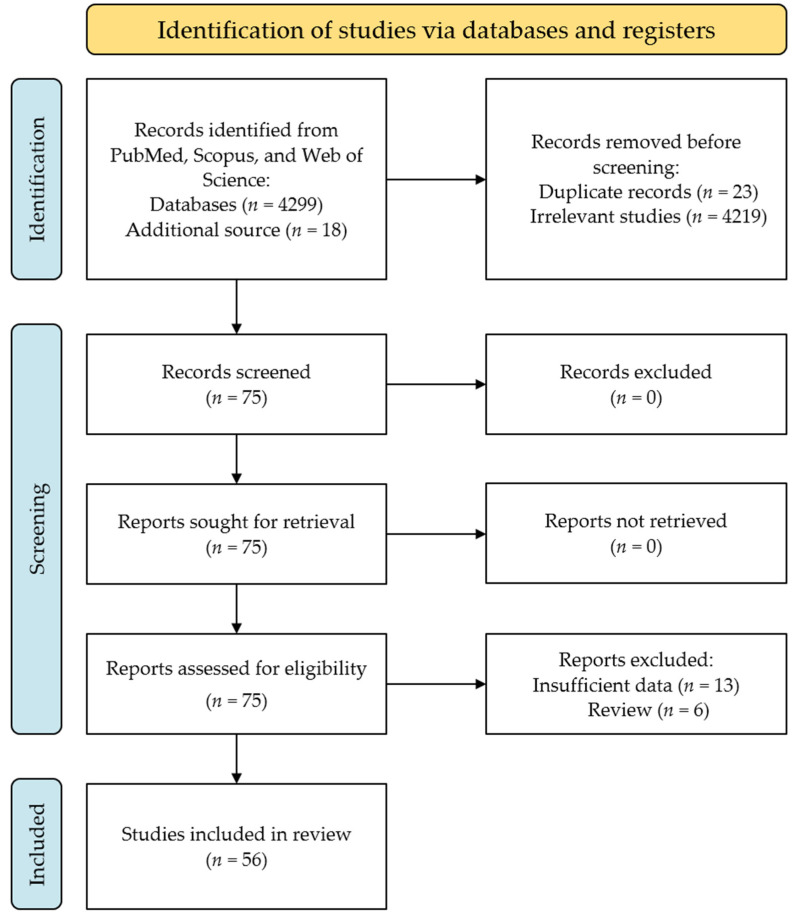
Figure 1
Figure 1
A flowchart of article selection in this review.
Figure 2
Figure 2
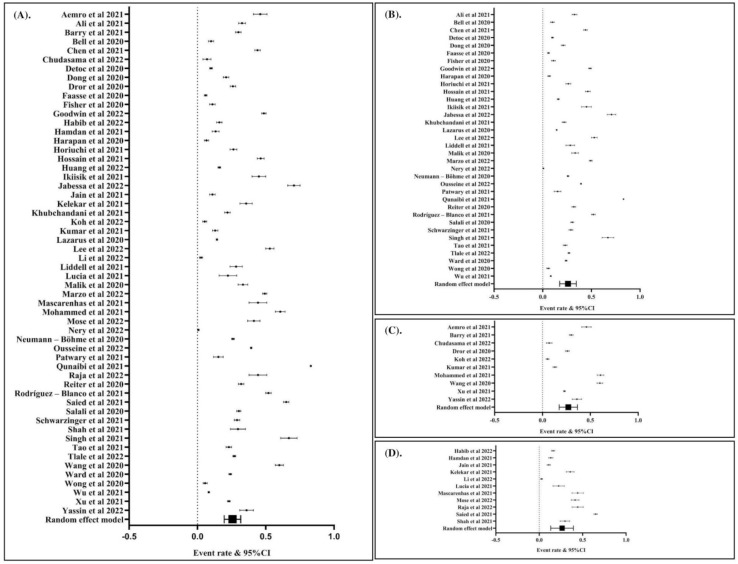
The global prevalence of hesitancy to COVID-19 vaccination (event rate: 0.25; 95% CI: 0.20, 0.32; p Egger: 1.2580; p heterogeneity: <0.0001; p: <0.0001) (A). The prevalence of hesitancy to COVID-19 vaccination among general population (event rate: 0.25; 95% CI: 0.18, 0.34; p Egger: 1.3090; p heterogeneity: <0.0001; p: <0.0001) (B). The prevalence of hesitancy to COVID-19 vaccination among healthcare workers (event rate: 0.26; 95% CI: 0.18, 0.37; p Egger: 0.7670; p heterogeneity: <0.0001; p: <0.0001) (C). The prevalence of hesitancy to COVID-19 vaccination among students (event rate: 0.25; 95% CI: 0.14, 0.40; p Egger: 1.2090; p heterogeneity: <0.0001; p: 0.0030) (D). The studies included are provided in the reference list [19,25,26,27,28,29,30,31,32,33,34,35,36,37,38,39,40,41,42,43,44,45,46,47,48,49,50,51,52,53,54,55,56,57,58,59,60,61,62,63,64,65,66,67,68,69,70,71,72,73,74,75,76,77,78,79].
Figure 3
Figure 3
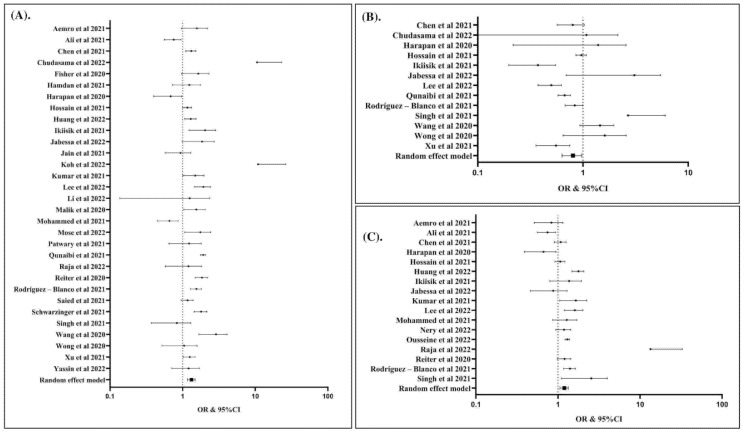
Female was associated with increased risk of hesitancy to COVID-19 vaccination compared to male (OR: 1.32; 95% CI: 1.17, 1.49; p Egger: 0.2840; p heterogeneity: <0.0001; p: <0.0001) (A). Individuals with age > 50 years was associated with lower risk of hesitancy to COVID-19 vaccination compared to individuals with age ≤ 50 years (OR: 0.79; 95% CI: 0.64, 0.98; p Egger: 0.2980; p Het: <0.0001; p: 0.0290) (B). Single individuals had higher risk of hesitancy to COVID-19 vaccination than married individuals (OR: 1.19; 95% CI: 1.06, 1.34; p Egger: 0.1950; p heterogeneity: <0.0001; p: 0.0040) (C). The studies included are provided in the reference list [19,25,26,27,28,29,30,31,32,33,34,35,36,37,38,39,40,41,42,43,44,45,46,47,48,49,50,51,52,53,54,55,56,57,58,59,60,61,62,63,64,65,66,67,68,69,70,71,72,73,74,75,76,77,78,79].
Figure 4
Figure 4
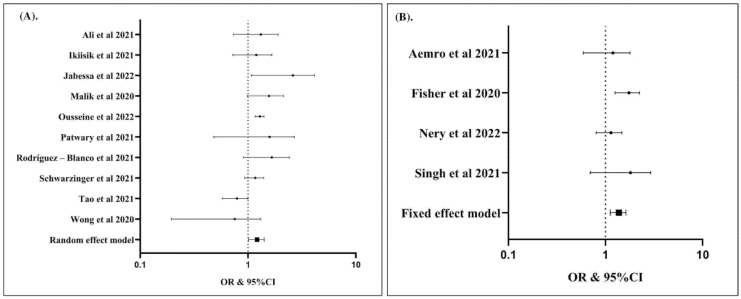
Unemployed individuals were associated with increased risk of hesitancy to COVID-19 vaccination compared to working individuals (OR: 1.20; 95% CI: 1.02, 1.42; p Egger: 0.1790; p heterogeneity: 0.0090; p: 0.0300) (A); individuals with household number ≥ 5 individuals had higher risk of hesitancy to COVID-19 vaccination (OR: 1.36; 95% CI: 1.13, 1.63; p Egger: 0.1680; p heterogeneity: 0.1620; p: 0.0010) (B). The studies included are provided in the reference list [19,25,26,27,28,29,30,31,32,33,34,35,36,37,38,39,40,41,42,43,44,45,46,47,48,49,50,51,52,53,54,55,56,57,58,59,60,61,62,63,64,65,66,67,68,69,70,71,72,73,74,75,76,77,78,79].
Figure 5
Figure 5
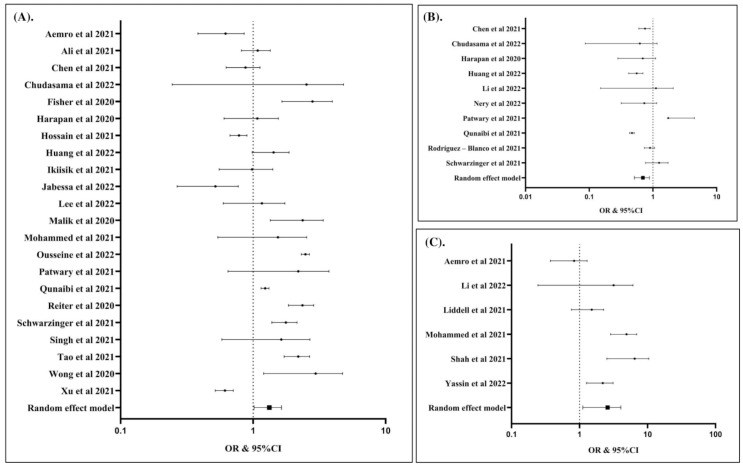
Individuals with the education levels < BSC had higher risk of hesitancy to COVID-19 vaccination than ≥ BSC (OR: 1.30; 95% CI: 1.03, 1.65; p Egger: 0.5260; p heterogeneity: <0.0001; p: 0.0300) (A); individuals having the healthcare-related job had lower risk of hesitancy to COVID-19 vaccination (OR: 0.68; 95% CI: 0.52, 0.89; p Egger: 0.3340; p heterogeneity: <0.0001; p: 0.0040) (B); Individuals considering that COVID-19 vaccines are not safe had higher risk of hesitancy to COVID-19 vaccination (OR: 2.24; 95% CI: 1.21, 4.14; p Egger: 0.7000; p heterogeneity: <0.0001; p: 0.0100) (C). The studies included are provided in the reference list [19,25,26,27,28,29,30,31,32,33,34,35,36,37,38,39,40,41,42,43,44,45,46,47,48,49,50,51,52,53,54,55,56,57,58,59,60,61,62,63,64,65,66,67,68,69,70,71,72,73,74,75,76,77,78,79].
Figure 6
Figure 6
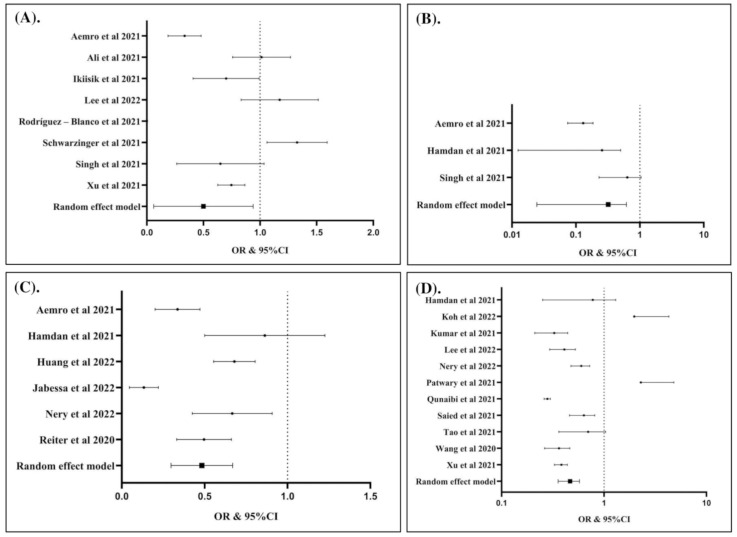
Individuals living with children in the home had lower risk of hesitancy to COVID-19 vaccination (OR: 0.37; 95% CI: 0.14, 0.99; p Egger: 1.4040; p heterogeneity: <0.0001; p: 0.0490) (A); individuals keeping physical distancing had lower risk of hesitancy to COVID-19 vaccination (OR: 0.23; 95% CI: 0.08, 0.65; p Egger: 0.8370; p heterogeneity: 0.0010; p: 0.0050 (B); individuals with history of COVID-19 test were associated with lower risk of hesitancy to COVID-19 vaccination (OR: 0.46; 95% CI: 0.31, 0.68; p Egger: 0.4340; p heterogeneity: <0.0001; p: <0.0001) (C); individuals with history of influenza vaccination in the past few years had lower risk of hesitancy to COVID-19 vaccination (OR: 0.46; 95% CI: 0.36, 0.58; p Egger: 0.3460; p heterogeneity: <0.0001; p: <0.0001) (D). The studies included are provided in the reference list [19,25,26,27,28,29,30,31,32,33,34,35,36,37,38,39,40,41,42,43,44,45,46,47,48,49,50,51,52,53,54,55,56,57,58,59,60,61,62,63,64,65,66,67,68,69,70,71,72,73,74,75,76,77,78,79].

References

    1. Kashte S., Gulbake A., El-Amin S.F., III, Gupta A. COVID-19 vaccines: Rapid development, implications, challenges and future prospects. Hum. Cell. 2021;34:711–733. doi: 10.1007/s13577-021-00512-4. - DOI - PMC - PubMed
    1. Greenwood B. The contribution of vaccination to global health: Past, present and future. Philos. Trans. R. Soc. Lond B Biol. Sci. 2014;369:20130433. doi: 10.1098/rstb.2013.0433. - DOI - PMC - PubMed
    1. Salo H., Kilpi T. National vaccination program—A success story of public health and economy. Duodecim. 2017;133:977–983. - PubMed
    1. Anderson E.L. Recommended solutions to the barriers to immunization in children and adults. Mo. Med. 2014;111:344–348. - PMC - PubMed
    1. Shen S.C., Dubey V. Addressing vaccine hesitancy: Clinical guidance for primary care physicians working with parents. Can. Fam. Physician. 2019;65:175–181. - PMC - PubMed

LinkOut - more resources