


Simulating androgen receptor selection in designer yeast
- PMID: 36017332
- PMCID: PMC9386396
- DOI: 10.1016/j.synbio.2022.07.005
Simulating androgen receptor selection in designer yeast
Abstract
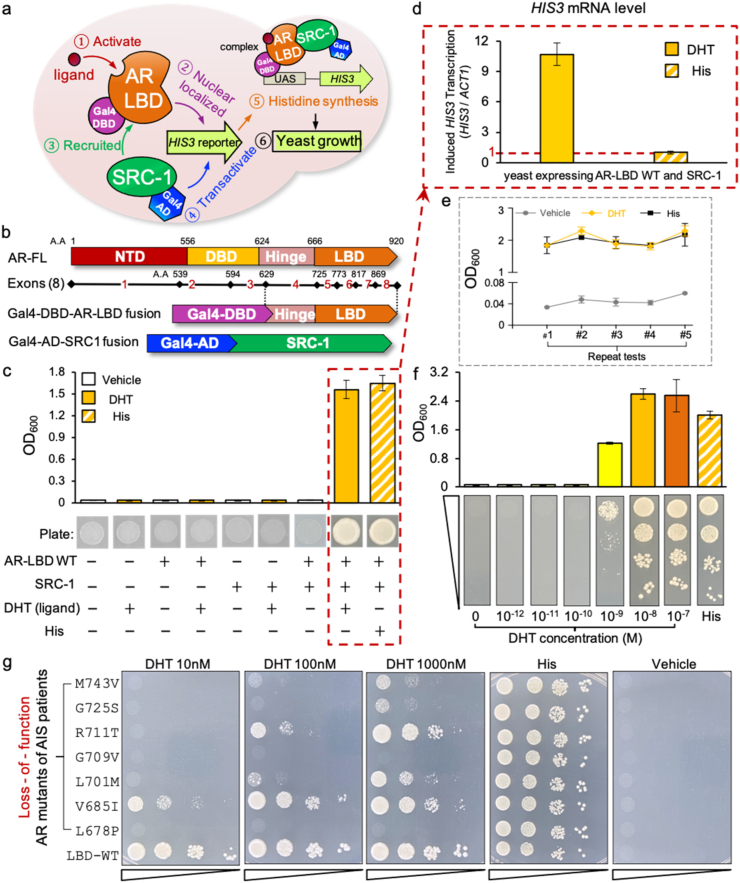
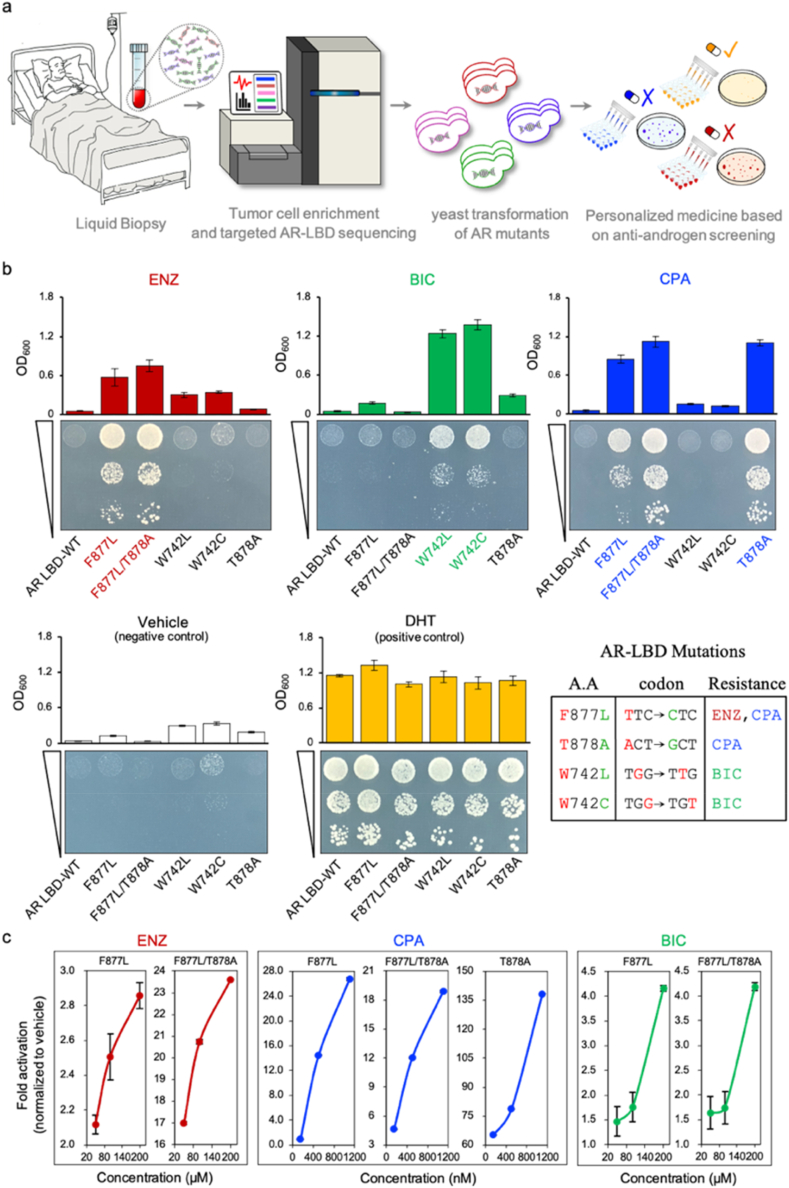
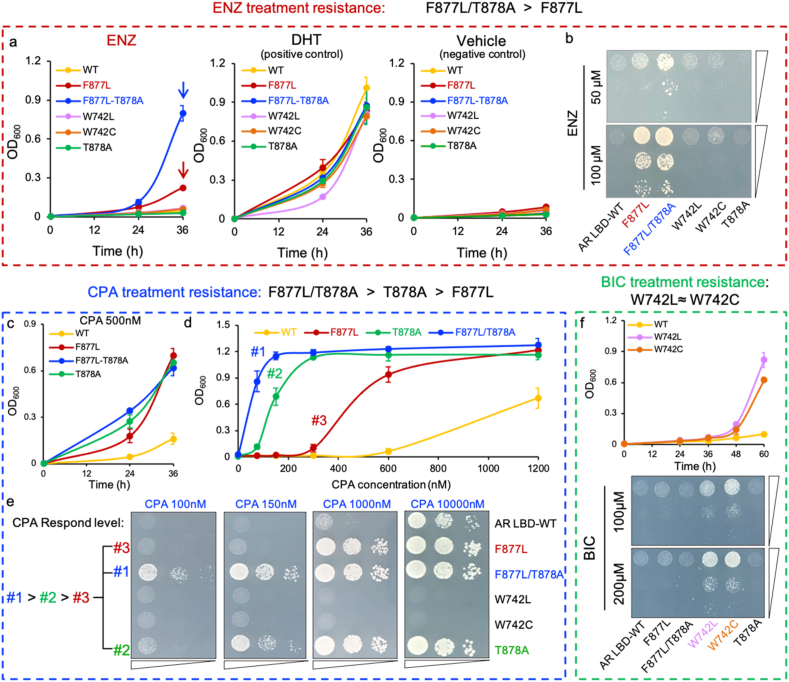
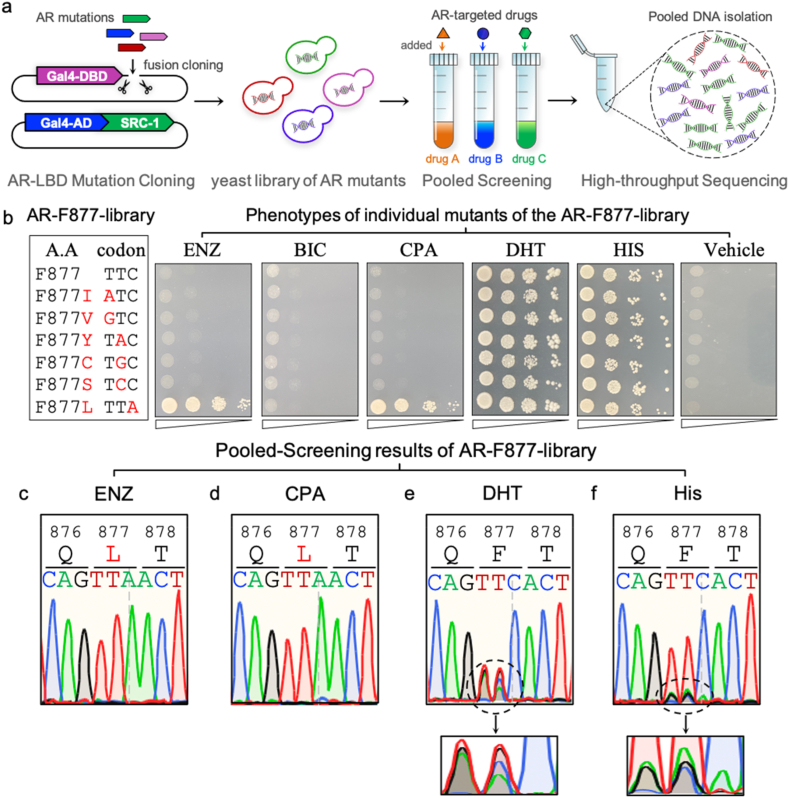
Androgen receptor (AR) mutation is closely associated with prostate cancer (PCa) and is one of the mechanisms of resistance to PCa therapies such as AR antagonists. Although sequencing technologies like next-generation sequencing (NGS) contributes to the high-throughput and precise detection of AR mutations carried by PCa patients, the lack of interpretations of these clinical genetic variants has still been a roadblock for PCa-targeted precision medicine. Here, we established a designer yeast reporter assay to simulate natural androgen receptor (AR) selection using AR antagonists. Yeast HIS3 gene transactivation was associated with the ligand-induced recruitment of steroid receptor coactivator-1 (SRC-1) by AR mutants, where yeast growth in histidine-free medium was determined as the outcome. This assay is applicable to determine a wide range of clinical AR mutants including those with loss of function relating to androgen insensitivity syndrome (AIS), and those associated with PCa conferring resistance to AR antagonists such as enzalutamide (ENZ), bicalutamide (BIC), and cyproterone acetate (CPA). One clinical AR mutant previously reported to confer ENZ-resistance, F877L, was found to confer partial resistance to CPA as well using designer yeast. Our simple and efficient assay can enable precise one-pot screening of AR mutants, providing a reference for tailored medicine.
Keywords: Androgen receptor antagonists; Androgen receptor mutations; Prostate cancer; Saccharomyces cerevisiae.
© 2022 The Authors.
Conflict of interest statement
There is potential Competing Interest. A patent has been filed for the screening method presented in this study.
Figures
References
-
- Brown T.R., Lubahn D.B., Wilson E.M., Joseph D.R., French F.S., Migeon C.J. Deletion of the steroid-binding domain of the human androgen receptor gene in one family with complete androgen insensitivity syndrome: evidence for further genetic heterogeneity in this syndrome. Proc Natl Acad Sci U S A. 1988;85:8151–8155. doi: 10.1073/pnas.85.21.8151. - DOI - PMC - PubMed
-
- Asahiro M., Dachi A., Yoichi R., Akayanagi T., Rihiro A., Omura T., et al. 2000. A ndrogen-I nsensitivity syndrome as a possible coactivator disease.
LinkOut - more resources
Full Text Sources
Research Materials
Miscellaneous
