


Lights at night: does photobiomodulation improve sleep?
- PMID: 36018149
- PMCID: PMC9727457
- DOI: 10.4103/1673-5374.350191
Lights at night: does photobiomodulation improve sleep?
Abstract
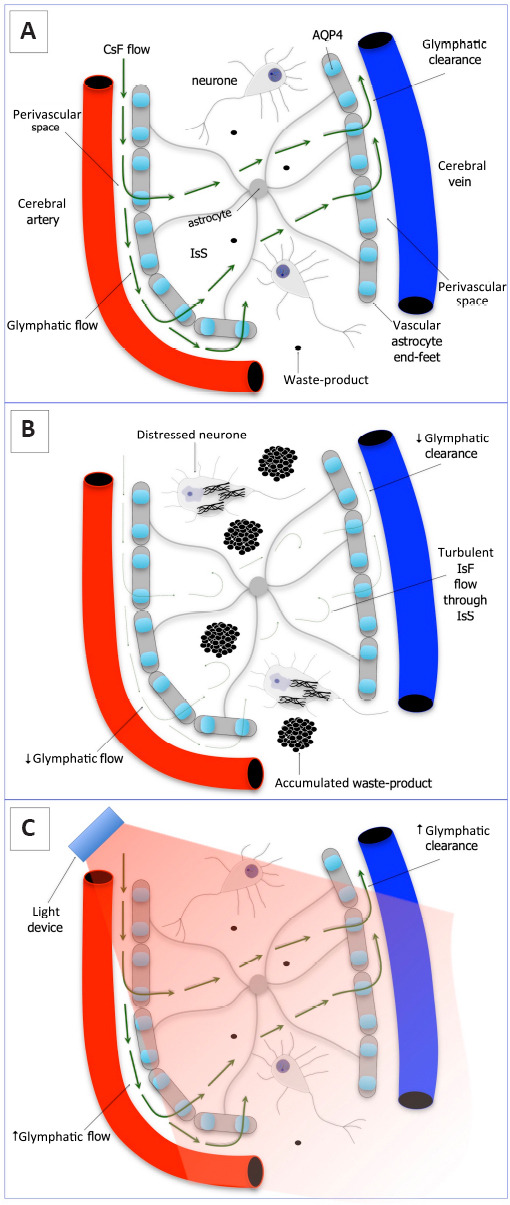
Sleep is a critical part of our daily routine. It impacts every organ and system of our body, from the brain to the heart and from cellular metabolism to immune function. A consistent daily schedule of quality of sleep makes a world of difference to our health and well-being. Despite its importance, so many individuals have trouble sleeping well. Poor quality sleep has such a detrimental impact on many aspects of our lives; it affects our thinking, learning, memory, and movements. Further, and most poignantly, poor quality sleep over time increases the risk of developing a serious medical condition, including neurodegenerative disease. In this review, we focus on a potentially new non-pharmacological treatment that improves the quality of sleep. This treatment, called photobiomodulation, involves the application of very specific wavelengths of light to body tissues. In animal models, these wavelengths, when applied at night, have been reported to stimulate the removal of fluid and toxic waste-products from the brain; that is, they improve the brain's inbuilt house-keeping function. We suggest that transcranial nocturnal photobiomodulation, by improving brain function at night, will help improve the health and well-being of many individuals, by enhancing the quality of their sleep.
Keywords: aquaporin 4; glymphhatic; infrared; non-pharmacological; red; sleep cap; transcranial; wakefulness.
Conflict of interest statement
None
Figures
References
-
- Ahn JH, Cho H, Kim JH, Kim SH, Ham JS, Park I, Suh SH, Hong SP, Song JH, Hong YK, Jeong Y, Park SH, Koh GY. Meningeal lymphatic vessels at the skull base drain cerebrospinal fluid. Nature. 2019;572:62–66. - PubMed
-
- Ballard C, Gauthier S, Corbett A, Brayne C, Aarsland D, Jones E. Alzheimer's disease. Lancet. 2011;377:1019–1031. - PubMed
-
- Brodziak A, Wolinska A, Rozyk-Myrta A. Significance of understanding function of glymphatic system to manage practical clinical problems of the elderly. ARC J Neurosci. 2018;3:15–20.
Publication types
LinkOut - more resources
Full Text Sources
Miscellaneous
