. 2022 Aug 26;23(1):620.
doi: 10.1186/s12864-022-08755-7.

The complete chloroplast genomes of Tetrastigma hemsleyanum (Vitaceae) from different regions of China: molecular structure, comparative analysis and development of DNA barcodes for its geographical origin discrimination

Affiliations

The complete chloroplast genomes of Tetrastigma hemsleyanum (Vitaceae) from different regions of China: molecular structure, comparative analysis and development of DNA barcodes for its geographical origin discrimination

Shujie Dong et al. BMC Genomics. .

Abstract

Background: Tetrastigma hemsleyanum is a valuable traditional Chinese medicinal plant widely distributed in the subtropical areas of China. It belongs to the Cayratieae tribe, family Vitaceae, and exhibited significant anti-tumor and anti-inflammatory activities. However, obvious differences were observed on the quality of T. hemsleyanum root from different regions, requiring the discrimination strategy for the geographical origins.

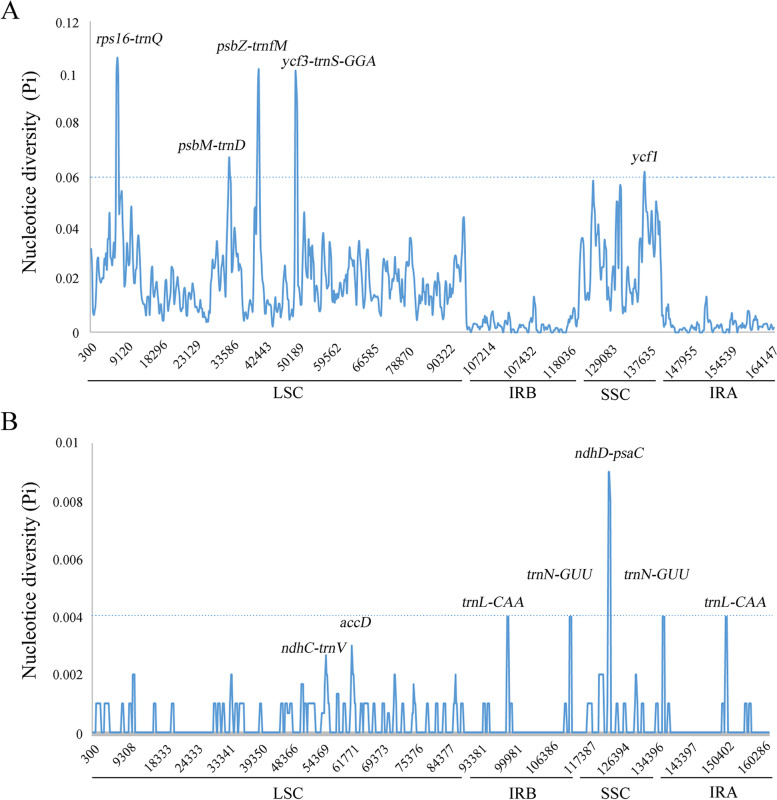
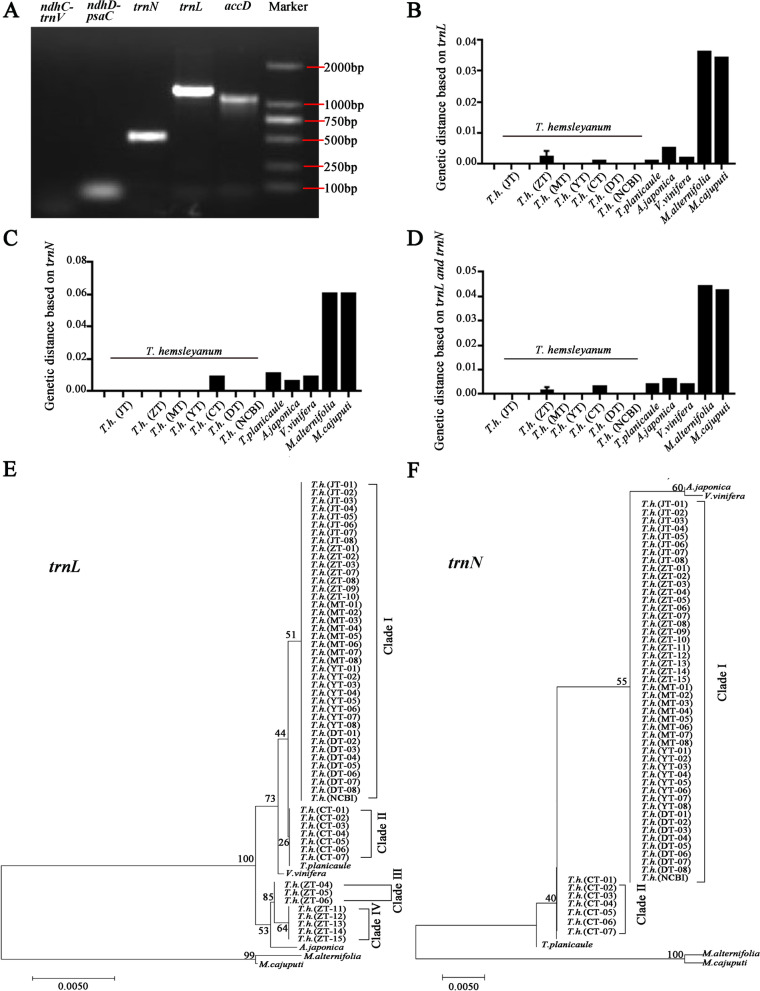
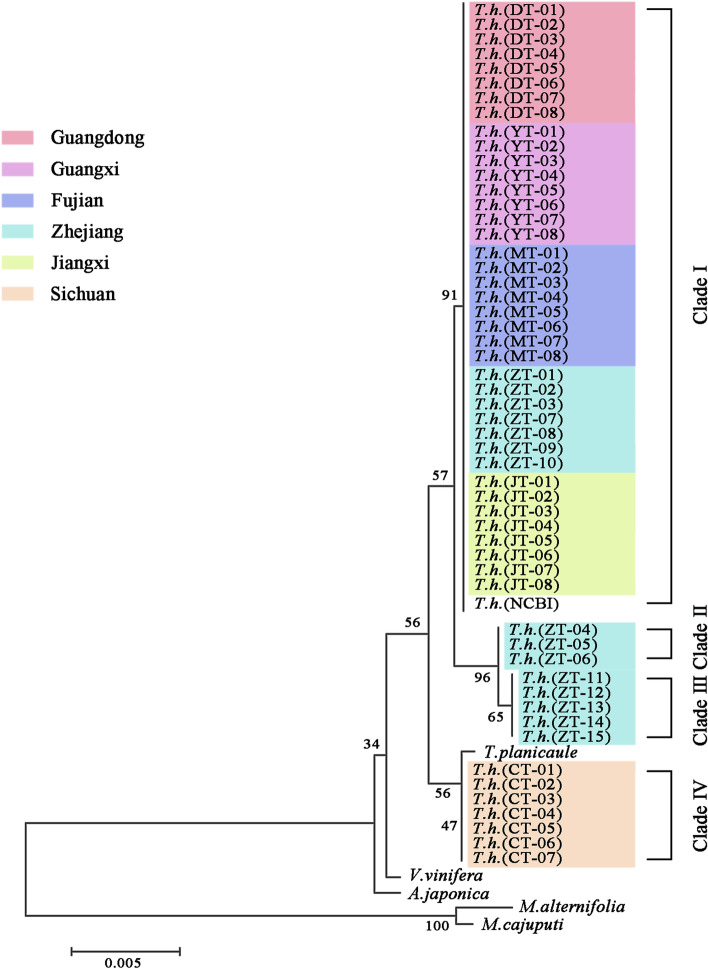
Result: This study characterized five complete chloroplast (cp) genomes of T. hemsleynum samples from different regions, and conducted a comparative analysis with other representing species from family Vitaceae to reveal the structural variations, informative markers and phylogenetic relationships. The sequenced cp genomes of T. hemsleyanum exhibited a conserved quadripartite structure with full length ranging from 160,124 bp of Jiangxi Province to 160,618 bp of Zhejiang Province. We identified 112 unique genes (80 protein-coding, 28 tRNA and 4 rRNA genes) in the cp genomes of T. hemsleyanum with highly similar gene order, content and structure. The IR contraction/expansion events occurred on the junctions of ycf1, rps19 and rpl2 genes with different degrees, causing the differences of genome sizes in T. hemsleyanum and Vitaceae plants. The number of SSR markers discovered in T. hemsleyanum was 56-57, exhibiting multiple differences among the five geographic groups. Phylogenetic analysis based on conserved cp genome proteins strongly grouped the five T. hemsleyanum species into one clade, showing a sister relationship with T. planicaule. Comparative analysis of the cp genomes from T. hemsleyanum and Vitaceae revealed five highly variable spacers, including 4 intergenic regions and one protein-coding gene (ycf1). Furthermore, five mutational hotspots were observed among T. hemsleyanum cp genomes from different regions, providing data for designing DNA barcodes trnL and trnN. The combination of molecular markers of trnL and trnN clustered the T. hemsleyanum samples from different regions into four groups, thus successfully separating specimens of Sichuan and Zhejiang from other areas.

Conclusion: Our study obtained the chloroplast genomes of T. hemsleyanum from different regions, and provided a potential molecular tracing tool for determining the geographical origins of T. hemsleyanum, as well as important insights into the molecular identification approach and and phylogeny in Tetrastigma genus and Vitaceae family.

Keywords: Chloroplast genome; DNA barcoing markers; Geographical origins; Nucleotide diversity; Phylogenetic relationships; Tetrastigma hemsleyanum.


Conflict of interest statement

The authors declare that they have no competing interest.

Figures
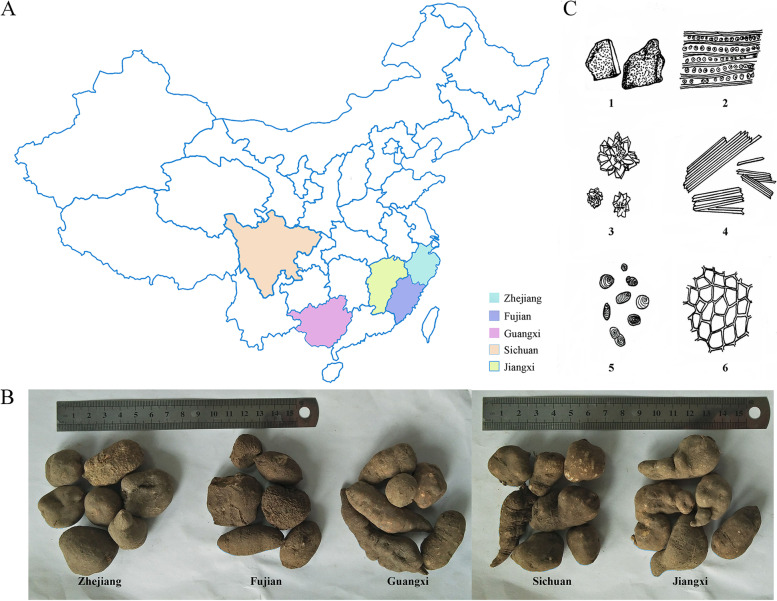
Fig. 1
Fig. 1
The geographical distributions and morphological characteristics of Tetrastigma hemsleyanum from different regions. A Regional distribution map of Tetrastigma hemsleyanum sample collection (B) The microscopic characters of the dried roots from Tetrastigma hemsleyanum: 1. brown patches; 2. marginal orifice catheter; 3. cluster crystals of calcium oxalate; 4. needle crystals of calcium oxalate; 5. starch granules; 6. cork cell. C Comparison of macroscopic characters of the root tubers of Tetrastigma hemsleyanum from five different regions
Fig. 2
Fig. 2
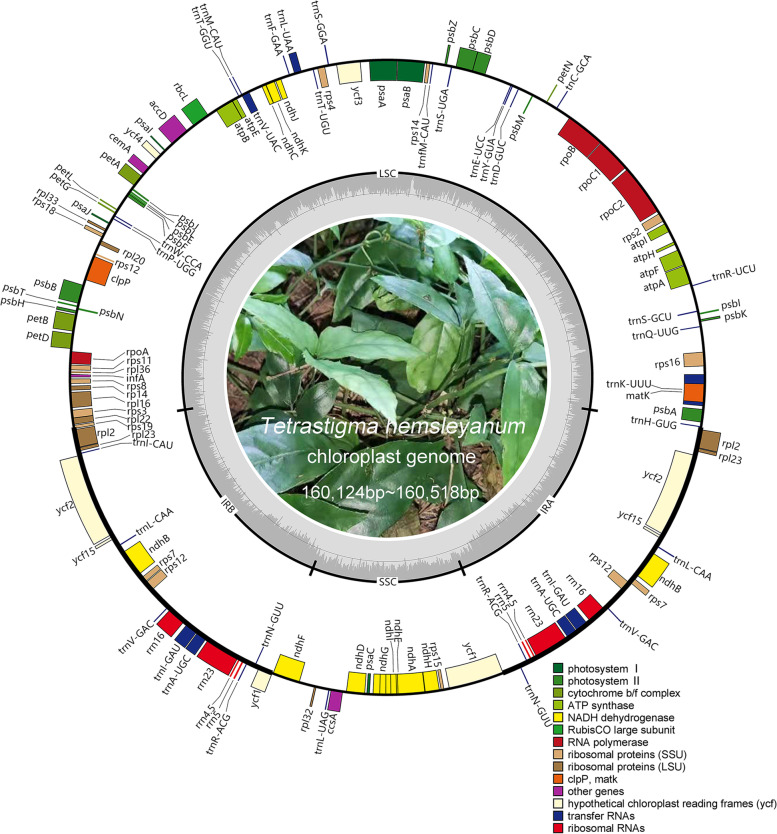
The chloroplast genome map of Tetrastigma hemsleyanum from five different regions. Genes labeled inside the circle are transcribed clockwise, while those outside the circle are transcribed anti-clockwise. The tick lines exhibited the extent of the Inverted Repeats (IRA and IRB) separating the Large Single-Copy (LSC) and the Small Single-Copy (SSC) regions. The darker gray and the lighter gray in the inner circle corresponds to GC and AT content, respectively. Genes with different functions are represented in different colors
Fig. 3
Fig. 3
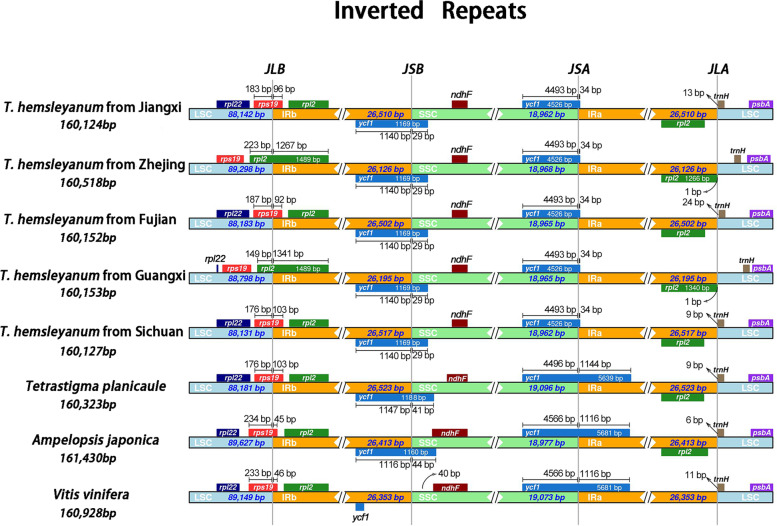
Comparison of the LSC, IR, and SSC junction regions among five Tetrastigma hemsleyanum samples with different geographical origins, Tetrastigma planicaule, Ampelopsis japonica and Vitis vinifera cp genomes
Fig. 4
Fig. 4
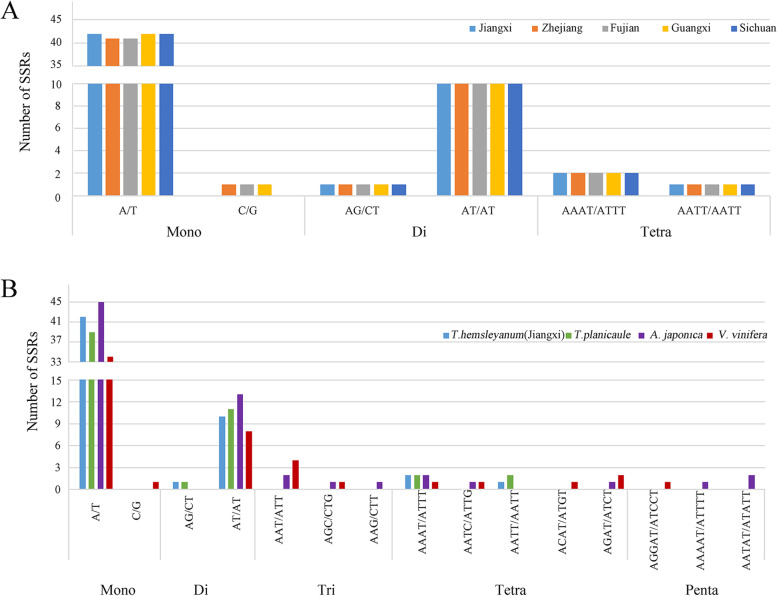
Analysis of simple sequence repeats (SSRs) in Vitaceae plants and Tetrastigma hemsleyanum species with different geographical origins. A The number of different types of SSRs in five samples of Tetrastigma hemsleyanum from different regions. B The number of different types of SSRs in the cp genomes of Tetrastigma hemsleyanum sample from Jiangxi Province, Tetrastigma planicaule, Ampelopsis japonica and Vitis vinifera
Fig. 5
Fig. 5
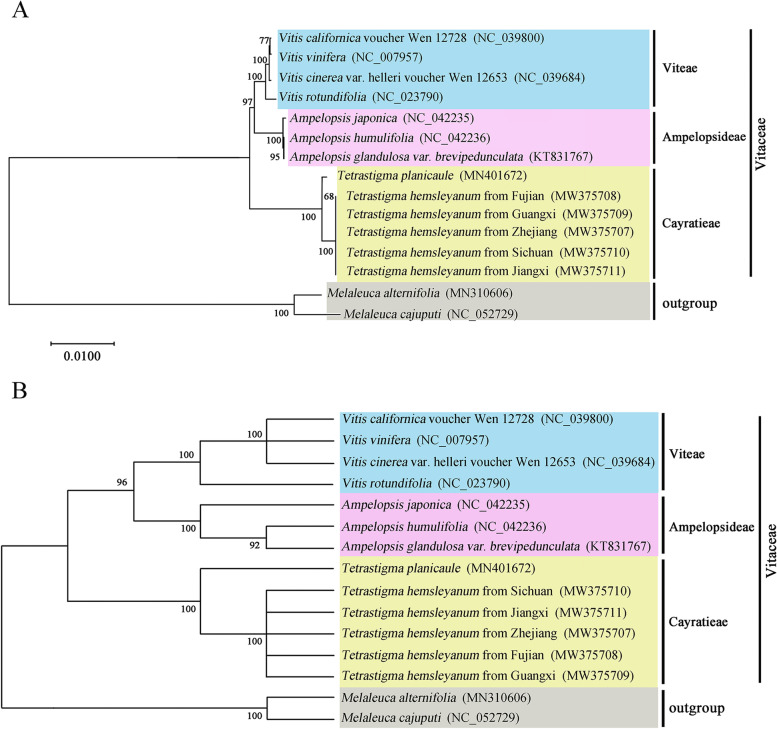
Phylogenetic relationships based on the conserved chloroplast protein coding genes from five samples of Tetrastigma hemsleyanum and other representative Vitaceae species. A The tree was constructed using maximum likelihood (ML) method. B The tree was constructed using maximum parsimony (MP) method. The number above each node referred to the bootstrap value from 500 replicates. The areas corresponding to blue, lavender and yellow represented the tribes of Viteae, Ampelopsideae and Cayratieae, respectively. Melaleuca alternifolia and Melaleuca cajuputi were set as the outgroups for phylogenetic analysis
Fig. 6
Fig. 6
Comparison of potential mutational hotspots in the complete chloroplast genomes among Vitaceae plants and Tetrastigma hemsleyanum samples from different regions. A Nucleotide diversity (Pi) analysis among four Vitaceae chloroplast genomes. B Nucleotide diversity (Pi) analysis in the cp genomes of Tetrastigma hemsleyanum from five different regions. Sliding window length was 800 bp and step size was selected as 200 bp. The Pi value of each window is shown on the Y-axis, and their positions of the midpoint represented on the X-axis
Fig. 7
Fig. 7
Comparative analysis of trnL and trnN sequences of T. hemsleyanum samples (A) Agarose gel electrophoresis of PCR products of five DNA barcodes from T. hemleyanum in Zhejiang Province. B Genetic distance analysis between the samples of T. hemsleyanum in Jiangxi Province and other regions, three representative Vitaceae species as well as two Melaleuca species based on trnL sequence, (C) trnN sequence and (D) combination of trnL + trnN sequences. The Neighbor-Joining (NJ) trees of 21 samples of T. hemsleyanum from different regions and 3 representative Vitaceae species, based on trnL sequence (E) and trnN sequence (F)
Fig. 8
Fig. 8
The Neighbor-Joining (NJ) tree analysis of 21 T. hemsleyanum samples from different regions and 3 representative Vitaceae species, based on the combination of trnL + trnN sequence. The six colors represent samples of T. hemsleyanum from six different provinces

References

    1. Wang YH, Jiang WM, Comes HP, Hu FS, Qiu YX, Fu CX. Molecular phylogeography and ecological niche modelling of a widespread herbaceous climber, Tetrastigma hemsleyanum (Vitaceae): insights into Plio-Pleistocene range dynamics of evergreen forest in subtropical China. New Phytol. 2015;206:852–867. doi: 10.1111/nph.13261. - DOI - PubMed
    1. Zhu RY, Xu XF, Ying JL, Cao G, Wu X. The phytochemistry, pharmacology, and quality control of Tetrastigma hemsleyanum Diels & Gilg in China: a review. Front Pharmacol. 2020;11:550497. doi: 10.3389/fphar.2020.550497. - DOI - PMC - PubMed
    1. Hu WY, Zheng YJ, Xia PG, Liang ZS. The research progresses and future prospects of Tetrastigma hemsleyanum Diels et Gilg: a valuable Chinese herbal medicine. J Ethnopharmacol. 2021;271:113866. doi: 10.1016/j.jep.2021.113836. - DOI - PubMed
    1. Qiu MC, Zhou ZD, Yang ZJ. Total flavonoids from Tetrastigma hemsleyanum Diels induce apoptosis of breast cancer cells through the MAPK pathway. Chin J Clin Pharmacol. 2019;35:305963.
    1. Li YL, Feng XY, Zhang YR, Wang YX, Yu X, Jia RY, et al. Dietary flavone from the Tetrastigma hemsleyanum vine triggers human lung adenocarcinoma apoptosis via autophagy. Food Funct. 2020;11:9776–9788. doi: 10.1039/D0FO01997F. - DOI - PubMed

LinkOut - more resources