


Clostridioides difficile spore: coat assembly and formation
- PMID: 36032037
- PMCID: PMC9542656
- DOI: 10.1080/22221751.2022.2119168
Clostridioides difficile spore: coat assembly and formation
Abstract
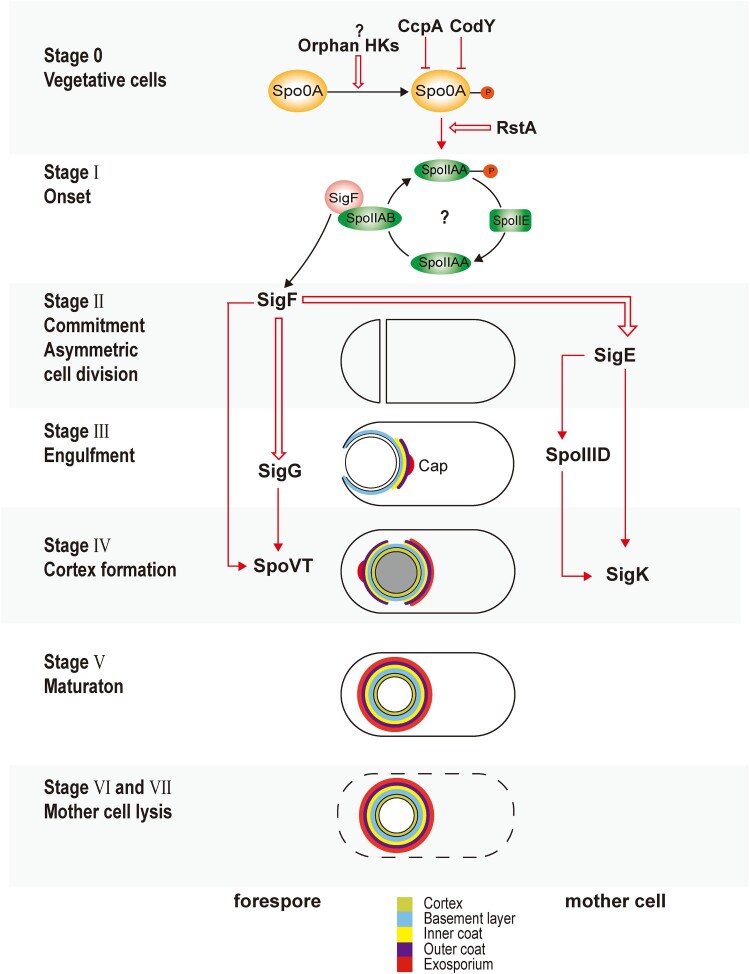
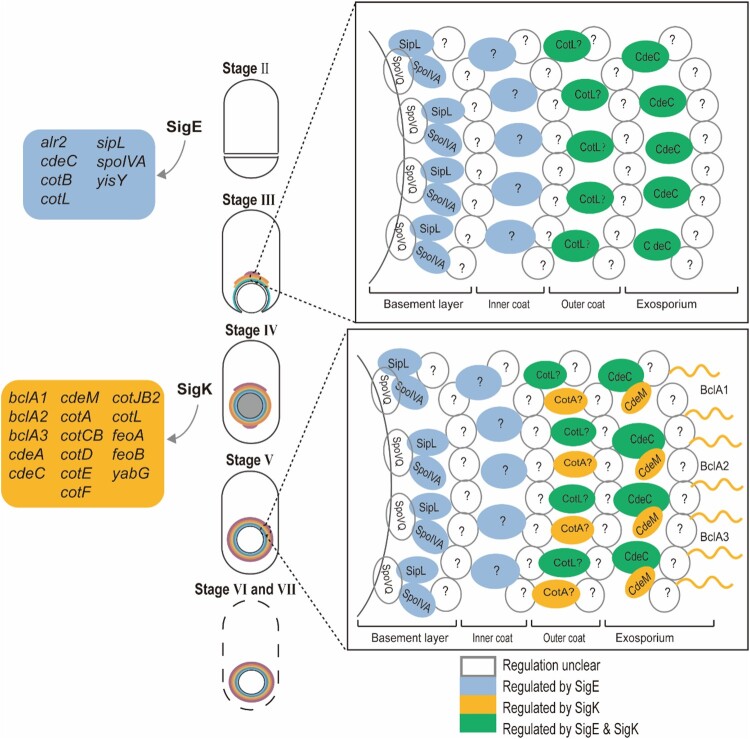
Clostridioides difficile (C. difficile) is a Gram-positive, spore-forming, toxin-producing, obligate anaerobic bacterium. C. difficile infection (CDI) is the leading cause of healthcare-associated infective diarrhoea. The infection is mediated by the spore, a metabolically inactive form of C. difficile. The spore coat acts as a physical barrier to defend against chemical insults from hosts and natural environments. The composition of spore coat has already been revealed; therefore, the interactive networks of spore coat proteins and the dynamic process of coat assembly are the keys to design strategies to control and cure CDI. This review gives a brief discussion of the signal processing and transcriptional regulation of C. difficile sporulation initiation. Following the discussion, the spore formation is also introduced. Finally, this review mainly focuses on the spore coat assembly, a poorly understood process in C. difficile, and important proteins that have been studied.
Keywords: Clostridioides difficile; coat assembly; morphogenetic protein; spore formation; sporulation.
Conflict of interest statement
No potential conflict of interest was reported by the author(s).
Figures
References
-
- Schnizlein MK, Young VB.. Capturing the environment of the Clostridioides difficile infection cycle. Nat Rev Gastroenterol Hepatol. 2022;19:508–520. - PubMed
-
- McDonald LC, Gerding DN, Johnson S, et al. Clinical practice guidelines for Clostridium difficile infection in adults and children: 2017 update by the Infectious Diseases Society of America (IDSA) and Society for Healthcare Epidemiology of America (SHEA). Clin Infect Dis. 2018;66(7):987–994. - PubMed
Publication types
MeSH terms
Substances
LinkOut - more resources
Full Text Sources
