


Efficacy of terpenoids in attenuating pulmonary edema in acute lung injury: A meta-analysis of animal studies
- PMID: 36034851
- PMCID: PMC9401633
- DOI: 10.3389/fphar.2022.946554
Efficacy of terpenoids in attenuating pulmonary edema in acute lung injury: A meta-analysis of animal studies
Abstract
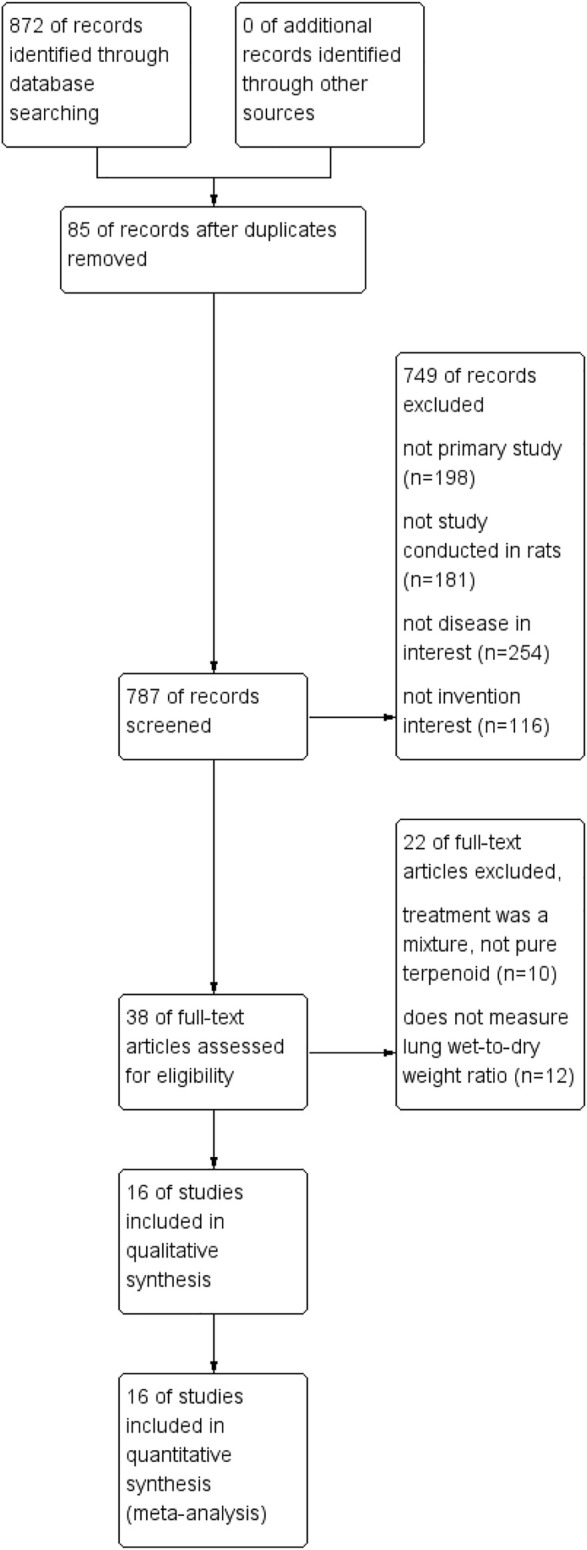
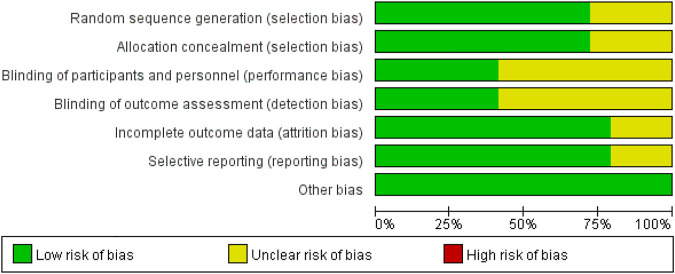
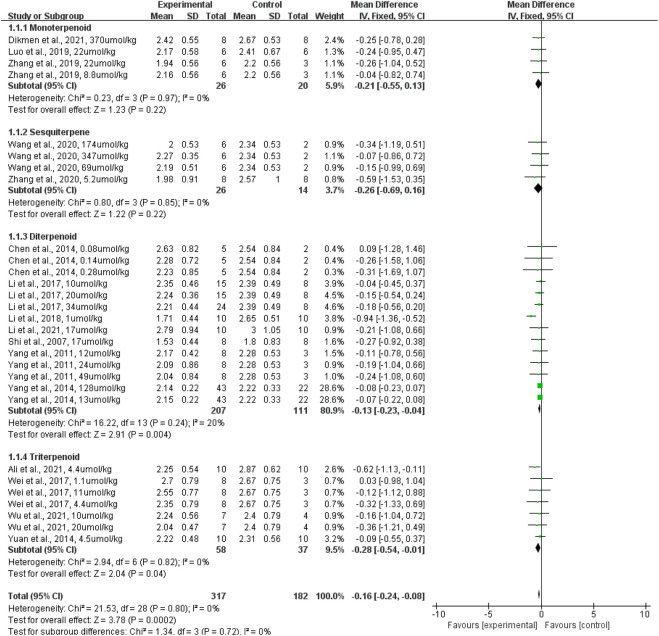
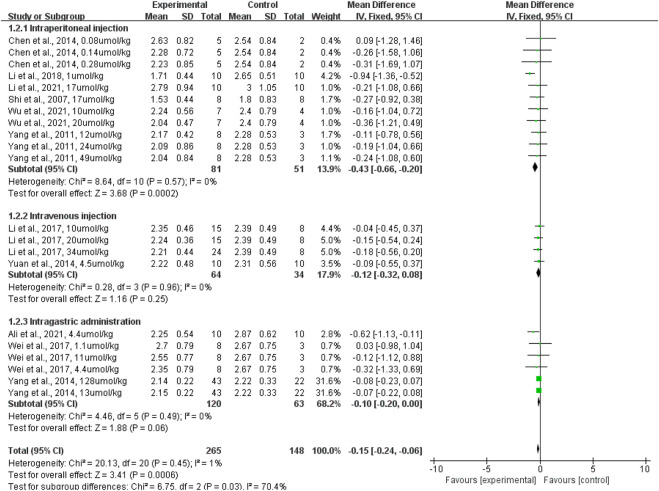
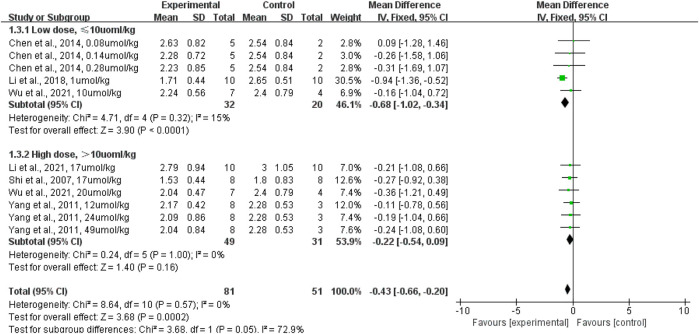
Background: The clinical efficiency of terpenoids in treating human acute lung injury (ALI) is yet to be determined. The lipopolysaccharide-induced rat model of ALI is a well-established and widely used experimental model for studying terpenoids' effects on ALI. Using a systematic review and meta-analysis, the therapeutic efficiency of terpenoid administration on the lung wet-to-dry weight ratio in rats was investigated. Methods: Using the Cochrane Library, Embase, and PubMed databases, a comprehensive literature search for studies evaluating the therapeutic efficacy of terpenoids on ALI in rats was conducted. The lung wet-to-dry weight ratio was extracted as the main outcome. The quality of the included studies was assessed using the Systematic Review Center for Laboratory Animal Experimentation's risk of bias tool. Results: In total, 16 studies were included in this meta-analysis. In general, terpenoids significantly lowered the lung wet-to-dry weight ratio when compared with the control vehicle (p = 0.0002; standardized mean difference (SMD): -0.16; 95% confidence interval (CI): -0.24, -0.08). Subgroup analysis revealed that low dose (≤10 μmol/kg) (p < 0.0001; SMD: -0.68; 95% CI: -1.02, -0.34), intraperitoneal injection (p = 0.0002; SMD: -0.43; 95% CI: -0.66, -0.20), diterpenoid (p = 0.004; SMD: -0.13; 95% CI: -0.23, -0.04), and triterpenoid (p = 0.04; SMD: -0.28; 95% CI: -0.54, -0.01) significantly lowered the lung wet-to-dry weight ratio when compared with the control vehicle. Conclusion: A low dose of diterpenoid and triterpenoid administered intraperitoneally is effective in alleviating ALI. This systematic review and meta-analysis provides a valuable mirror for clinical research aiming at the advancement of terpenoids for preventive and therapeutic use. Systematic Review Registration: CRD42022326779.
Keywords: acute lung injury; animal model; lipopolysaccharide; lung wet-to-dry weight ratio; terpenoids.
Copyright © 2022 Wang, Luo, Jie, Li, Liu and Song.
Conflict of interest statement
The authors declare that the research was conducted in the absence of any commercial or financial relationships that could be construed as potential conflicts of interest.
Figures
References
-
- An J. F., Sun Y., Zhang Q. L., Zhang F. L., Zhang J. L. (2014). The effects of germacrone on lipopolysaccharide-induced acute lung injury in neonatal rats. Cell Mol. Biol. (Noisy-le-grand) 60 (4), 8–12. - PubMed
Publication types
LinkOut - more resources
Full Text Sources
