


Predictors of Health-Protective and Helping Behaviors during the Covid-19 Pandemic: The Role of Social Support and Resilience
- PMID: 36036086
- PMCID: PMC11528867
- DOI: 10.1177/00332941221123777
Predictors of Health-Protective and Helping Behaviors during the Covid-19 Pandemic: The Role of Social Support and Resilience
Abstract
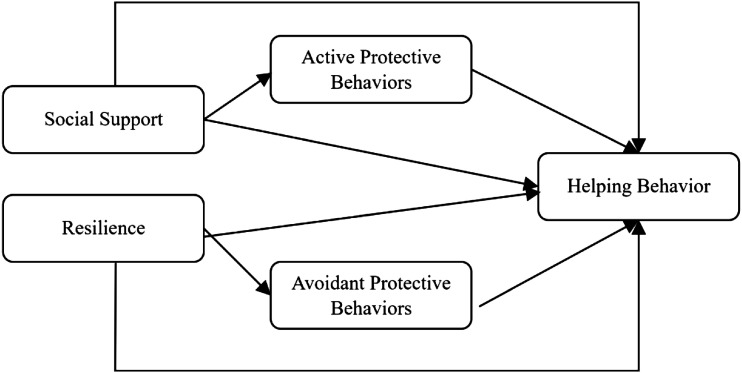
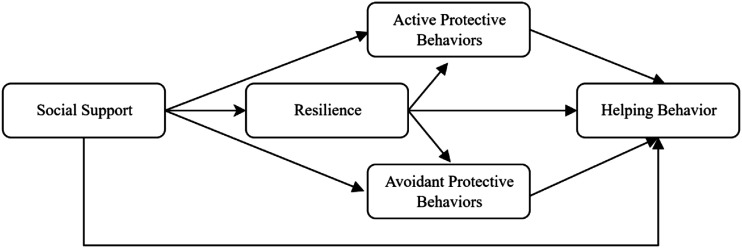
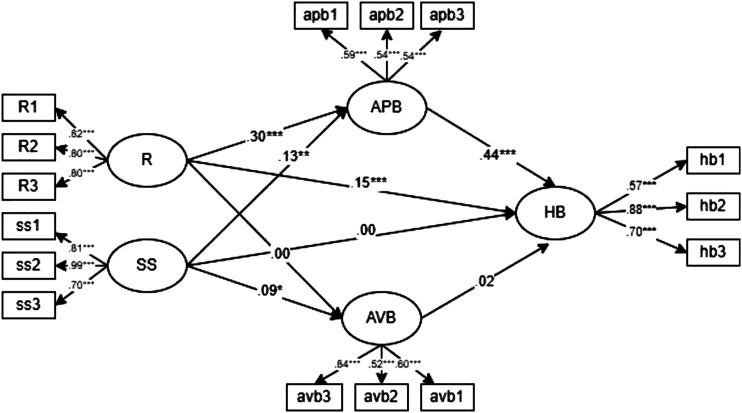
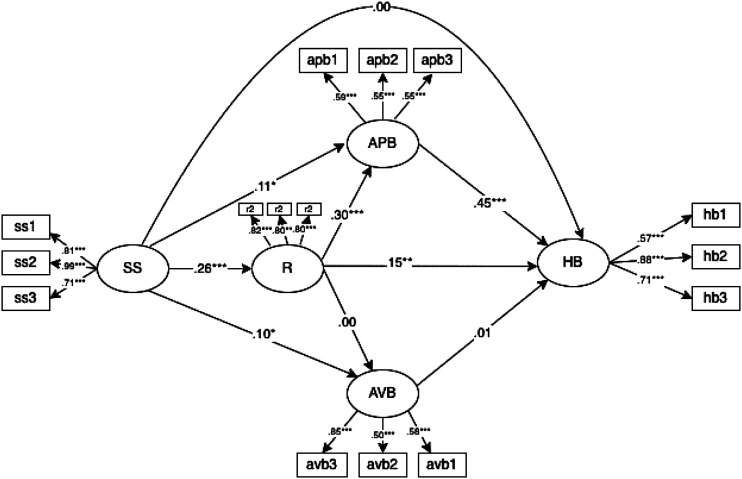
The COVID -19 pandemic dramatically affected people's lives. In this study, we explored the role of social and personal factors underlying individuals' adaptive responses during the critical onset period of the outbreak. In particular, we tested two models on the mediating role of health-protective behaviors in the relationship between social support, resilience, and helping behavior. A sample of 1085 participants from Portugal and Brazil took part in an online survey during the first wave of the pandemic. First, through an Exploratory Factor Analysis of the health-protective behaviors to prevent contagion by the coronavirus, we identified two distinct dimensions, one aggregating active protective behaviors and the other as avoidant behaviors. Secondly, we found that resilience and active protective behavior sequentially mediated the relationship between social support and willingness to help. In addition, a multigroup analysis showed that this mediational process was similar in both countries. Given the wide range of social and individual factors that may predict prosocial behaviors, we highlight the role of social support on the intention to help through resilience and active protective behaviors.
Keywords: Social support; helping behaviors; protective behaviors; resilience.
Conflict of interest statement
Declaration of Conflicting InterestsThe author(s) declared no potential conflicts of interest with respect to the research, authorship, and/or publication of this article.
Figures
References
-
- Albott C. S., Wozniak J. R., McGlinch B. P., Wall M. H., Gold B. S., Vinogradov S. (2020). Battle buddies: Rapid deployment of a psychological resilience intervention for health care workers during the COVID-19 pandemic. Anesthesia & Analgesia, 131(1), 43–54. 10.1213/ANE.0000000000004912 - DOI - PMC - PubMed
-
- Alonso Fachado A., Montes Martinez A., Menendez Villalva C., Pereira M. G. (2007). Adaptação cultural e validação da versão Portuguesa Questionário Medical Outcomes Study Social Support Survey (MOS-SSS) [Cultural adaptation and validation of the medical outcomes study social support survey questionnaire (MOS-SSS)]. Acta Medica Portuguesa, 20(6), 525–534. https://www.actamedicaportuguesa.com/revista/index.php/amp/article/viewF.... - PubMed
-
- Banker S., Park J. (2020). Evaluating prosocial COVID-19 messaging frames: Evidence from a field study on Facebook. Judgment and Decision Making 15(6), 1037–1043. 10.2139/ssrn.3684901 - DOI
-
- Boon H. J., Cottrell A., King D., Stevenson R. B., Millar J. (2012). Bronfenbrenner’s bioecological theory for modelling community resilience to natural disasters. Natural Hazards, 60(2), 381–408. 10.1007/s11069-011-0021-4 - DOI
Publication types
MeSH terms
LinkOut - more resources
Full Text Sources
Medical
