


The Effect of Bariatric Surgery on Long-term Depression Treatment in Patients With Obesity
- PMID: 36036992
- PMCID: PMC9429034
- DOI: 10.1097/SLA.0000000000005520
The Effect of Bariatric Surgery on Long-term Depression Treatment in Patients With Obesity
Abstract
Objective: In a large multisite cohort of Veterans who underwent Roux-en-Y gastric bypass (RYGB) or laparoscopic sleeve gastrectomy (LSG), initiation of (ie, incident) and persistence of (ie, continuation of preoperative) depression treatment are compared with matched nonsurgical controls.
Background: Bariatric surgery has been associated with short-term improvements in depression but less is known about longer term outcomes.
Methods: In a retrospective cohort study, we matched 1713 Veterans with depression treatment who underwent bariatric surgery in Veterans Administration bariatric centers from fiscal year 2001 to 2016 to 15,056 nonsurgical controls using sequential stratification and examined the persistence of depression treatment via generalized estimating equations. Incidence of depression treatment was compared using Cox regression models between 2227 surgical patients and 20,939 matched nonsurgical controls without depression treatment at baseline.
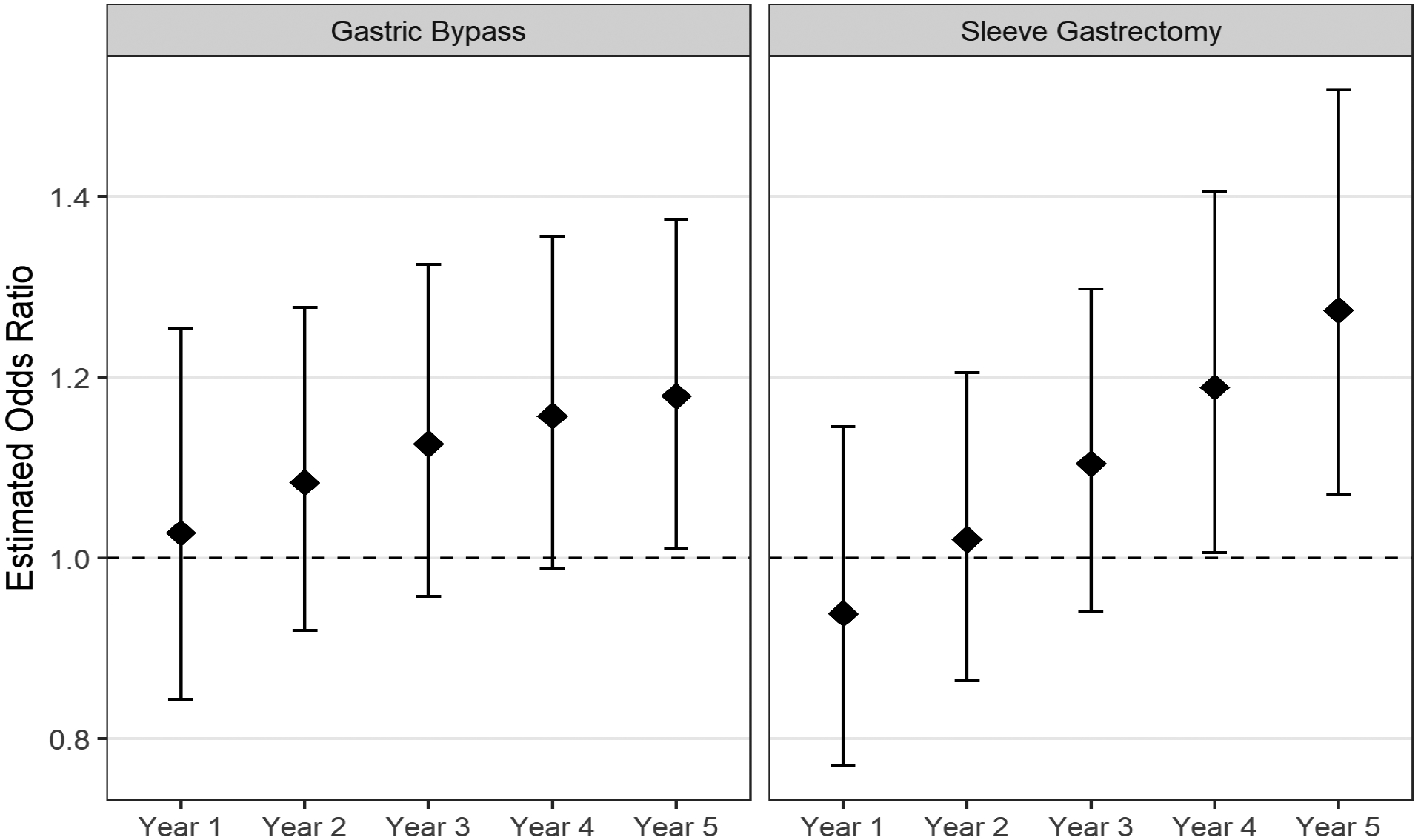
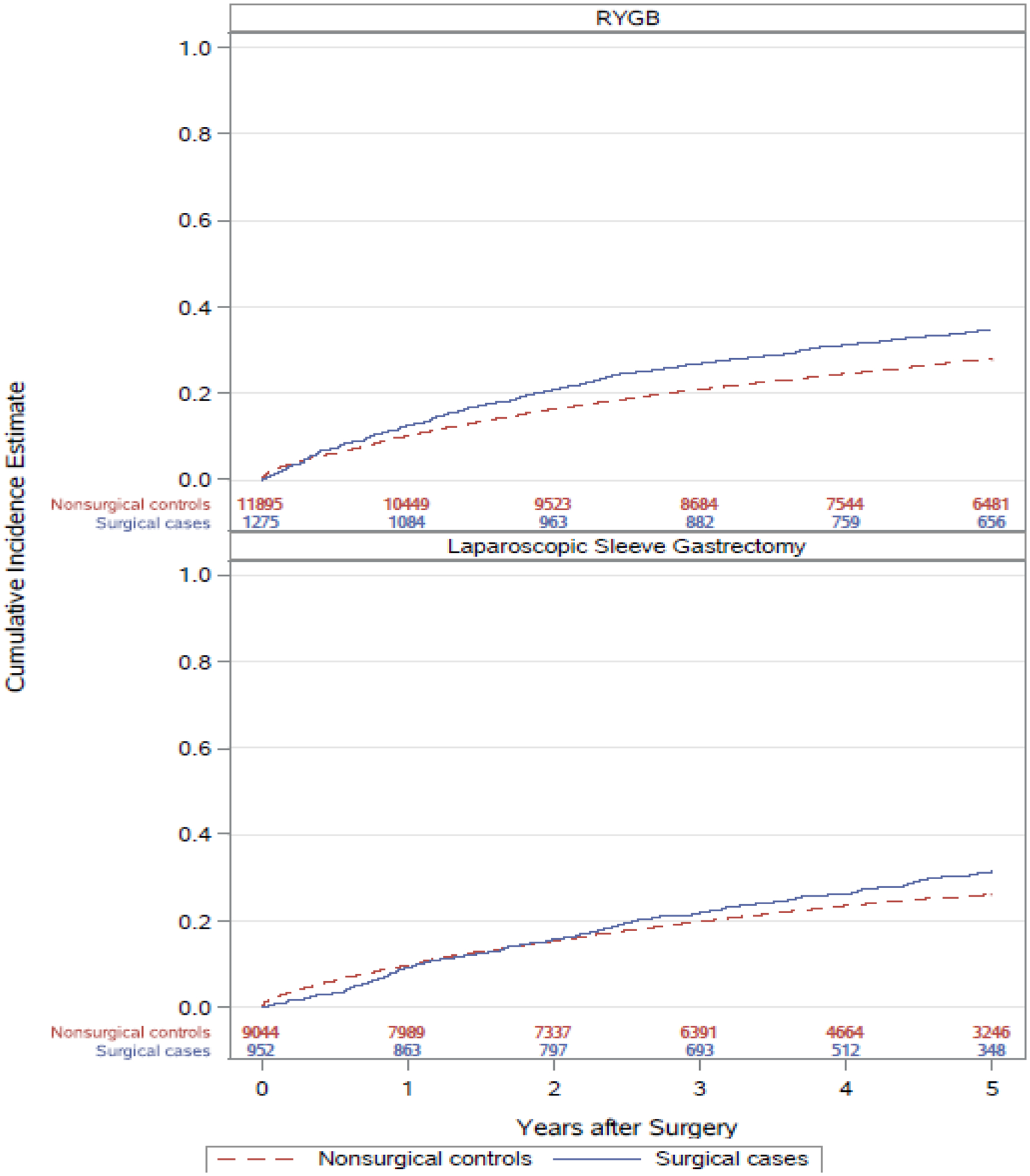
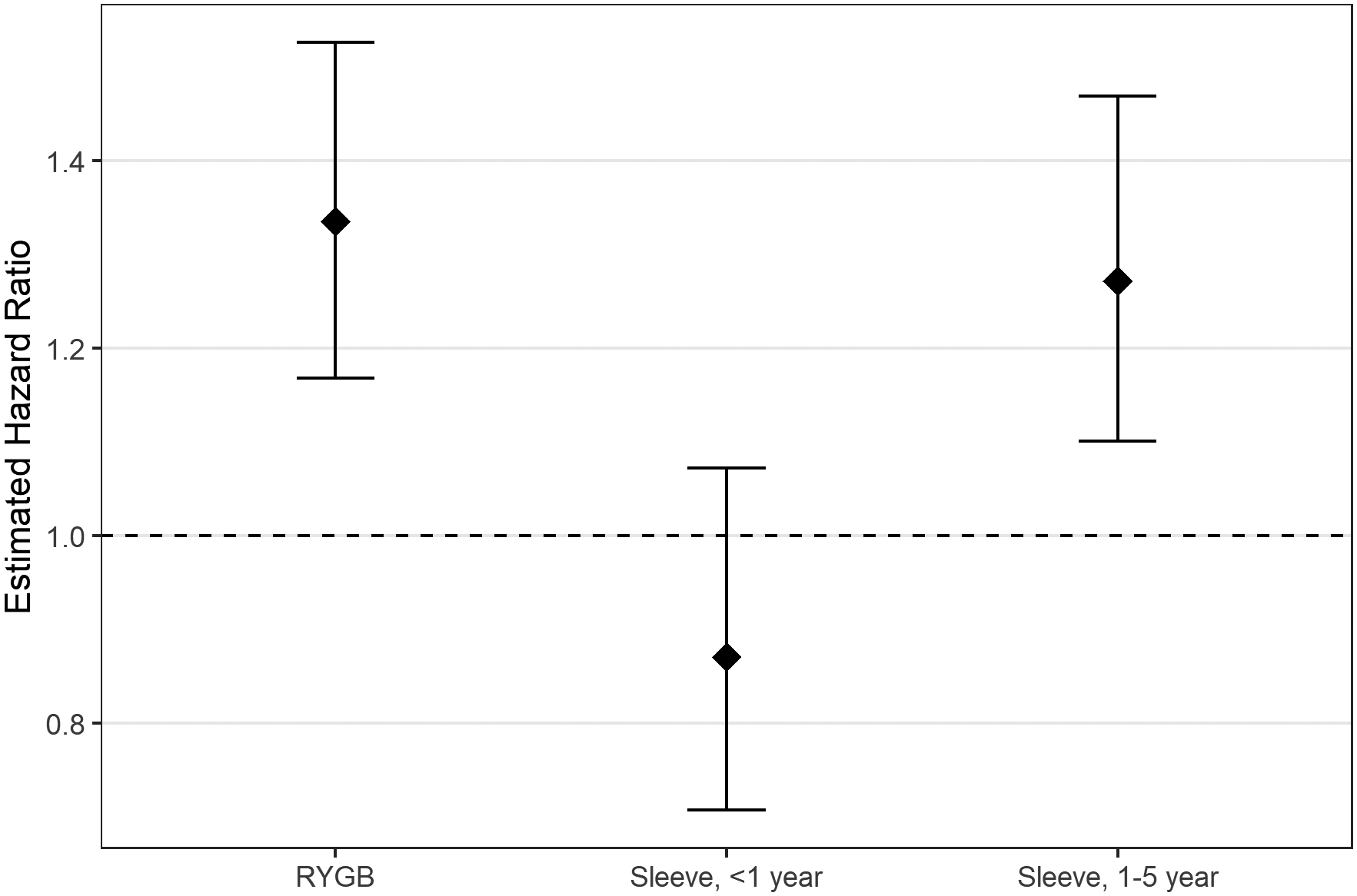
Results: In surgical patients with depression treatment at baseline, the use of postsurgical depression treatment declined over time for both surgical procedures, but postsurgical patients had greater use of depression treatment at 5 years [RYGB: odds ratio=1.24, 95% confidence interval (CI): 1.04-1.49; LSG: odds ratio=1.27, 95% CI: 1.04-1.56] compared with controls. Among those without depression treatment at baseline, bariatric surgery was associated with a higher incidence of depression treatment compared with matched controls (RYGB: hazard ratio=1.34, 95% CI: 1.17-1.53; LSG: hazard ratio at 1-5 years=1.27, 95% CI: 1.10-1.47).
Conclusions: Bariatric surgery was associated with a greater risk of postoperative incident depression treatment and greater persistence of postoperative depression treatment. Depression may worsen for some patients after bariatric surgery, so clinicians should carefully monitor their patients for depression postoperatively.
Conflict of interest statement
M.L.M. reports research grants for the National Institutes of Health (NIH), Veterans Affairs Health Services Research and Development Service (VA HSR&D), and National Committee for Quality Assurance (NCQA), and ownership of Amgen stock due to his spouse’s employment. D.E.A. reports research grants from NIH and PCORI outside of the submitted work. K.A.B. reports research grants from NIH, Agency for Healthcare Research and Quality (AHRQ), and work for NCQA outside of the submitted work. The remaining authors report no conflicts of interest.
Figures
References
-
- Serretti A, Mandelli L. Antidepressants and body weight: a comprehensive review and meta-analysis. J Clin Psychiatry. 2010;71(10):1259–1272. - PubMed
-
- Gill H, Gill B, El-Halabi S, et al. Antidepressant Medications and Weight Change: A Narrative Review. Obesity (Silver Spring). 2020;28(11):2064–2072. - PubMed
-
- Dawes AJ, Maggard-Gibbons M, Maher AR, et al. Mental Health Conditions Among Patients Seeking and Undergoing Bariatric Surgery: A Meta-analysis. Jama. 2016;315(2):150–163. - PubMed
