Review
. 2022 Aug 29;8(1):68.
doi: 10.1038/s41522-022-00327-7.

Translational challenges and opportunities in biofilm science: a BRIEF for the future

Affiliations
Review

Translational challenges and opportunities in biofilm science: a BRIEF for the future

C J Highmore et al. NPJ Biofilms Microbiomes. .

Abstract

Biofilms are increasingly recognised as a critical global issue in a multitude of industries impacting health, food and water security, marine sector, and industrial processes resulting in estimated economic cost of $5 trillion USD annually. A major barrier to the translation of biofilm science is the gap between industrial practices and academic research across the biofilms field. Therefore, there is an urgent need for biofilm research to notice and react to industrially relevant issues to achieve transferable outputs. Regulatory frameworks necessarily bridge gaps between different players, but require a clear, science-driven non-biased underpinning to successfully translate research. Here we introduce a 2-dimensional framework, termed the Biofilm Research-Industrial Engagement Framework (BRIEF) for classifying existing biofilm technologies according to their level of scientific insight, including the understanding of the underlying biofilm system, and their industrial utility accounting for current industrial practices. We evidence the BRIEF with three case studies of biofilm science across healthcare, food & agriculture, and wastewater sectors highlighting the multifaceted issues around the effective translation of biofilm research. Based on these studies, we introduce some advisory guidelines to enhance the translational impact of future research.


Conflict of interest statement

The authors declare no competing interests.

Figures

Fig. 1
Fig. 1. Biofilms impact on human activity and canonical model.
a Outline of the scope and scale of biofilm interactions in human activity. Every facet of human health and the economy interacts with microbial biofilms. These span: food production (agriculture and aquaculture); food and fast-moving consumer goods processing; clinical applications to human and animal health; wastewater treatment and related environmental engineering; and all marine uses, including transport and resource extraction. The estimates of economic impact are from NBIC’s commissioned study and are available in their Annual Report 2021 and recent publication. b The canonically-understood colonisation-maturation-dispersal model of biofilms, and counterexamples. Biofilms are frequently modelled (in theory and in vitro) as single-species communities, which adhere to a physical substratum, colonising it, mature through extracellular matrix modelling and cell growth, to a climactic dispersal state. However, while this core model is well-understood and experimentally tractable, it frequently oversimplifies key aspects of real-life biofilms. These considerations are expanded on in the text around the image (black font). These include the substratum (which may be absent [as in water columns in WWT] or alter over time [as in a healing wound]); the community composition itself (which may contain multiple species, or even kingdoms, as in rhizobial communities including phage and fungi); the solution (which may vary rapidly, as in therapeutic antibiotic use) and the extracellular matrix (which may be partly or even wholly a result of non-microbial processes, as in saliva of the buccal cavity).
Fig. 2
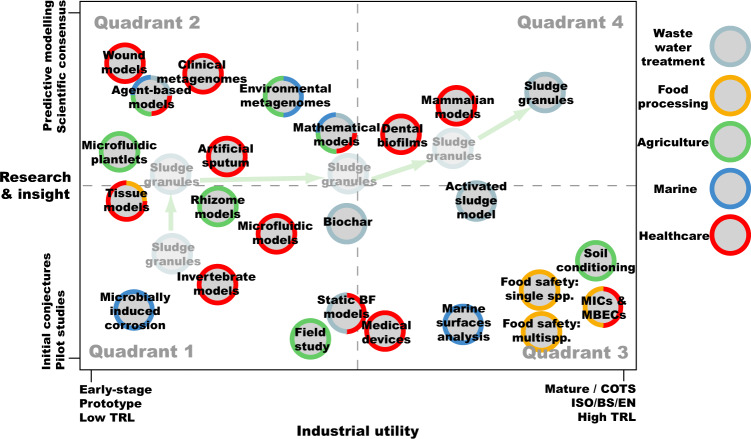
Fig. 2. The BRIEF for evaluating and translating biofilm research.
A selection of biofilm models, techniques, frameworks or applications derived from industry and academic basic science are presented on a two-dimensional plot. Horizontal axis: degree of technical maturity, scalability and/or deployability & standardisation of tools/approaches to monitor a biofilm system or application, from non-standardised, early-stage, prototype, low-Technology Readiness Level (TRL) approaches, to mature, commercially-available off-the-shelf (COTS), high-TRL approaches likely to have ISO, EN, DIN, BS, or other, standards within a defined regulatory framework. Vertical axis: depth and quality (predictive ability) of overall empirical understanding about the system. Colours correspond to applications relevant to wastewater treatment; food processing; food production (including agriculture and aquaculture); marine and petrochemicals; and human and animal healthcare. See Info Box 3 on Biochar. Supplementary Table 1 for more details,,,–,,–.

References

    1. Flemming H-C, Wingender J. The biofilm matrix. Nat. Rev. Microbiol. 2010;8:623–633. doi: 10.1038/nrmicro2415. - DOI - PubMed
    1. de Carvalho, C. C. C. R. Marine Biofilms: A Successful Microbial Strategy With Economic Implications. Front. Marine Sci.5, 126 (2018).
    1. Wolcott RD, et al. Chronic wounds and the medical biofilm paradigm. J. Wound Care. 2010;19:45–53. doi: 10.12968/jowc.2010.19.2.46966. - DOI - PubMed
    1. Tuck B, Watkin E, Somers A, Machuca LL. A critical review of marine biofilms on metallic materials. npj Mater. Degrad. 2022;6:25. doi: 10.1038/s41529-022-00234-4. - DOI
    1. Camara M, et al. Economic significance of biofilms: a multidisciplinary and cross-sectoral challenge. NPJ Biofilms Microbiomes. 2022;8:42. doi: 10.1038/s41522-022-00306-y. - DOI - PMC - PubMed

Publication types