


SARS-CoV-2 air sampling: A systematic review on the methodologies for detection and infectivity
- PMID: 36040285
- PMCID: PMC9538005
- DOI: 10.1111/ina.13083
SARS-CoV-2 air sampling: A systematic review on the methodologies for detection and infectivity
Abstract
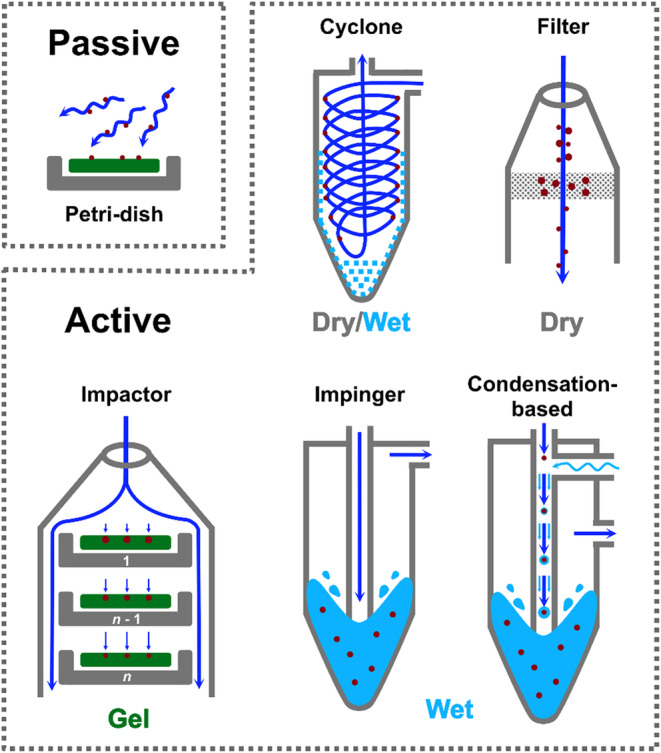
This systematic review aims to present an overview of the current aerosol sampling methods (and equipment) being used to investigate the presence of SARS-CoV-2 in the air, along with the main parameters reported in the studies that are essential to analyze the advantages and disadvantages of each method and perspectives for future research regarding this mode of transmission. A systematic literature review was performed on PubMed/MEDLINE, Web of Science, and Scopus to assess the current air sampling methodologies being applied to SARS-CoV-2. Most of the studies took place in indoor environments and healthcare settings and included air and environmental sampling. The collection mechanisms used were impinger, cyclone, impactor, filters, water-based condensation, and passive sampling. Most of the reviewed studies used RT-PCR to test the presence of SARS-CoV-2 RNA in the collected samples. SARS-CoV-2 RNA was detected with all collection mechanisms. From the studies detecting the presence of SARS-CoV-2 RNA, fourteen assessed infectivity. Five studies detected viable viruses using impactor, water-based condensation, and cyclone collection mechanisms. There is a need for a standardized protocol for sampling SARS-CoV-2 in air, which should also account for other influencing parameters, including air exchange ratio in the room sampled, relative humidity, temperature, and lighting conditions.
Keywords: air sampling; airborne transmission; collection media; impactor; impinge; infectivity.
© 2022 John Wiley & Sons A/S. Published by John Wiley & Sons Ltd.
Figures
References
-
- WHO . Transmission of SARS‐CoV‐2: implications for infection prevention precautions; 2020. WHO Glob. Accessed September 28, 2020. https://www.who.int/news‐room/commentaries/detail/transmission‐of‐sars‐c...
Publication types
MeSH terms
Substances
LinkOut - more resources
Full Text Sources
Medical
Miscellaneous
