Randomized Controlled Trial
. 2022 Aug 1;5(8):e2227893.
doi: 10.1001/jamanetworkopen.2022.27893.

Effects of an Exercise Program on Brain Health Outcomes for Children With Overweight or Obesity: The ActiveBrains Randomized Clinical Trial

Affiliations
Randomized Controlled Trial

Effects of an Exercise Program on Brain Health Outcomes for Children With Overweight or Obesity: The ActiveBrains Randomized Clinical Trial

Francisco B Ortega et al. JAMA Netw Open. .

Abstract

Importance: Pediatric overweight and obesity are highly prevalent across the world, with implications for poorer cognitive and brain health. Exercise might potentially attenuate these adverse consequences.

Objectives: To investigate the effects of an exercise program on brain health indicators, including intelligence, executive function, academic performance, and brain outcomes, among children with overweight or obesity and to explore potential mediators and moderators of the main effects of exercise.

Design, setting, and participants: All preexercise and postexercise data for this 20-week randomized clinical trial of 109 children aged 8 to 11 years with overweight or obesity were collected from November 21, 2014, to June 30, 2016, with neuroimaging data processing and analyses conducted between June 1, 2017, and December 20, 2021. All 109 children were included in the intention-to-treat analyses; 90 children (82.6%) completed the postexercise evaluation and attended 70% or more of the recommended exercise sessions and were included in per-protocol analyses.

Interventions: All participants received lifestyle recommendations. The control group continued their usual routines, whereas the exercise group attended a minimum of 3 supervised 90-minute sessions per week in an out-of-school setting.

Main outcomes and measures: Intelligence, executive function (cognitive flexibility, inhibition, and working memory), and academic performance were assessed with standardized tests, and hippocampal volume was measured with magnetic resonance imaging.

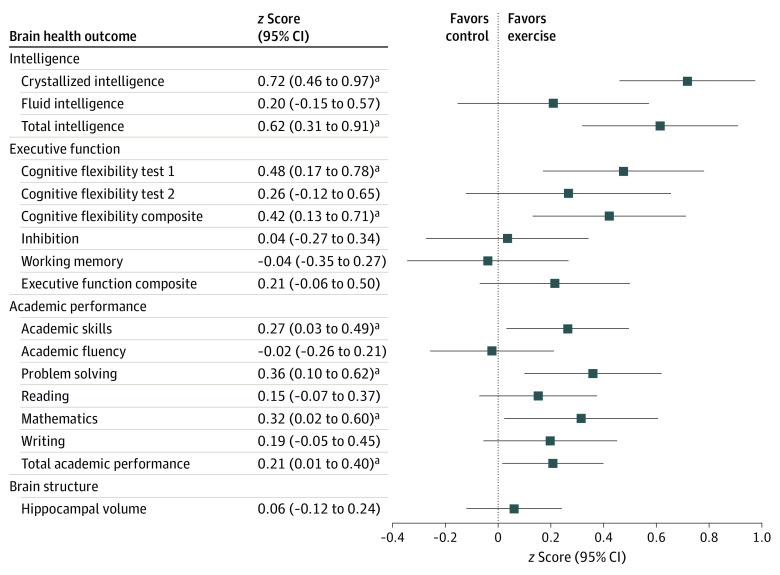
Results: The 109 participants included 45 girls (41.3%); participants had a mean (SD) body mass index of 26.8 (3.6) and a mean (SD) age of 10.0 (1.1) years at baseline. In per-protocol analyses, the exercise intervention improved crystallized intelligence, with the exercise group improving from before exercise to after exercise (mean z score, 0.62 [95% CI, 0.44-0.80]) compared with the control group (mean z score, -0.10 [95% CI, -0.28 to 0.09]; difference between groups, 0.72 SDs [95% CI, 0.46-0.97]; P < .001). Total intelligence also improved significantly more in the exercise group (mean z score, 0.69 [95% CI, 0.48-0.89]) than in the control group (mean z score, 0.07 [95% CI, -0.14 to 0.28]; difference between groups, 0.62 SDs [95% CI, 0.31-0.91]; P < .001). Exercise also positively affected a composite score of cognitive flexibility (mean z score: exercise group, 0.25 [95% CI, 0.05-0.44]; control group, -0.17 [95% CI, -0.39 to 0.04]; difference between groups, 0.42 SDs [95% CI, 0.13-0.71]; P = .005). These main effects were consistent in intention-to-treat analyses and after multiple-testing correction. There was a positive, small-magnitude effect of exercise on total academic performance (mean z score: exercise group, 0.31 [95% CI, 0.18-0.44]; control group, 0.10 [95% CI, -0.04 to 0.24]; difference between groups, 0.21 SDs [95% CI, 0.01-0.40]; P = .03), which was partially mediated by cognitive flexibility. Inhibition, working memory, hippocampal volume, and other brain magnetic resonance imaging outcomes studied were not affected by the exercise program. The intervention increased cardiorespiratory fitness performance as indicated by longer treadmill time to exhaustion (mean z score: exercise group, 0.54 [95% CI, 0.27-0.82]; control group, 0.13 [95% CI, -0.16 to 0.41]; difference between groups, 0.42 SDs [95% CI, 0.01-0.82]; P = .04), and these changes in fitness mediated some of the effects (small percentage of mediation [approximately 10%-20%]). The effects of exercise were overall consistent across the moderators tested, except for larger improvements in intelligence among boys compared with girls.

Conclusions and relevance: In this randomized clinical trial, exercise positively affected intelligence and cognitive flexibility during development among children with overweight or obesity. However, the structural and functional brain changes responsible for these improvements were not identified.

Trial registration: ClinicalTrials.gov Identifier: NCT02295072.


Conflict of interest statement

Conflict of Interest Disclosures: None reported.

Figures

Figure 1.
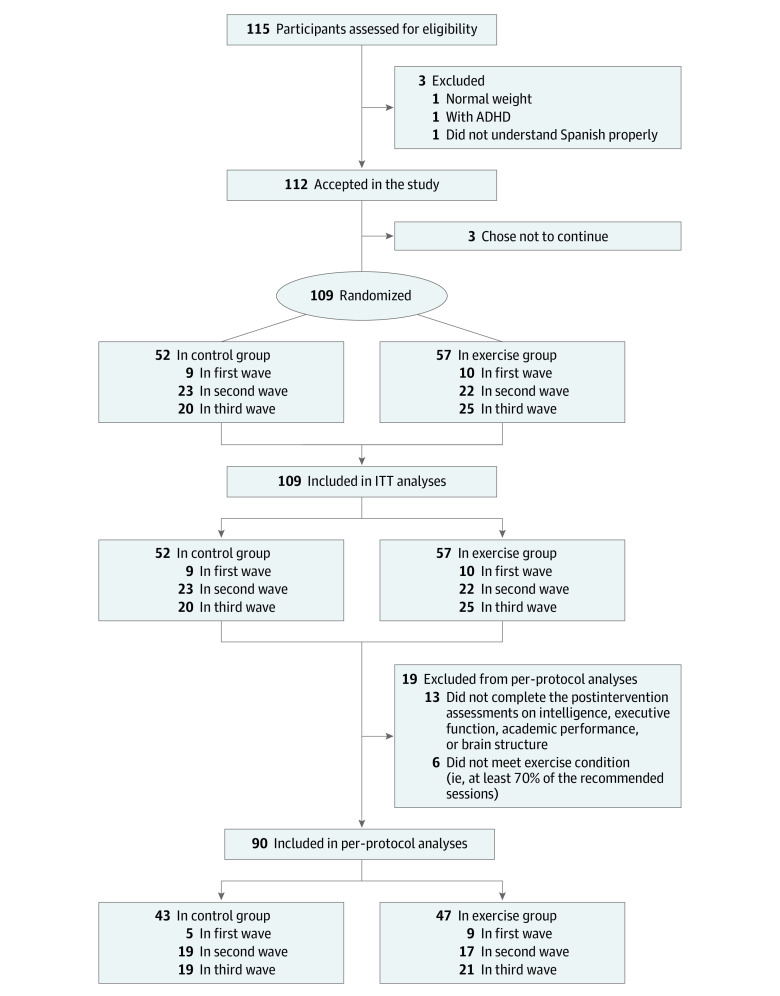
Figure 1.. CONSORT Flow Diagram
For final intention-to-treat (ITT) analyses, participants who left the study during the intervention or who did not complete the postexercise program assessments were imputed (see Statistical Analysis section). The actual number for each variable can be seen in eTables 1 to 22 in Supplement 2. ADHD indicates attention-deficit/hyperactivity disorder.
Figure 2.
Figure 2.. Per-Protocol Effects of the ActiveBrains Exercise Program on the Main Brain Health Outcomes
Dots indicate the between-groups difference in z scores of change (ie, postexercise outcomes with respect to the baseline mean [SD] value). Bars indicate 95% CIs. Each analysis was adjusted for baseline outcomes. The cognitive flexibility composite z score was calculated as the renormalized mean of the z scores for cognitive flexibility test 1 and cognitive flexibility test 2. The executive function composite z score was calculated as the renormalized mean of the z scores for cognitive flexibility, inhibition, and working memory. Academic skills are the sum of components based on basic skills, such as reading decoding, mathematics calculation, and spelling. Academic fluency is the sum of tests based on reading, calculation, and writing fluency. Problem solving is the sum of the components based on solving academic problems in reading, mathematics, and writing. Total academic performance is the overall measure of academic performance based on reading, mathematics, and writing. Two of the cognitive tests (ie, the cognitive flexibility test 2 [Trail Making Test] and the inhibition test [Stroop Color-Word Test]) were originally expressed inversely, which means that lower scores indicate better performance. To simplify the visual interpretation of the main findings, we inverted these 2 scores so that they can be interpreted in the same fashion as the rest of the outcomes (ie, higher score indicates better performance). These cognitive tests are expressed in their original units and not inverted in eTables 2 and 19 in Supplement 2. aSignificant effect at P < .05 (or by the 95% CI not including zero).
Figure 3.
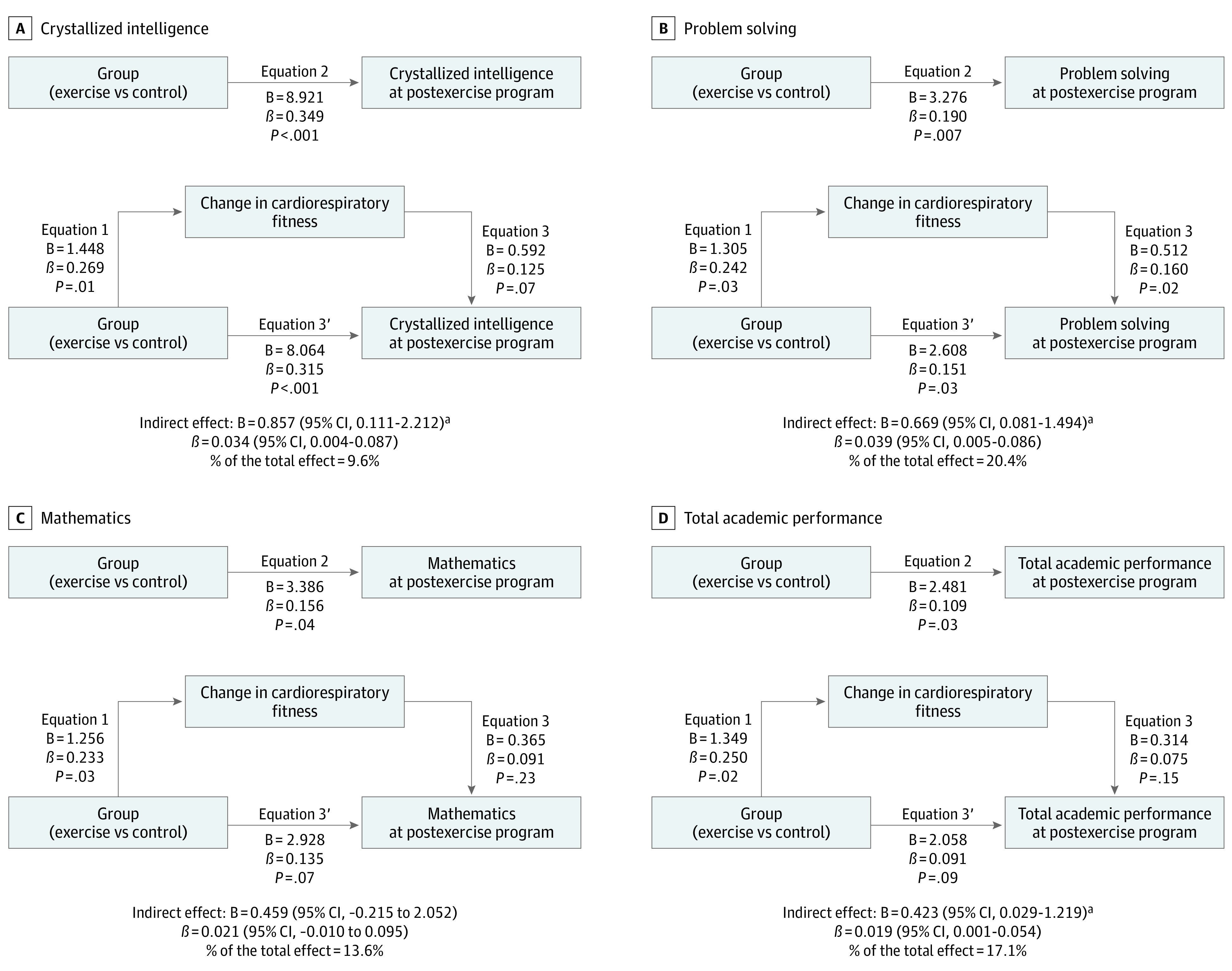
Figure 3.. Cardiorespiratory Fitness Change Mediation Models of the Intervention Effects (ie, Exercise vs Control) on Crystallized Intelligence and Academic Performance Outcomes in Children With Overweight or Obesity
Each analysis was adjusted by the respective intelligence or academic performance outcomes at baseline. Change in cardiorespiratory fitness expresses the change in total completion time (minutes) of the treadmill test at postexercise program with respect to the total completion time (minutes) at baseline because it was the main cardiorespiratory fitness outcome influenced by the exercise program. Problem solving is the sum of the components based on solving academic problems in reading, mathematics, and writing. Total academic performance is the overall measure of the academic performance based on reading, mathematics, and writing. B indicates unstandardized regression coefficient; β, standardized regression coefficient. aSignificant indirect effect at P < .05.
Figure 4.
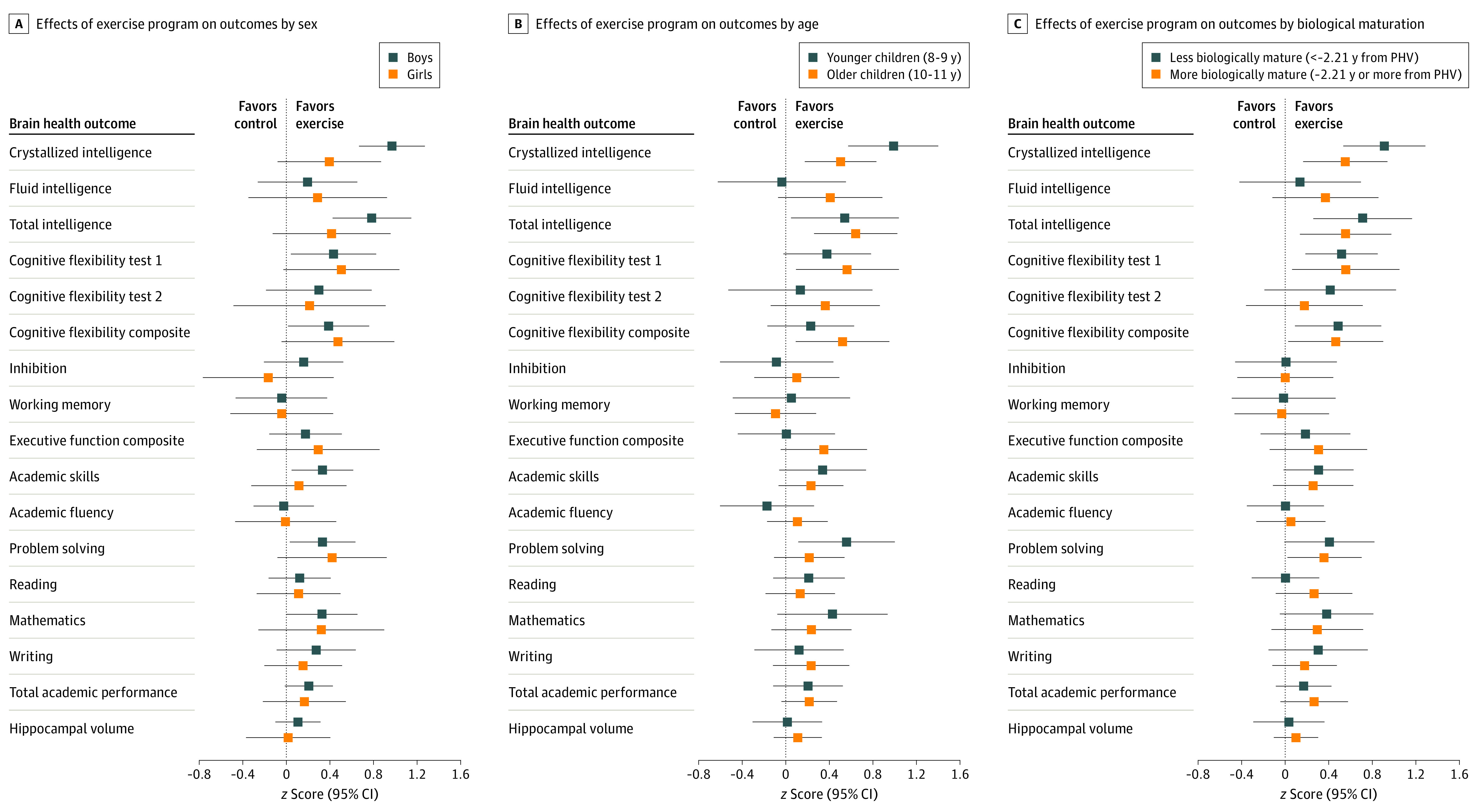
Figure 4.. Per-Protocol Effects of the ActiveBrains Exercise Program on the Main Brain Health Outcomes by Sex, Age, and Biological Maturation
Each analysis was adjusted by baseline outcomes. Dots indicate the between-groups difference in z scores of change (ie, postexercise outcomes with respect to the baseline mean [SD] value). Bars indicate 95% CIs. To express biological maturation, the number of years from peak height velocity (PHV) was calculated by subtracting the age of PHV from the chronological age. The difference in years was used as a measure of maturity. Peak height velocity was dichotomized using the median. The cognitive flexibility composite z score was calculated as the renormalized mean of the z scores for cognitive flexibility test 1 and cognitive flexibility test 2. Executive function composite z score was calculated as the renormalized mean of the z scores for cognitive flexibility, inhibition, and working memory. Academic skills are the sum of components based on basic skills such as reading decoding, mathematics calculation, and spelling. Academic fluency is the sum of tests based on reading, calculation, and writing fluency. Problem solving is the sum of the components based on solving academic problems in reading, mathematics, and writing. Total academic performance is the overall measure of academic performance based on reading, mathematics, and writing. Two of the cognitive tests (ie, cognitive flexibility test 2 [Trail Making Test] and the inhibition test [Stroop Color-Word Test]) were originally expressed inversely, which means that lower scores indicate better performance. To simplify the visual interpretation of the main findings, we inverted these 2 scores so that they can be interpreted in the same fashion as the rest of the outcomes (ie, higher score indicates better performance). These cognitive tests are expressed in their original units and not inverted in eTables 2 and 19 in Supplement 2.
Figure 5.
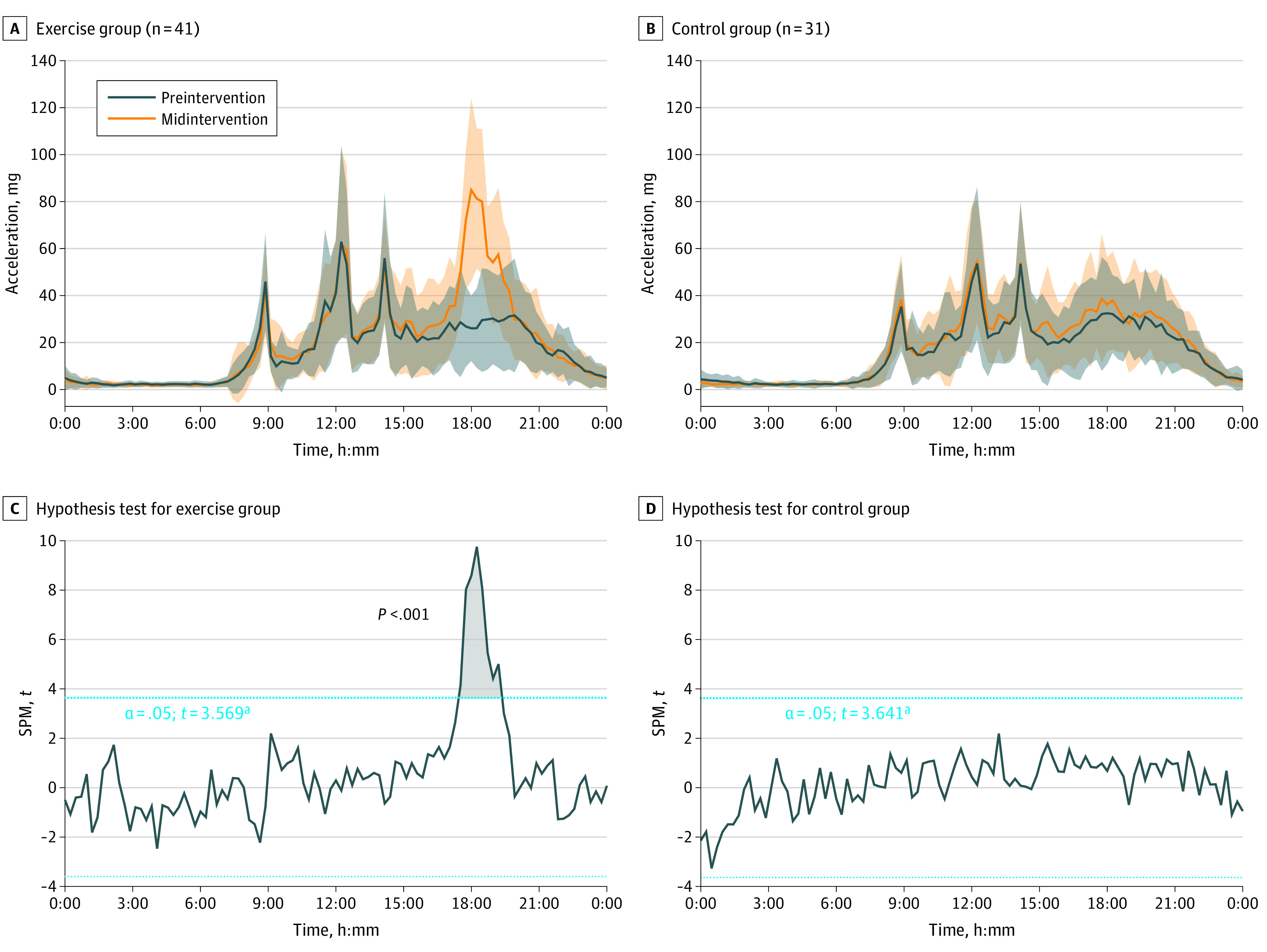
Figure 5.. Comparison of the 24-Hour Physical Activity Patterns Derived From Aggregated Raw Accelerations Measured With an Accelerometer Attached at the Right Hip at Baseline and in the Middle of the Exercise Program
SPM indicates statistical parametric mapping. aThe hypothesis test shows the threshold at which there are significant differences in physical activity patterns between the baseline and exercise periods.

References

    1. World Health Organization . Obesity and overweight: key facts. Accessed November 1, 2021. https://www.who.int/news-room/fact-sheets/detail/obesity-and-overweight
    1. Ou X, Andres A, Pivik RT, Cleves MA, Badger TM. Brain gray and white matter differences in healthy normal weight and obese children. J Magn Reson Imaging. 2015;42(5):1205-1213. doi:10.1002/jmri.24912 - DOI - PubMed
    1. Bauer CCC, Moreno B, González-Santos L, Concha L, Barquera S, Barrios FA. Child overweight and obesity are associated with reduced executive cognitive performance and brain alterations: a magnetic resonance imaging study in Mexican children. Pediatr Obes. 2015;10(3):196-204. doi:10.1111/ijpo.241 - DOI - PubMed
    1. Esteban-Cornejo I, Ortega FB, Catena A. Neural perspectives on cognitive control development during childhood and adolescence should take into account how obesity affects brain development. Acta Paediatr. 2018;107(4):720-721. doi:10.1111/apa.14200 - DOI - PubMed
    1. Pareja-Galeano H, Garatachea N, Lucia A. Exercise as a polypill for chronic diseases. Prog Mol Biol Transl Sci. 2015;135:497-526. doi:10.1016/bs.pmbts.2015.07.019 - DOI - PubMed

Publication types

Associated data