


Citizen science and expert opinion working together to understand the impacts of climate change
- PMID: 36040922
- PMCID: PMC9426922
- DOI: 10.1371/journal.pone.0273822
Citizen science and expert opinion working together to understand the impacts of climate change
Abstract
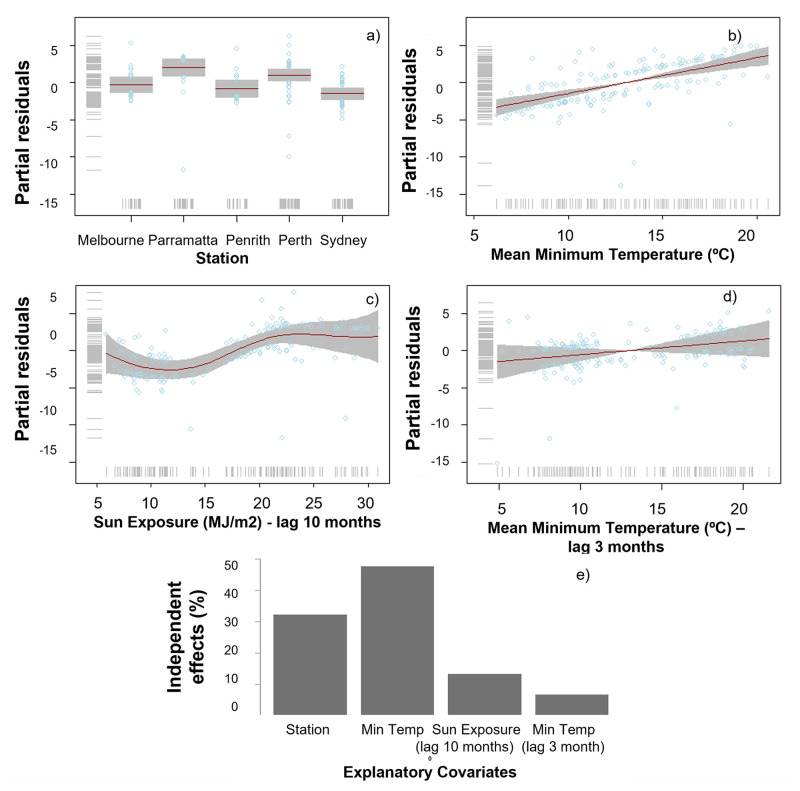
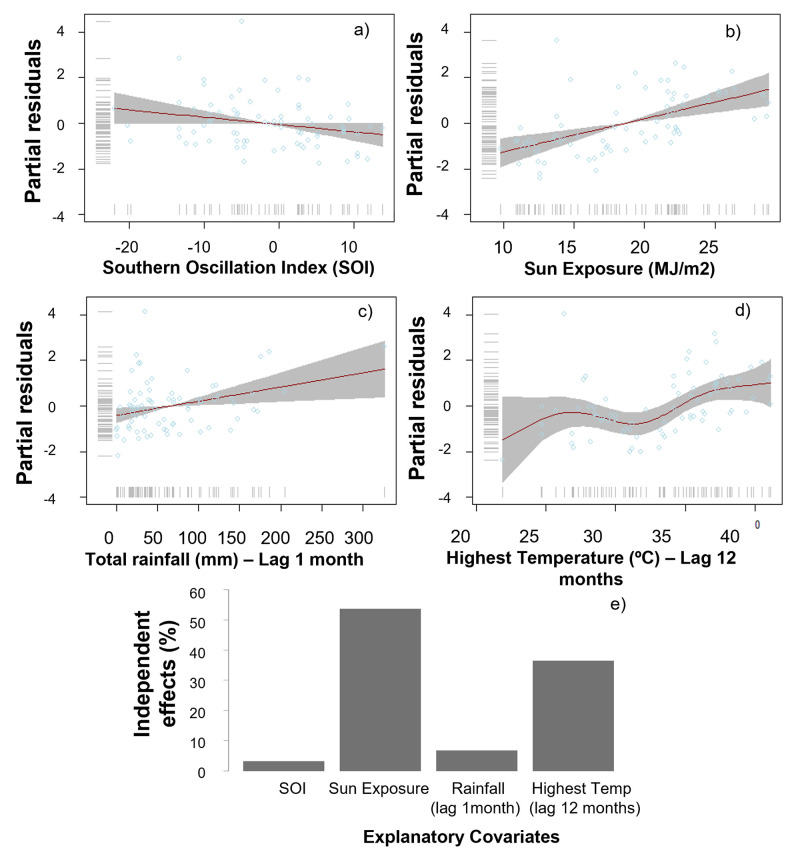
In the absence of historical information on phenology available in Australia, expert opinion was used for selecting indicator species that would be suitable for monitoring phenology on a continental scale as part of ClimateWatch-a citizen science program. Jacaranda mimosifolia being the most frequently observed species was used in this study to test expert opinion and the adequacy of citizen science records in detecting the influence of climatic conditions on this species' flowering phenology. Generalised Additive Models for Location Scale and Shape were used to explore the occurrence and intensity of flowering of Jacaranda in relation to rainfall, temperature, and sun exposure. Jacaranda flowering onset was influenced by winter cold exposure, while flowering intensity was related to increasing sun exposure as spring progresses, and both were influenced by the conditions for flowering in the former flowering seasons (i.e., sun exposure and highest temperatures reached, respectively). Our models provide the first attempt to describe the climate drivers for Jacaranda mimosifolia flowering in the southern hemisphere and identify where climatic changes will most likely alter this tree's phenology in Australia and benefit or challenge its reproductive ability. They also support the choice of species for citizen science programs based on expert opinion.
Conflict of interest statement
The authors have declared that no competing interests exist.
Figures
References
-
- Lieth H. Purposes of a phenology book. In: Lieth H, editor. Phenology and seasonality modeling Ecological studies: analysis and synthesis. 8. New York: Springer-Verlag; 1974. p. 3–19.
-
- Beaumont LJ, Hartenthaler T, Keatley MR, Chambers LE. Shifting time: recent changes to the phenology of Australian species. Clim Res. 2015;63(3):203–14.
Publication types
MeSH terms
LinkOut - more resources
Full Text Sources
Medical
