Protracted armed conflict and maternal health: a scoping review of literature and a retrospective analysis of primary data from northwest Syria
- PMID: 36041781
- PMCID: PMC9438041
- DOI: 10.1136/bmjgh-2021-008001
Protracted armed conflict and maternal health: a scoping review of literature and a retrospective analysis of primary data from northwest Syria
Abstract
Introduction: Syria's protracted conflict has devastated the health system reversing progress made on maternal health preconflict. Our aim is to understand the state of maternal health in Syria focused on underage pregnancy and caesarean sections using a scoping review and quantitative analysis; the latter draws on data from the Syrian American Medical Society's (SAMS) maternal health facilities in northwest Syria.
Methods: We performed a scoping review of academic and grey literature on the state of maternal health across Syria since the onset of conflict (taken as March 2011). Identified articles were screened using pre-established criteria and themes identified. We also performed a retrospective quantitative analysis of maternal health data from SAMS' facilities in a microcontext in north-west Syria between March 2017 and July 2020, analysing the trends in the proportion of births by caesarean section and age at pregnancy.
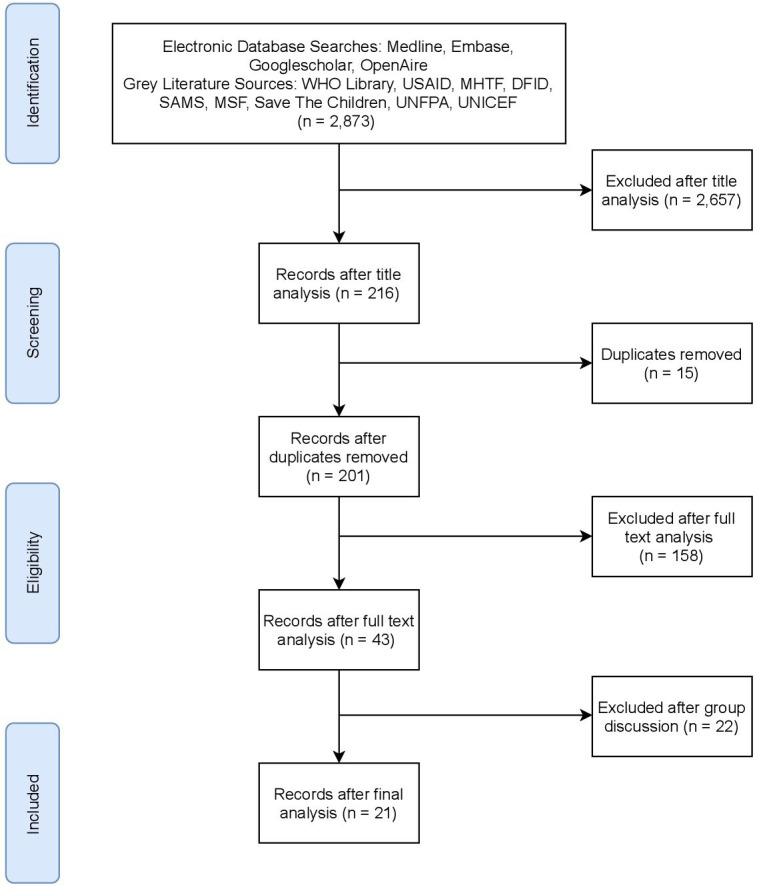
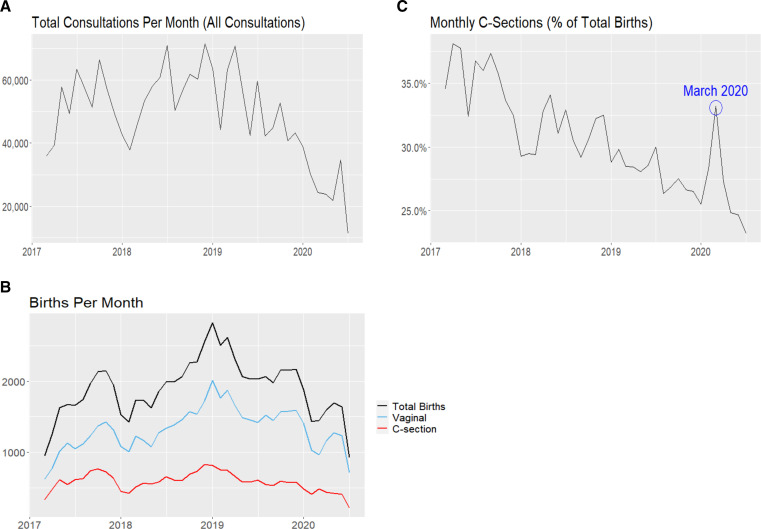
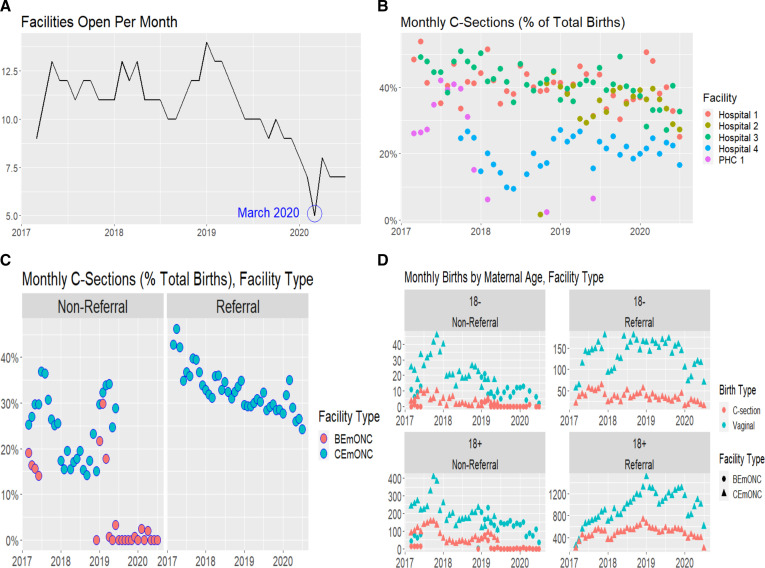
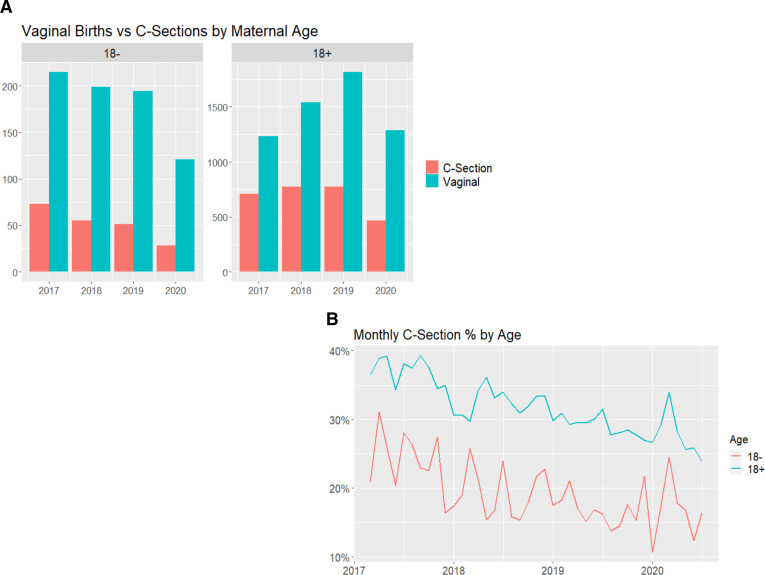
Results: Scoping review: of 2824 articles, 21 remained after screening. Main themes related to maternal mortality rates, caesarean sections, maternal age and perinatal care. 12 studies reported caesarean section rates; these varied from 16% to 64% of all births: northern Syria (19%-45%,) Damascus (16%-54%,) Lattakia (64%) and Tartous (59%.) Quantitative analysis: Of 77 746 births across 17 facilities, trend data for caesarean sections showed a decrease from 35% in March 2017 to 23% in July 2020 across SAMS facilities. Girls under 18 years accounted for 10% of births and had a lower proportion of caesarean section births. There was notable geographical and interfacility variation in the findings.
Conclusion: The quality of available literature was poor with country-level generalisations. Research which explores microcontexts in Syria is important given the different effects of conflict across the country and the fragmented health system. Our quantitative analysis provides some evidence around the changes to caesarean section rates in northwest Syria. Despite limitations, this study adds to sparse literature on this important topic.
Keywords: Maternal health; Obstetrics; Public Health; Surgery.
© Author(s) (or their employer(s)) 2022. Re-use permitted under CC BY-NC. No commercial re-use. See rights and permissions. Published by BMJ.
Conflict of interest statement
Competing interests: None declared.
Figures
References
-
- United Nations Children’s Fund (UNICEF) . The impact of conflict on women and girls in West and central Africa and the UNICEF response. New York, 2005.
-
- Namasivayam A, Arcos González P, Castro Delgado R, González P, Delgado R, et al. . The effect of armed conflict on the utilization of maternal health services in Uganda: a population-based study. PLoS Curr 2017;9. 10.1371/currents.dis.557b987d6519d8c7c96f2006ed3c271a. [Epub ahead of print: 03 Oct 2017]. - DOI - PMC - PubMed
Publication types
MeSH terms
LinkOut - more resources
Full Text Sources
Medical