


A new method for estimating under-recruitment of a patient registry: a case study with the Ohio Registry of Amyotrophic Lateral Sclerosis
- PMID: 36042373
- PMCID: PMC9428141
- DOI: 10.1038/s41598-022-18944-9
A new method for estimating under-recruitment of a patient registry: a case study with the Ohio Registry of Amyotrophic Lateral Sclerosis
Abstract
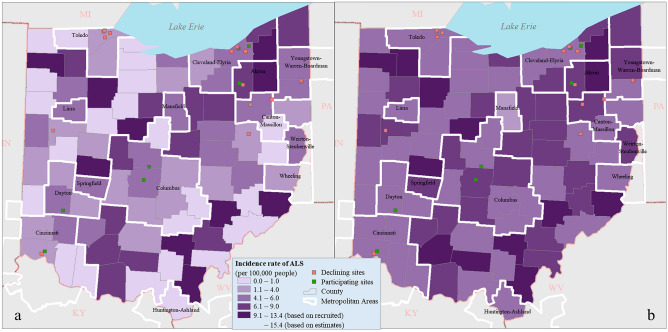
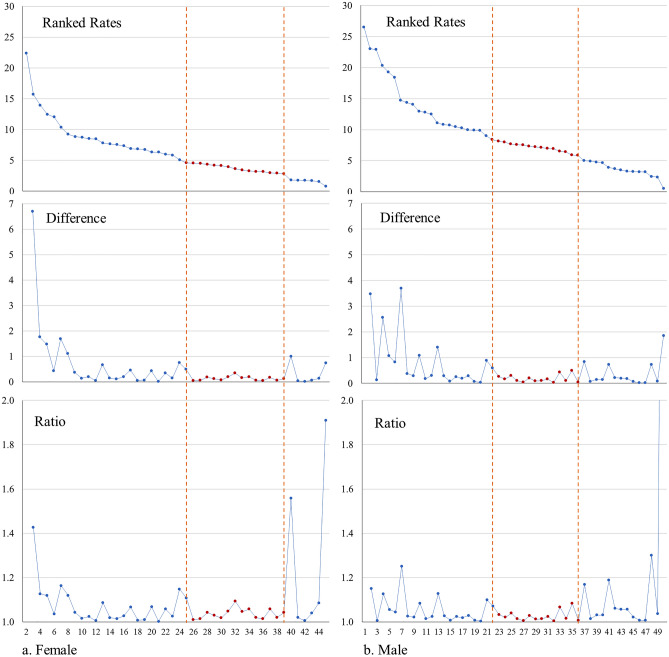
We developed a disease registry to collect all incident amyotrophic lateral sclerosis (ALS) cases diagnosed during 2016-2018 in Ohio. Due to incomplete case ascertainment and limitations of the traditional capture-recapture method, we proposed a new method to estimate the number of cases not recruited by the Registry and their spatial distribution. Specifically, we employed three statistical methods to identify reference counties with normal case-population relationships to build a Poisson regression model for estimating case counts in target counties that potentially have unrecruited cases. Then, we conducted spatial smoothing to adjust outliers locally. We validated the estimates with ALS mortality data. We estimated that 119 total cases (95% CI [109, 130]) were not recruited, including 36 females (95% CI [31, 41]) and 83 males (95% CI [74, 99]), and were distributed unevenly across the state. For target counties, including estimated unrecruited cases increased the correlation between the case count and mortality count from r = 0.8494 to 0.9585 for the total, from 0.7573 to 0.8270 for females, and from 0.6862 to 0.9292 for males. The advantage of this method in the spatial perspective makes it an alternative to capture-recapture for estimating cases missed by disease registries.
© 2022. The Author(s).
Conflict of interest statement
The authors declare no competing interests.
Figures



References
Publication types
MeSH terms
Grants and funding
LinkOut - more resources
Full Text Sources
Medical
Miscellaneous
