


A cohort study on longitudinal changes in postural balance during the first year after stroke
- PMID: 36042404
- PMCID: PMC9425943
- DOI: 10.1186/s12883-022-02851-7
A cohort study on longitudinal changes in postural balance during the first year after stroke
Abstract
Introduction: Many patients with strokes report increased incidence of fall that can be due to impaired postural balance. The recovery of balance in patients with varying degrees of impairments and activity limitations is less studied, and whether individuals with mild paresis can recover their balance faster is unclear. Better knowledge about factors influencing the recovery of postural balance can be used to guide clinical management after stroke to provide the right rehabilitation to the right person at the right time, and thus to avoid potential fall incidences.
Objective: This study aims to examine longitudinal changes in postural balance during the first year after stroke.
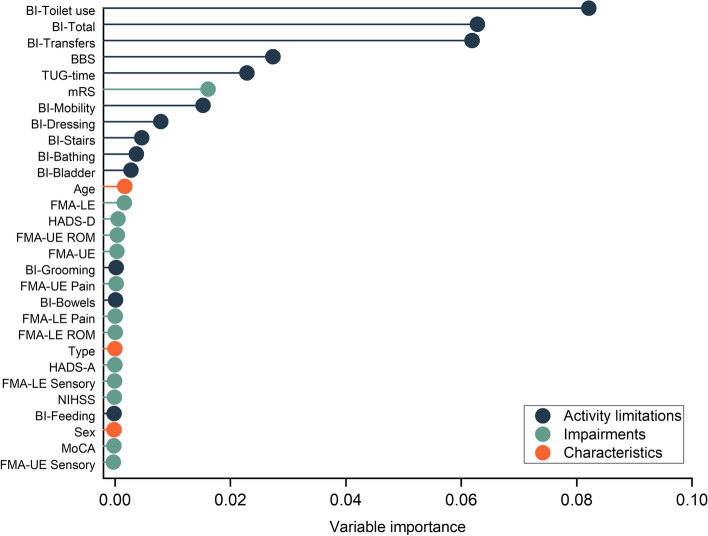
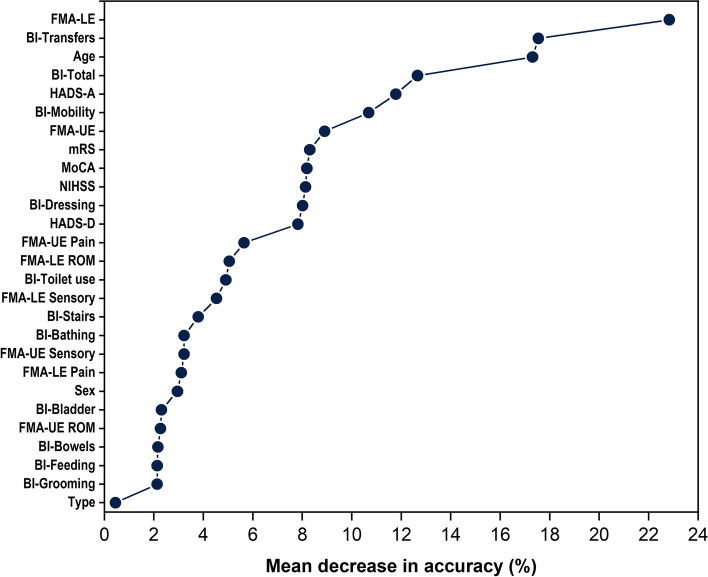
Methods: Postural balance was assessed using the Berg Balance Scale (BBS) within 5 days, 1, 2, and 3 months and 1-year post-stroke. Stroke severity was stratified using a cluster analysis by including multidimensional baseline measures. A longitudinal mixed-effect model was constructed to analyze changes in proportional balance impairment by stroke severity over time. Individuals with a cut-off of BBS below 45 scores were identified through a classification algorithm using baseline predictors.
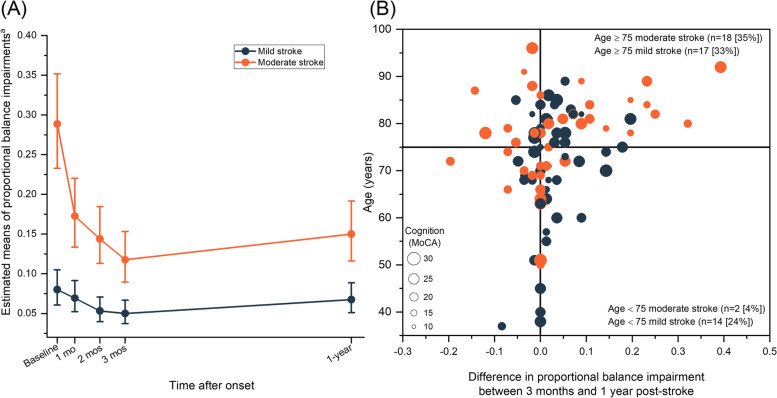
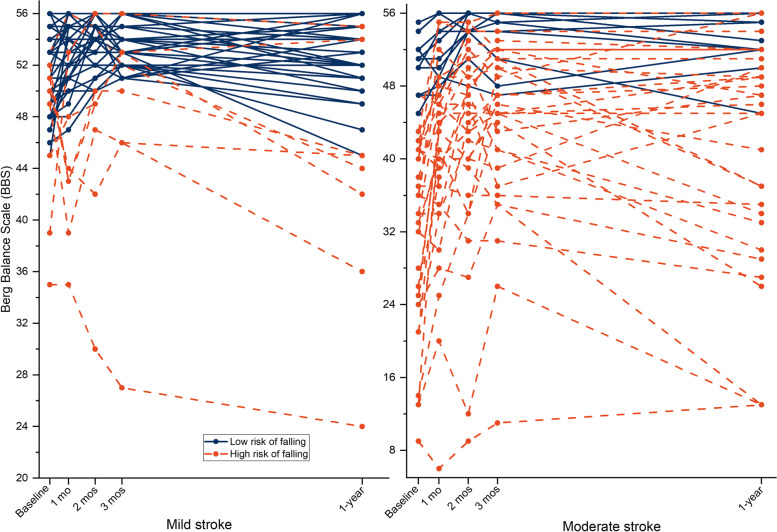
Results: A total of 135 patients were stratified to mild stroke (77 [57%] patients) or moderate stroke (58 [43%] patients). Ninety-three patients were included in the longitudinal analysis. Significant recovery was found at 1-year for moderate stroke (48% recovery from the initial impaired postural balance, adjusted P < 0.001), but not for mild stroke, after adjusting for age and cognition. Both stroke severities had a maximal recovery in postural balance at 3 months post-stroke, but the moderate stroke group deteriorated after that. Patients with higher age and worse cognition had more severe balance impairments. The classification model achieved a sensitivity of 0.95 (95% confidence interval [CI]: 0.91-0.98) and a specificity of 0.99 (95% CI: 0.98-1.0) for classifying individuals with BBS below 45 points.
Conclusions: This study indicates that continuous improvements in postural balance ends at 3 months regardless for mild or moderate stroke groups, and patients with moderate stroke significantly deteriorate in postural balance after 3 months.
Keywords: Berg Balance Scale; Cerebrovascular Accident; Impairment of Postural Balance; Longitudinal Analysis; Stroke Recovery.
© 2022. The Author(s).
Conflict of interest statement
The authors declare no conflict of interest regarding the study.
Figures
References
-
- Ursin MH, Bergland A, Fure B, Thommessen B, Hagberg G, Øksengård AR, et al. Gait and balance one year after stroke; relationships with lesion side, subtypes of cognitive impairment and neuroimaging findings-a longitudinal, cohort study. Physiotherapy. 2019;105(2):254–261. doi: 10.1016/j.physio.2018.07.007. - DOI - PubMed
MeSH terms
Grants and funding
LinkOut - more resources
Full Text Sources
Medical
