


A review of infant growth and psychomotor developmental outcomes after intrauterine exposure to preeclampsia
- PMID: 36042465
- PMCID: PMC9426217
- DOI: 10.1186/s12887-022-03542-5
A review of infant growth and psychomotor developmental outcomes after intrauterine exposure to preeclampsia
Abstract
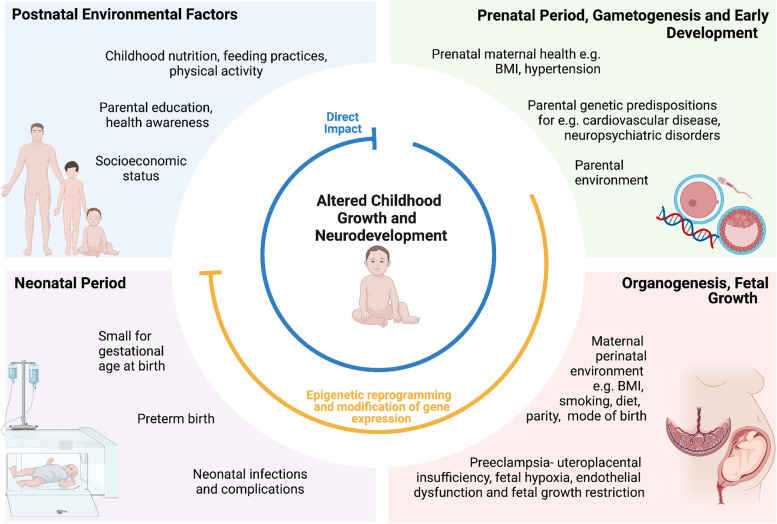
Preeclampsia is a hypertensive disorder of pregnancy with serious health implications for mother and their offspring. The uteroplacental vascular insufficiency caused by preeclampsia is associated with epigenetic and pathological changes in the mother and fetus. However, the impact of preeclampsia in infancy (birth to 2 years), a time of rapid development influenced by pre- and postnatal factors that can predict future health outcomes, remains inconclusive. This narrative review of 23 epidemiological and basic science studies assessed the measurement and impact of preeclampsia exposure on infant growth and psychomotor developmental outcomes from birth to 2 years. Studies assessing infant growth report that preeclampsia-exposed infants have lower weight, length and BMI at 2 years than their normotensive controls, or that they instead experience accelerated weight gain to catch up in growth by 2 years, which may have long-term implications for their cardiometabolic health. In contrast, clear discrepancies remain as to whether preeclampsia exposure impairs infant motor and cognitive development, or instead has no impact. It is additionally unknown whether any impacts of preeclampsia are independent of confounders including shared genetic factors that predispose to both preeclampsia and childhood morbidity, perinatal factors including small for gestational age or preterm birth and their sequelae, and postnatal environmental factors such childhood nutrition. Further research is required to account for these variables in larger cohorts born at term, to help elucidate the independent pathophysiological impact of this clinically heterogenous and dangerous disease.
Keywords: Development; Growth; Hypertensive pregnancy; Infant; Preeclampsia.
© 2022. The Author(s).
Conflict of interest statement
None.
Figures
References
-
- Gestational Hypertension and Preeclampsia ACOG Practice Bulletin, Number 222. Obstet Gynecol. 2020;135(6):e237–e260. - PubMed
-
- Brown MA, Magee LA, Kenny LC, Karumanchi SA, McCarthy FP, Saito S, et al. The hypertensive disorders of pregnancy: ISSHP classification, diagnosis & management recommendations for international practice. Pregnancy Hypertens. 2018;13:291–310. - PubMed
-
- Wu P, Haththotuwa R, Kwok CS, Babu A, Kotronias RA, Rushton C, et al. Preeclampsia and Future Cardiovascular Health: A Systematic Review and Meta-Analysis. Circ Cardiovasc Qual Outcomes. 2017;10(2):e003497. - PubMed
Publication types
MeSH terms
LinkOut - more resources
Full Text Sources
