


Psychological sequelae within different populations during the COVID-19 pandemic: a rapid review of extant evidence
- PMID: 36043286
- PMCID: PMC9297191
- DOI: 10.11622/smedj.2020111
Psychological sequelae within different populations during the COVID-19 pandemic: a rapid review of extant evidence
Abstract
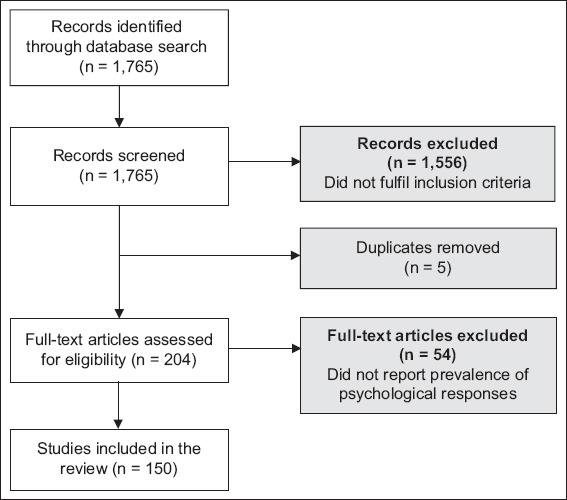
The rapid spread of COVID-19 has a potentially significant impact on not only physical health but also psychological well-being. To the best of our knowledge, no review thus far has consolidated the psychological impact of COVID-19 across different subpopulations. A systematic search of the literature until 15 June 2020 found 150 empirical papers pertinent to the mental health consequences of the pandemic. The majority (87.3%) were from China (45.3%), the rest of Asia (22.0%) and Europe (20.0%), and mostly examined the general population (37.3%), healthcare workers (31.3%) and those with pre-existing mental and physical illnesses (14.7%). The most common psychological responses across these subpopulations were anxiety (overall range 24.8%-49.5%), depression (overall range 18.6%-42.6%) and traumatic stress symptoms (overall range 12.7%-31.6%). Healthcare workers and those with pre-existing physical and mental illnesses were more severely affected. Future studies are needed on underexamined subgroups such as the elderly and patients who recovered from COVID-19.
Keywords: healthcare workers; infectious diseases; psychological responses; vulnerable populations.
Copyright: © Singapore Medical Association.
Figures
References
-
- Worldometer. COVID-19 coronavirus pandemic. [Accessed June 15, 2020]. Available at: https://www.worldometers.info/coronavirus/
-
- Chew QH, Wei KC, Vasoo S, Chua HC, Sim K. Narrative synthesis of psychological and coping responses towards emerging infectious disease outbreaks in the general population:practical considerations for the COVID-19 pandemic. Singapore Med J. 2020 Apr 3; https://doi.org/10.11622/smedj.2020046. [Epub ahead of print] - PMC - PubMed
-
- Sim K, Chong PN, Chan YH, Soon WS. Severe acute respiratory syndrome-related psychiatric and posttraumatic morbidities and coping responses in medical staff within a primary health care setting in Singapore. J Clin Psychiatry. 2004;65:1120–7. - PubMed
-
- Shokraneh F. Keeping up with studies on COVID-19:systematic search strategies and resources. BMJ. 2020;369:m1601. - PubMed
Publication types
MeSH terms
LinkOut - more resources
Full Text Sources
Medical
