


The complex genetic basis of fibromuscular dysplasia, a systemic arteriopathy associated with multiple forms of cardiovascular disease
- PMID: 36043395
- PMCID: PMC9434409
- DOI: 10.1042/CS20210990
The complex genetic basis of fibromuscular dysplasia, a systemic arteriopathy associated with multiple forms of cardiovascular disease
Abstract
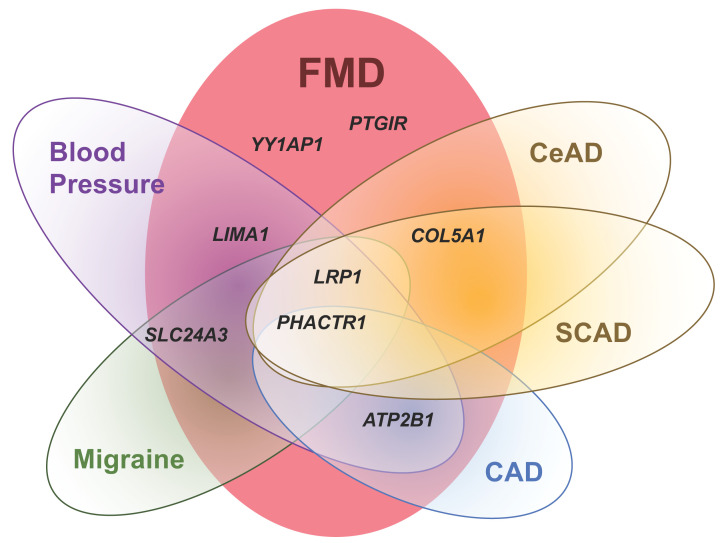
Artery stenosis is a common cause of hypertension and stroke and can be due to atherosclerosis accumulation in the majority of cases and in a small fraction of patients to arterial fibromuscular dysplasia (FMD). Artery stenosis due to atherosclerosis is widely studied with known risk factors (e.g. increasing age, male gender, and dyslipidemia) to influence its etiology, including genetic factors. However, the causes of noninflammatory and nonatherosclerotic stenosis in FMD are less understood. FMD occurs predominantly in early middle-age women, a fraction of the population where cardiovascular risk is different and understudied. FMD arteriopathies are often diagnosed in the context of hypertension and stroke and co-occur mainly with spontaneous coronary artery dissection, an atypical cause of acute myocardial infarction. In this review, we provide a comprehensive overview of the recent advances in the understanding of molecular origins of FMD. Data were obtained from genetic studies using complementary methodological approaches applied to familial, syndromic, and sporadic forms of this intriguing arteriopathy. Rare variation analyses point toward mechanisms related to impaired prostacyclin signaling and defaults in fibrillar collagens. The study of common variation, mainly through a recent genome-wide association study, describes a shared genetic link with blood pressure, in addition to point at potential risk genes involved in actin cytoskeleton and intracellular calcium homeostasis supporting impaired vascular contraction as a key mechanism. We conclude this review with future strategies and approaches needed to fully understand the genetic and molecular mechanisms related to FMD.
Keywords: arteriopathy; cardiovascular disease in women; fibromuscular dysplasia; genetics.
© 2022 The Author(s).
Conflict of interest statement
The authors declare that there are no competing interests associated with the manuscript.
Figures


References
Publication types
MeSH terms
LinkOut - more resources
Full Text Sources
Medical
