. 2022 Sep;609(7926):341-347.
doi: 10.1038/s41586-022-05157-3. Epub 2022 Aug 31.

A microbial supply chain for production of the anti-cancer drug vinblastine

Affiliations

A microbial supply chain for production of the anti-cancer drug vinblastine

Jie Zhang et al. Nature. 2022 Sep.

Abstract

Monoterpene indole alkaloids (MIAs) are a diverse family of complex plant secondary metabolites with many medicinal properties, including the essential anti-cancer therapeutics vinblastine and vincristine1. As MIAs are difficult to chemically synthesize, the world's supply chain for vinblastine relies on low-yielding extraction and purification of the precursors vindoline and catharanthine from the plant Catharanthus roseus, which is then followed by simple in vitro chemical coupling and reduction to form vinblastine at an industrial scale2,3. Here, we demonstrate the de novo microbial biosynthesis of vindoline and catharanthine using a highly engineered yeast, and in vitro chemical coupling to vinblastine. The study showcases a very long biosynthetic pathway refactored into a microbial cell factory, including 30 enzymatic steps beyond the yeast native metabolites geranyl pyrophosphate and tryptophan to catharanthine and vindoline. In total, 56 genetic edits were performed, including expression of 34 heterologous genes from plants, as well as deletions, knock-downs and overexpression of ten yeast genes to improve precursor supplies towards de novo production of catharanthine and vindoline, from which semisynthesis to vinblastine occurs. As the vinblastine pathway is one of the longest MIA biosynthetic pathways, this study positions yeast as a scalable platform to produce more than 3,000 natural MIAs and a virtually infinite number of new-to-nature analogues.


Conflict of interest statement

J.D.K., J.Z., L.G.H., K.V., V.D., S.E.O. and M.K.J. are inventors on pending patent applications. J.D.K. has a financial interest in Amyris, Lygos, Demetrix, Napigen, Apertor Pharmaceuticals, Maple Bio, Ansa Biotechnologies, Berkeley Yeast and Zero Acre Farms. The other authors declare no competing interests.

Figures
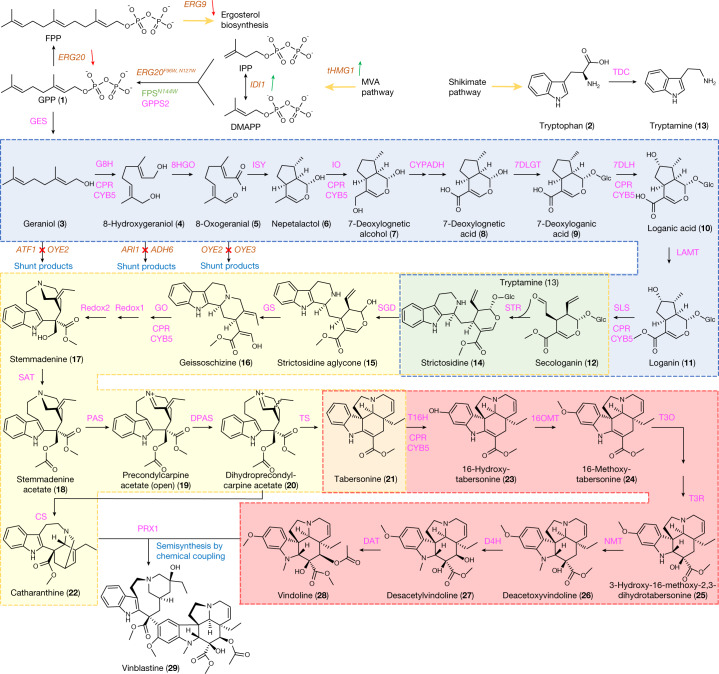
Fig. 1
Fig. 1. Complete biosynthetic pathway for the production of vinblastine in yeast.
Yeast genes (orange) overexpressed, dynamically knocked down or deleted are indicated by green arrows, red arrows and red crosses, respectively. Abbreviations not already defined in the text are as follows: IPP, isopentenyl pyrophosphate; DMAPP, dimethylallyl pyrophosphate; GPPS, GPP synthase; FPSN144W, FPP synthase N144W variant; CPR, NADPH-cytochrome P450 reductase; CYB5, cytochrome b5; GES, geraniol synthase; G8H, geraniol 8-hydroxylase; 8HGO, 8-hydroxygeraniol oxidoreductase; ISY, iridoid synthase; IO, iridoid oxidase; CYPADH, alcohol dehydrogenase 2; 7DLGT, 7-deoxyloganetic acid glucosyl transferase; 7DLH, 7-deoxyloganic acid hydroxylase; LAMT, loganic acid O-methyltransferase; TDC, tryptophan decarboxylase; GS, geissoschizine synthase; GO, geissoschizine oxidase; Redox1, protein redox 1; Redox2, protein redox 2; SAT, stemmadenine-O-acetyltransferase; CS, catharanthine synthase; TS, tabersonine synthase; T16H, tabersonine 16-hydroxylase; 16OMT, tabersonine 16-O-methyltransferase; T3O, tabersonine 3-oxygenase; T3R, 16-methoxy-2,3-dihydro-3-hydroxytabersonine synthase; NMT, 3-hydroxy- 16-methoxy-2,3-dihydrotabersonine-N-methyltransferase; D4H, deacetoxyvindoline 4-hydroxylase; DAT, deacetylvindoline-O-acetyltransferase; PRX1, class III peroxidase. The coloured boxes with dashed lines indicate strictosidine (blue), tabersonine/catharanthine (yellow) and vindoline (red) modules. The overlaps between modules are marked as green (overlap between the strictosidine and tabersonine/catharanthine modules) and orange (overlap between the tabersonine/catharanthine and vindoline modules). The information for all genes is also listed in Supplementary Table 1.
Fig. 2
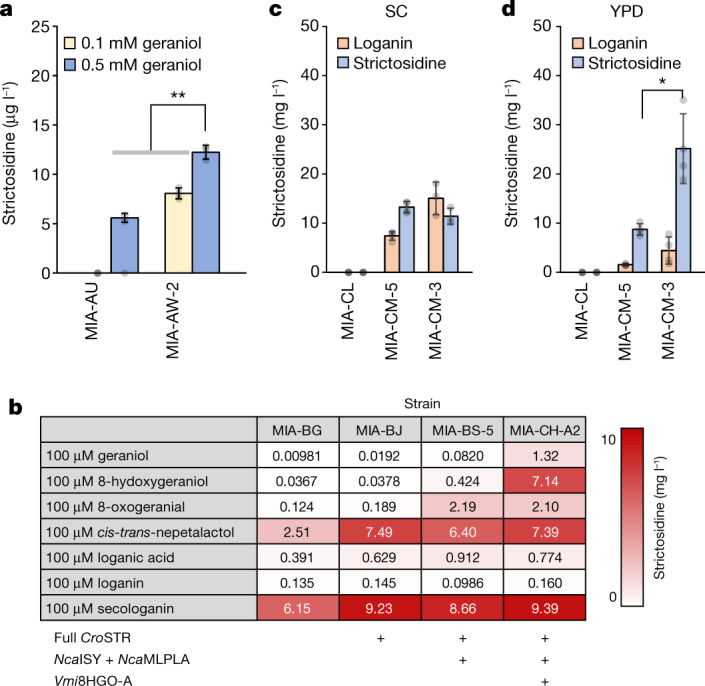
Fig. 2. Engineering and optimization of the strictosidine platform strain.
a, Strictosidine production by strains MIA-AU and MIA-AW-2 grown in SC medium supplemented with strictosidine pathway precursor geraniol. b, Strictosidine production by engineered strains grown in SC medium supplemented with different intermediates of the strictosidine pathway. c,d, De novo strictosidine production from strains grown in SC (c) and YPD (d) medium. Data are presented as mean ± s.d. (n = 3–4) (a,c,d). *P value  0.05; **P < 0.01. Student’s two-tailed t-test. More statistical analysis is available in the source data file. Source data
Fig. 3
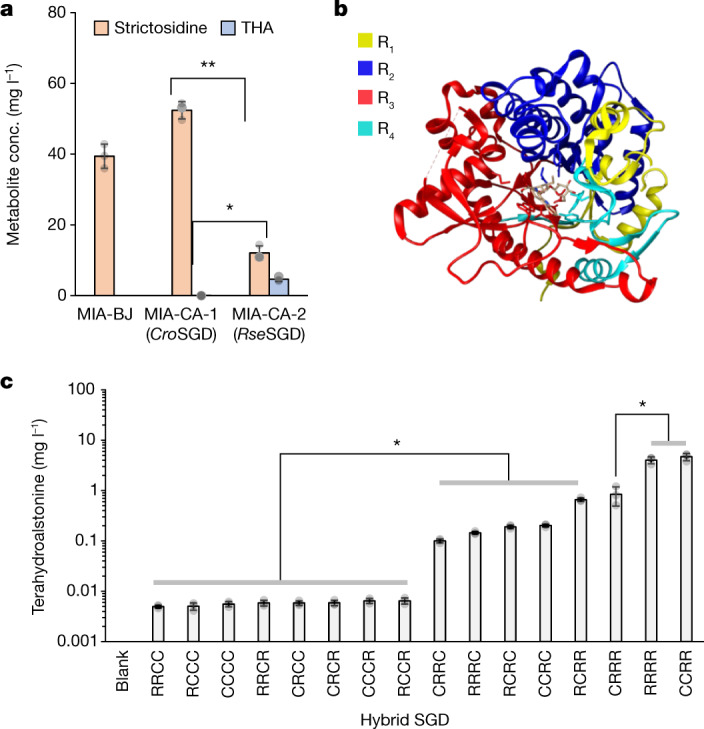
Fig. 3. Functionalization of strictosidine-β-d-glucosidase (SGD) in yeast.
a, THA production in yeast strains expressing CroSTR and CroTHAS together with SGD from C. roseus (CroSGD) or R. serpentina (RseSGD). conc., concentration. b, RseSGD protein divided into four domains on the basis of sequence conservation between CroSGD and RseSGD, denoted as R1 (yellow), R2 (blue), R3 (red) and R4 (cyan); crystal structure (PDB ID 2jf6). c, THA production from hybrid SGDs constructed by shuffling four domains between C. roseus (indicated by C) and R. serpentina (indicated by R) sequences. The first letter of the hybrid SGDs on the x axis is domain 1, the second letter domain 2 and so on. Data are presented as mean ± s.d. (n = 3) (a,c). *P < 0.01; **P <0.0001. Student’s two-tailed t-test. More statistical analysis is available in the source data file. Source data
Fig. 4
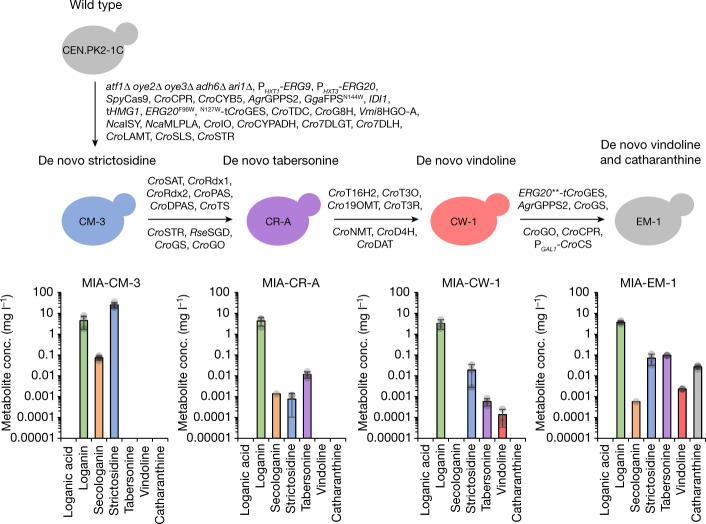
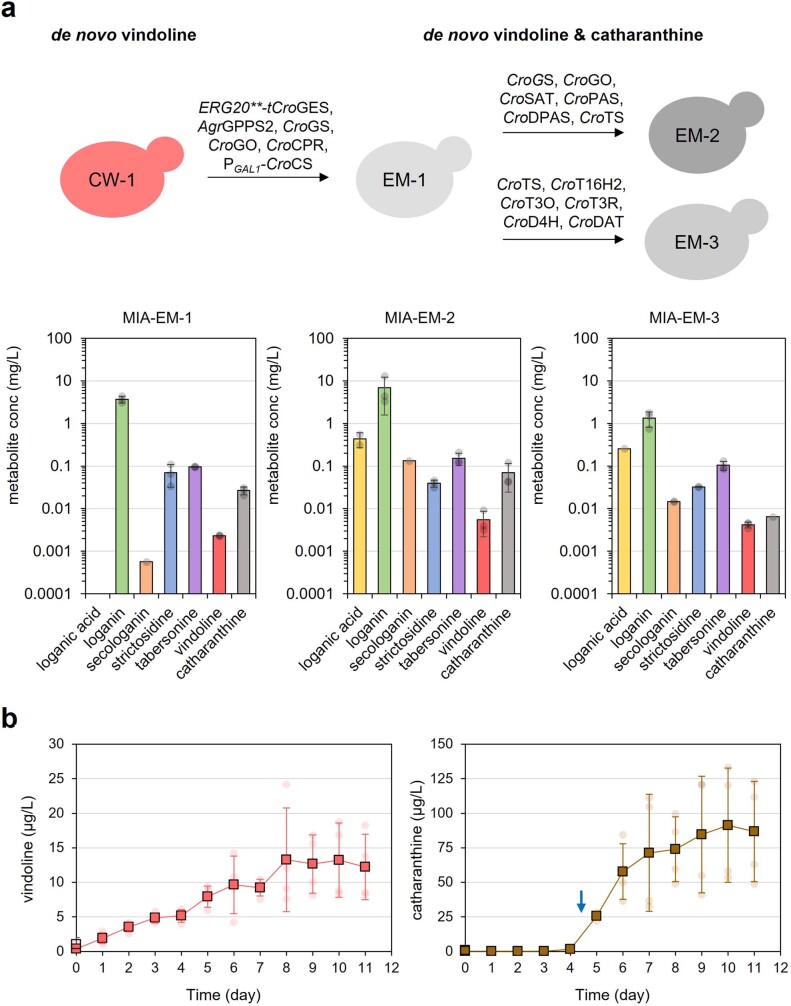
Fig. 4. De novo synthesis of strictosidine, tabersonine, vindoline and catharanthine in engineered yeast strains.
Strains MIA-CM-3 and MIA-CR-A were grown in 96-well deep plates containing 0.5 ml of SC medium. Strain MIA-CW-1 was grown in a 24-well deep plate (2 ml). Strain MIA-EM-1 was grown in a 48-well BioLector Pro flower-shaped plate (1 ml) with continuous feeding of glucose (fed-batch). Data represented are mean ± s.d. (n = 3–4). C. roseus catharanthine synthase, CroCS. Source data
Extended Data Fig. 1
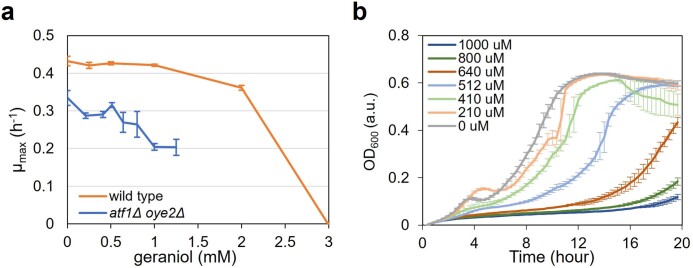
Extended Data Fig. 1. Impact of geraniol on cell growth.
A. Growth rates of the wild-type and atf1Δ oye2Δ double knockout strains. The wild-type strain was grown in media supplemented with 0-4 mM geraniol concentrations of geraniol and measured absorbance at 600 nm (OD600). B. Growth curves of atf1Δ oye2Δ strain in the presence of 0-1 mM geraniol. Higher concentrations of geraniol caused retarded growth and a dramatically longer lag-phase. Data presented are mean ± s.d. (n = 3). Source data
Extended Data Fig. 2
Extended Data Fig. 2. Analysis of proteins in the strictosidine module.
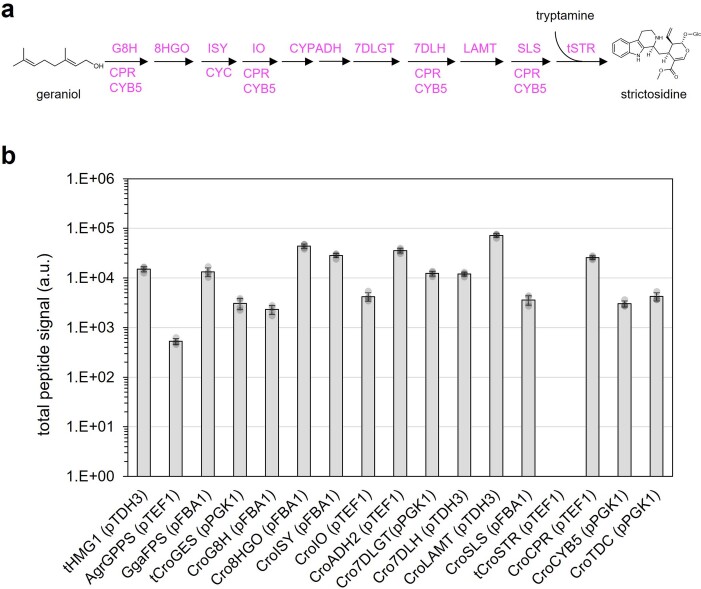
a. All biosynthetic genes in the strictosidine module were integrated into the wild-type strain CEN.PK2-1C; b. Measurement of protein abundance in strain MIA-AU using a shotgun targeted proteomics approach. CroSTR was below the detection limit. Data presented are mean ± s.d. (n = 3-4). Source data
Extended Data Fig. 3
Extended Data Fig. 3. Design of EZ-Swap strains.
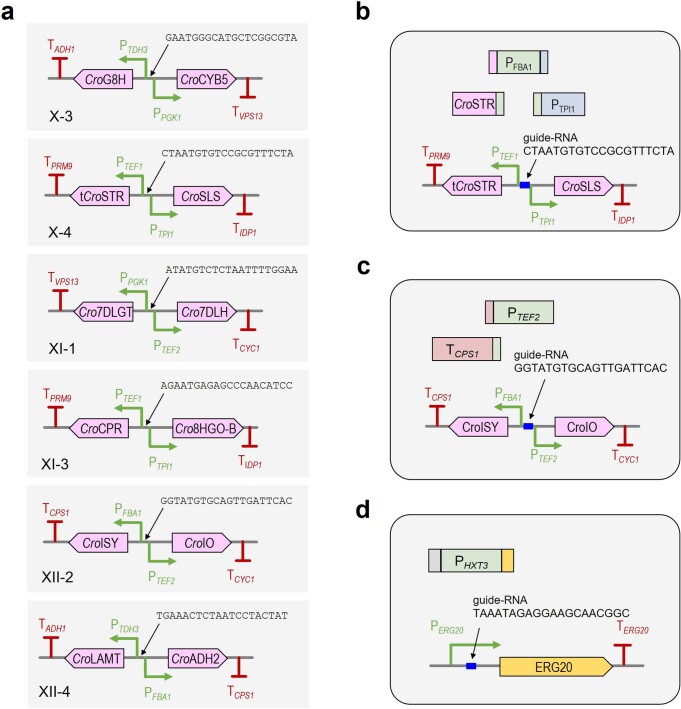
a. Genetic design of EZ-Swap base strain MIA-BG; b. Strategy for swapping tCroSTR with full length CroSTR; c. Strategy for knocking out CroISY; d. Strategy for replacing PERG20 with PHXT3 for dynamic knockdown of ERG20.
Extended Data Fig. 4
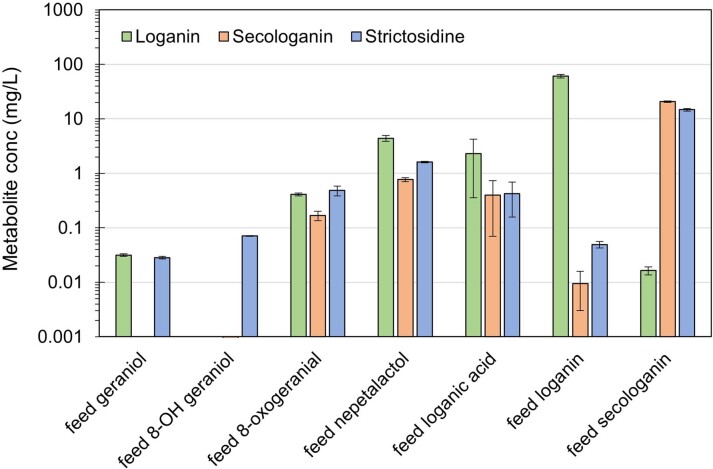
Extended Data Fig. 4. Strictosidine production in MIA-BG strain by feeding tryptamine and one of the strictosidine precursors.
Data presented are mean ± s.d. (n = 3). Source data
Extended Data Fig. 5
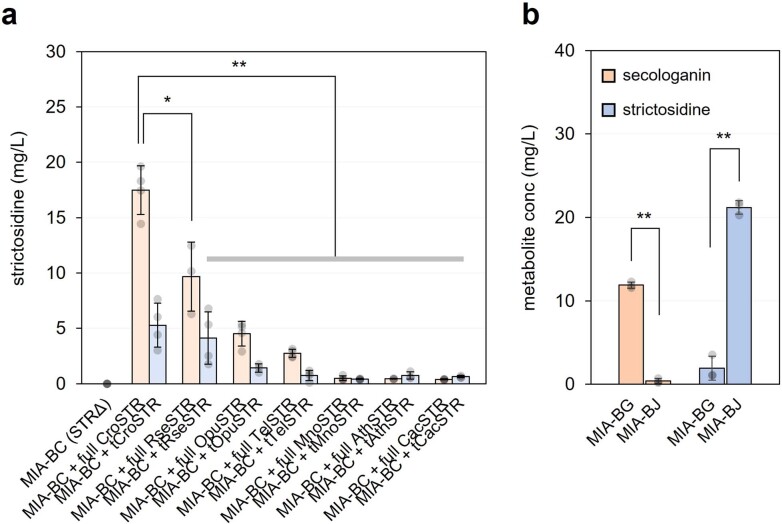
Extended Data Fig. 5. Screening of strictosidine synthase homologues.
a. Screening full-length and truncated STR variants in a strain without STR (MIA-BC); b. Conversion of secologanin to strictosidine by truncated CroSTR and full-length CroSTR. Data presented are mean ± s.d. (n = 3). * p-value < 0.05; ** p-value < 0.001. Student’s two-tailed t-test. More statistical analysis is available in the source data file. Source data
Extended Data Fig. 6
Extended Data Fig. 6. Screening of iridoid synthase (ISY) and cyclase (CYC) combinations for efficient conversion of 8-oxogeranial to cis-trans-nepetalactol.
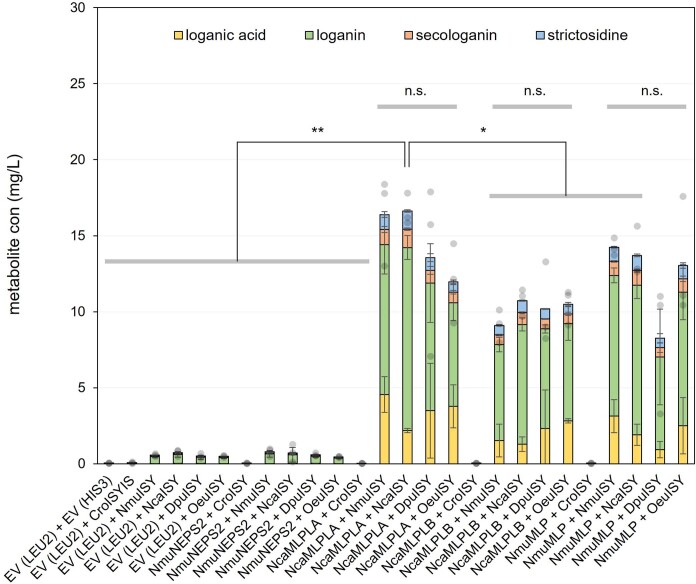
Combinations of ISY and CYC were transformed into the MIA-BKV-1 strain (MIA-BJ without ISY/CYC). All ISYs and CYCs are under the control of GAL1 or GAL10 promoters. All yeast transformants (three biological replicates) were grown in SC medium (lacking histidine and leucine for selection of the two plasmids) containing 1.5% glucose and 1.5% galactose as carbon sources. All cultures were supplemented with 100 μM 8-oxogeranial and 100 μM tryptamine. After 3 days, additional 0.5% galactose and 100 μM 8-oxogeranial were added to the culture. Loganic acid, loganin, secologanin and strictosidine were measured and combined values were used as an approximate for total production of cis-trans-nepetalactol. EV, empty vector. Data presented are mean ± s.d. (n = 3). n.s. not significant; * p-value < 0.05; ** p-value < 0.01. Student’s two-tailed t-test. More statistical analysis is available in the source data file. Source data
Extended Data Fig. 7
Extended Data Fig. 7. Screening of 8HGO variants for efficient conversion of 8-hydroxygeraniol to 8-oxogeranial.
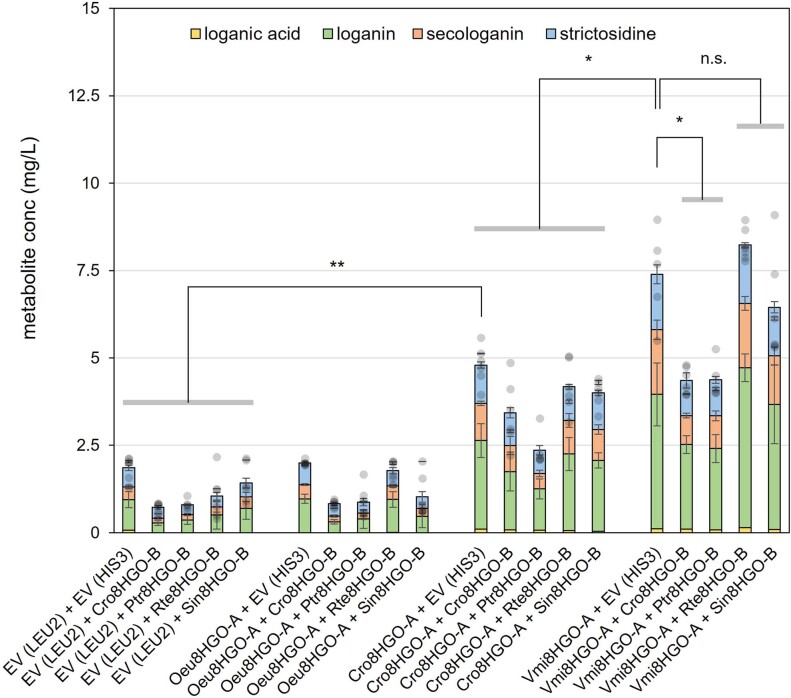
A combinatorial library of homologues of two 8HGO variants (A-type: NAD+-dependent, B-type: NADP+-dependent) were transformed into MIA-BKV-5 strain (8HGO deleted from strain MIA-BS-5). All 8HGO variants are under the control of GAL1 or GAL10 promoters. All yeast transformants were grown in SC medium (lacking histidine and leucine for selection of the two plasmids) containing 1% glucose and 1% galactose as carbon sources. All cultures were supplemented with 100 μM 8-hydroxygeraniol and 1 mM tryptamine and grown for 6 days. Loganic acid, loganin, secologanin and strictosidine were measured and combined as an indicator for total production of 8-hydroxygeraniol. EV, empty vector. Data presented are mean ± s.d. for each metabolite (n = 5-6). n.s. not significant; * p-value < 0.05; ** p-value < 0.01. Student’s two-tailed t-test. More statistical analysis is available in the source data file. Source data
Extended Data Fig. 8
Extended Data Fig. 8. Screening of SGD homologs.
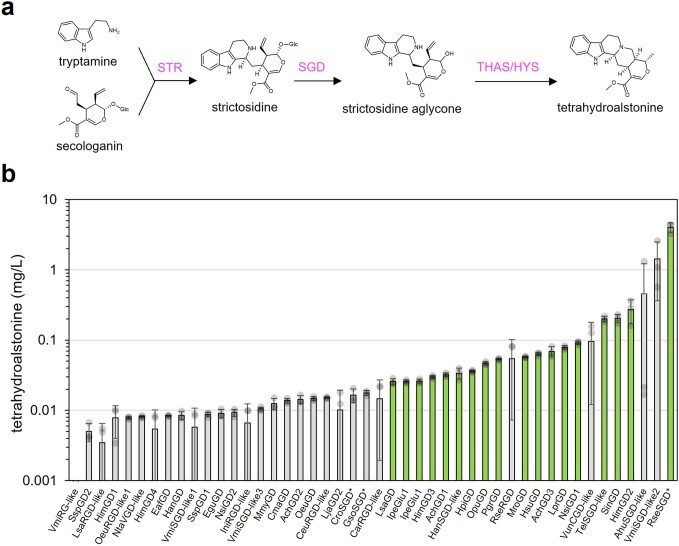
a. tetrahydroalstonine biosynthesis pathway from tryptamine and secologanin; b. Production of THA in yeast strains expressing CroSTR, CroHYS and one of the SGD homologs (Supplementary Table 1). Asterisk indicates the data were from a different experiment but under the same condition (SC medium + 100 μM secologanin + 1 mM tryptamine, cultivated for six days and analyzed on LC-MS). Data presented are mean ± s.d. (n = 3). Green color indicates significantly higher production compared to CroSGD (p-value < 0.05, Student’s two-tailed t-test). More statistical analysis is available in the source data file. Source data
Extended Data Fig. 9
Extended Data Fig. 9. Functional expression of the tabersonine/catharanthine and vindoline modules.
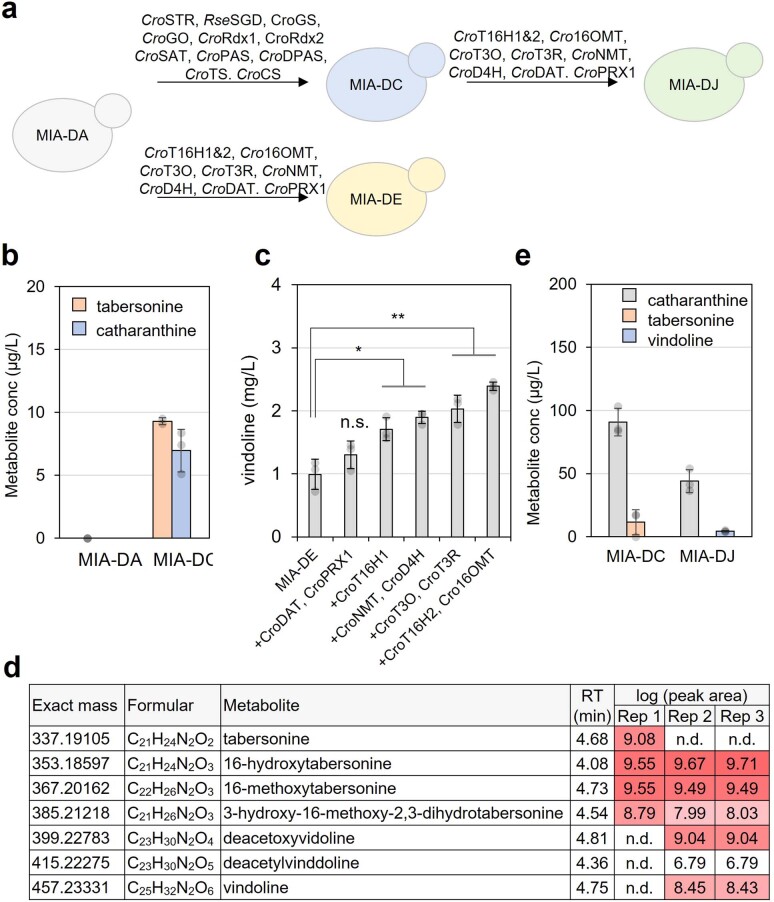
a. Construction of yeast strains for the functional expression of the tabersonine/catharanthine module (MIA-DC), the vindoline module (MIA-DE), and the tabersonine/catharanthine+vindoline modules (MIA-DJ); b. Production of catharanthine and tabersonine from fed 0.05 mM secologanin and 1 mM tryptamine; c. Production of vindoline from fed 0.05 mM tabersonine by strain MIA-DE expressing an additional copy of one or two genes from a centromeric plasmid; d. production of catharanthine, tabersonine and vindoline in MIA-DC and MIA-DJ strains fed with 0.1 mM secologanin and 1 mM tryptamine. e. Peak area of vindoline module intermediates in the cultivation of strain MIA-DE fed with 0.1 mM catharanthine and tabersonine. Data presented are mean ± s.d. (n = 3). * p-value < 0.05; ** p-value < 0.01; n.s., not significant. More statistical analysis is available in the source data file. Source data
Extended Data Fig. 10
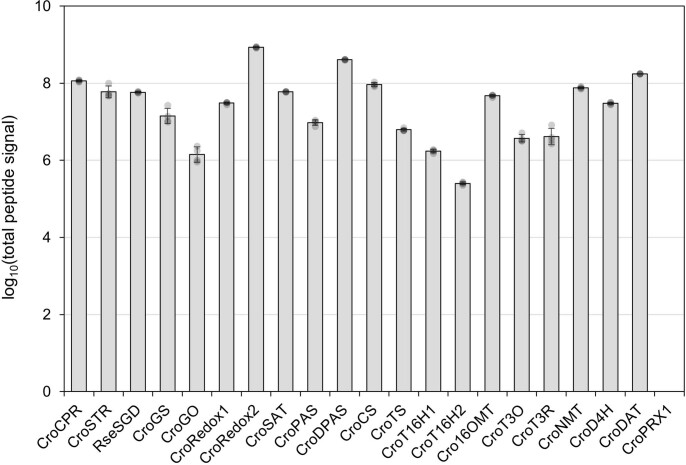
Extended Data Fig. 10. Relative abundance of all proteins involved in the tabersonine and vindoline modules.
The average value of unique peptide sequences for each protein was determined by untargeted proteomics from four biological replicates. All protein abundances were baseline corrected using background signals detected from a wild-type strain without any MIA genes. CroPRX1 was not detected in any of the replicates. Data presented are mean ± s.d. (n = 3).
Extended Data Fig. 11
Extended Data Fig. 11. De novo production of catharanthine and vindoline in fed-batch cultivations.
a. De novo vindoline production by MIA-CW-1 and MIA-EM strain series in BioLector Pro (1 mL) fed-batch cultivations. b. De novo vindoline and catharanthine production by fed-batch cultivations of strain MIA-EM-2 in ambr®250 bioreactors. The blue arrow in the catharanthine panel indicates the start of galactose induction. Data presented are all replicates (dots), and mean (square box) ± s.d. (n = 4).
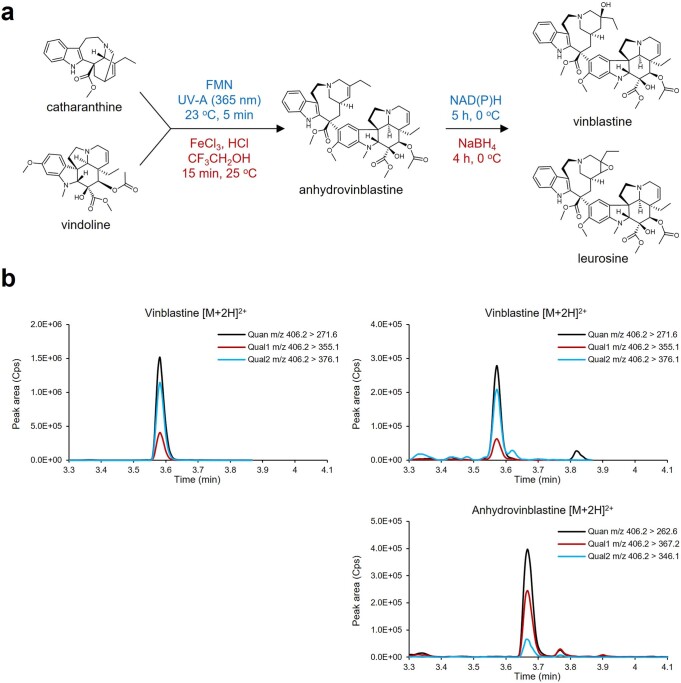
Extended Data Fig. 12
Extended Data Fig. 12. Semi-synthesis of vinblastine by coupling of vindoline and catharanthine.
a. Semi-synthesis of vinblastine by chemical coupling of catharanthine and vindoline. Two methods were used for the coupling of vindoline and catharanthine, a photo-chemical coupling under near-UV light followed by reduction using NADH, and a chemical coupling using FeCl3, followed by reduction using NaBH42; b. Representative chromatograms of vinblastine standard (left), and vinblastine and anhydrovinblastine produced from the Fe(III)-based chemical coupling using yeast-produced catharanthine and vindoline (right). FMN: flavin mononucleotide.

Comment in

References

    1. van Der Heijden R, Jacobs DI, Snoeijer W, Hallard D, Verpoorte R. The Catharanthus alkaloids: pharmacognosy and biotechnology. Curr. Med. Chem. 2004;11:607–628. doi: 10.2174/0929867043455846. - DOI - PubMed
    1. Ishikawa H, et al. Total synthesis of vinblastine, vincristine, related natural products, and key structural analogues. J. Am. Chem. Soc. 2009;131:4904–4916. doi: 10.1021/ja809842b. - DOI - PMC - PubMed
    1. Jeong WT, Lim HB. A UPLC-ESI-Q-TOF method for rapid and reliable identification and quantification of major indole alkaloids in Catharanthus roseus. J. Chromatogr. B. Analyt. Technol. Biomed. Life Sci. 2018;1080:27–36. doi: 10.1016/j.jchromb.2018.02.018. - DOI - PubMed
    1. Brown S, Clastre M, Courdavault V, O’Connor SE. De novo production of the plant-derived alkaloid strictosidine in yeast. Proc. Natl Acad. Sci. USA. 2015;112:3205–3210. doi: 10.1073/pnas.1423555112. - DOI - PMC - PubMed
    1. O’Connor SE, Maresh JJ. Chemistry and biology of monoterpene indole alkaloid biosynthesis. Nat. Prod. Rep. 2006;23:532–547. doi: 10.1039/b512615k. - DOI - PubMed

MeSH terms