


Association of orofacial dysfunction and sleep disordered breathing among Indian primary school children
- PMID: 36045941
- PMCID: PMC9421321
- DOI: 10.1016/j.jobcr.2022.08.002
Association of orofacial dysfunction and sleep disordered breathing among Indian primary school children
Erratum in
-
Erratum regarding missing declaration of competing interest statements in previously published articles.J Oral Biol Craniofac Res. 2024 Jul-Aug;14(4):358-359. doi: 10.1016/j.jobcr.2024.05.010. Epub 2024 May 22. J Oral Biol Craniofac Res. 2024. PMID: 38826840 Free PMC article.
Abstract
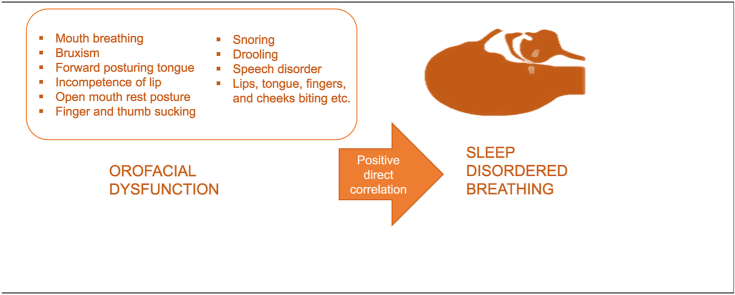
Introduction: Sleep-disordered breathing (SDB) ranges from partial obstruction of the upper airway resulting in snoring to total upper airway obstruction leading to obstructive sleep apnea. The impairment in the dynamics of the stomatognathic system is termed as orofacial dysfunction. This study investigates the prevalence of orofacial dysfunction and sleep-disordered breathing in primary school children and identifies their correlation.
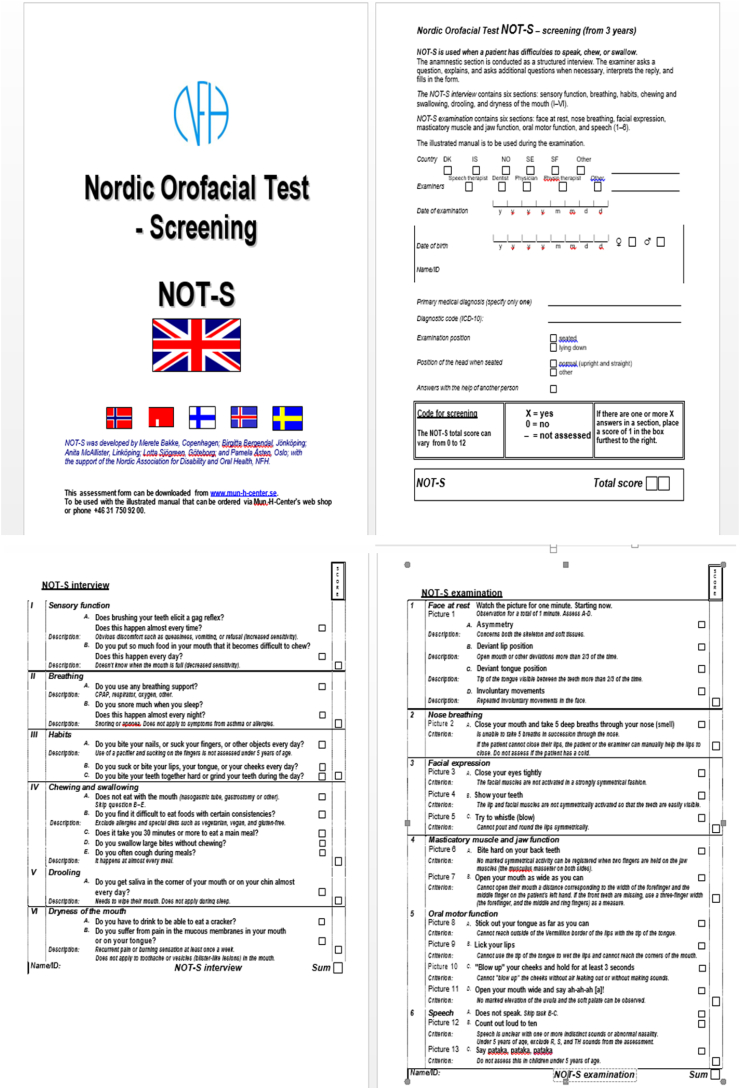
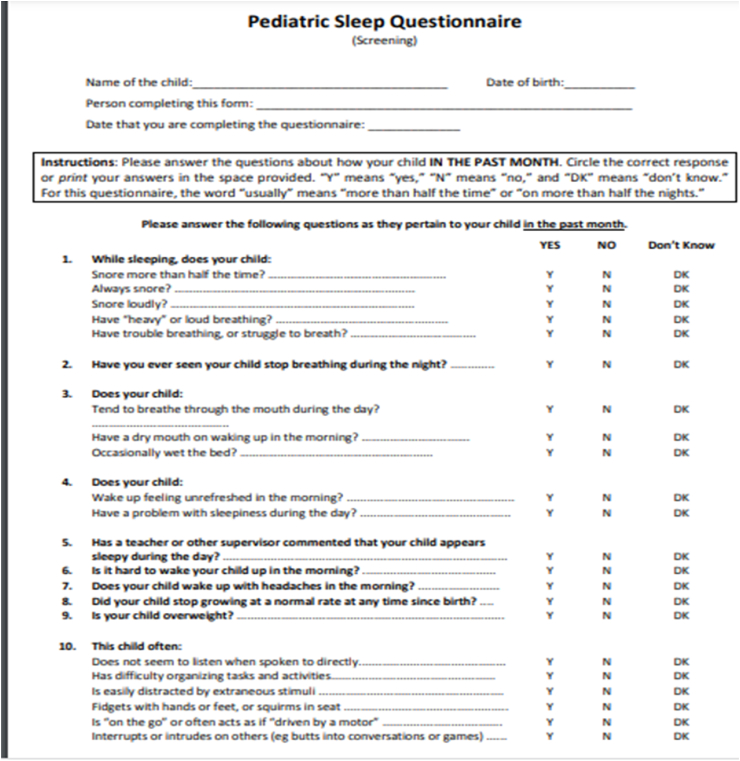
Methods: A total of 560 forms were distributed to 8 primary schools in Belagavi city. Among them, 482 parents responded (86% response rate), which included 239 boys (49.58%) and 243 girls (50.41%). All the participants were screened for orofacial dysfunction using Nordic Orofacial Dysfunction Test-screening (NOT-S) and sleep-disordered breathing using the Pediatric Sleep Questionnaire (PSQ).
Result: A positive direct correlation of sleep-disordered breathing with orofacial dysfunction (r = 0.47; p ≤ 0.001) was noted. A total of 41(8.58%) children were found to be at risk of sleep-disordered breathing with a score less than or equal to eight, based on (PSQ) Pediatric Sleep Questionnaire, and 156 (32.6%) children showed symptoms of orofacial dysfunction based on Nordic Orofacial Test-Screening (NOT-S).
Conclusion: The study demonstrates that around 32.6% of children had orofacial dysfunction symptoms, and 8.58% of children were at risk for sleep-disordered breathing, girls having a greater risk as compared to boys. There was a positive correlation between orofacial dysfunction and sleep-disordered breathing among children aged 6-12 years.
Keywords: Indian children; NOT-S; Orofacial dysfunction; Pediatric sleep questionnaire; Sleep disordered breathing.
© 2022 Craniofacial Research Foundation. Published by Elsevier B.V. All rights reserved.
Figures
References
-
- Sinha D., Guilleminault C. Sleep disordered breathing in children. Indian J Med Res. 2010;131(2):311. - PubMed
-
- Gozal D., O'Brien L.M. Snoring and obstructive sleep apnoea in children: why should we treat? Paediatr Respir Rev. 2004;5:S371–S376. - PubMed
-
- Krogman W.M., Mazaheri M., Harding R.L., et al. A longitudinal study of the craniofacial growth pattern in children with clefts as compared to normal, birth to six years. Cleft Palate J. 1975;12(1):59–84. - PubMed
-
- Guilleminault C., Sullivan S.S., Huang Y.S. Sleep-disordered breathing, orofacial growth, and prevention of obstructive sleep apnea. Sleep med clin. 2019;14(1):13–20. - PubMed
LinkOut - more resources
Full Text Sources
