


Metabolic profiling of Lantana camara L. using UPLC-MS/MS and revealing its inflammation-related targets using network pharmacology-based and molecular docking analyses
- PMID: 36050423
- PMCID: PMC9436993
- DOI: 10.1038/s41598-022-19137-0
Metabolic profiling of Lantana camara L. using UPLC-MS/MS and revealing its inflammation-related targets using network pharmacology-based and molecular docking analyses
Abstract
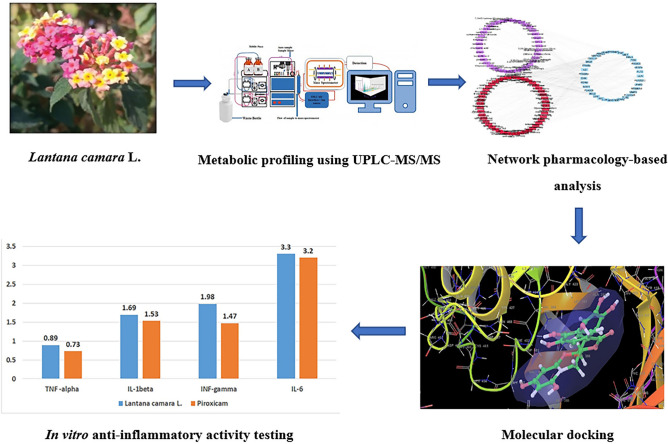
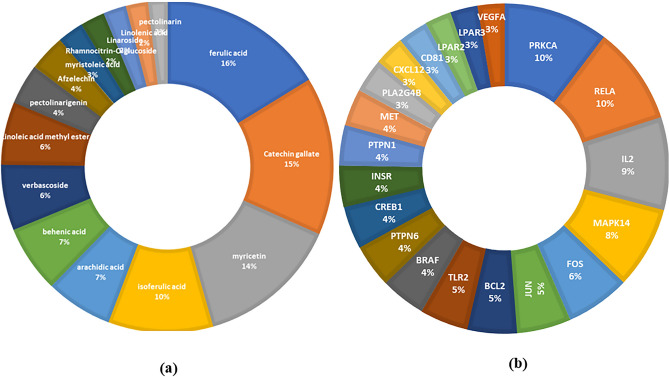
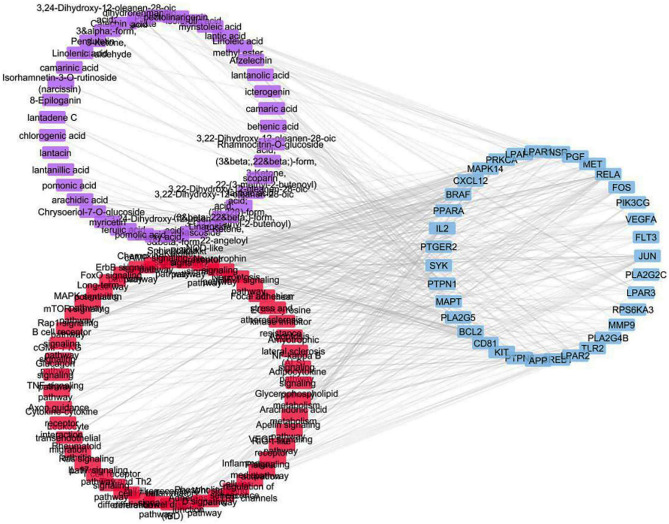
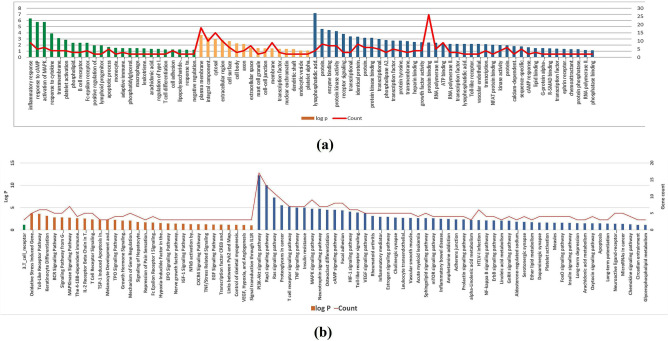
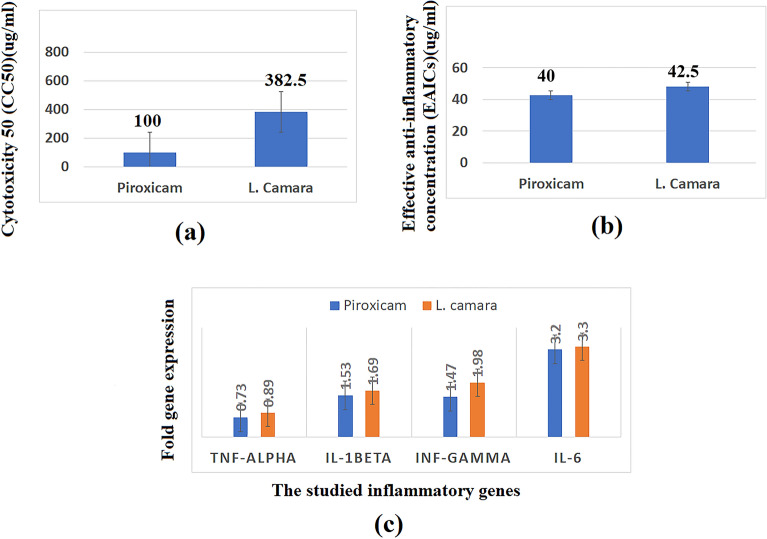
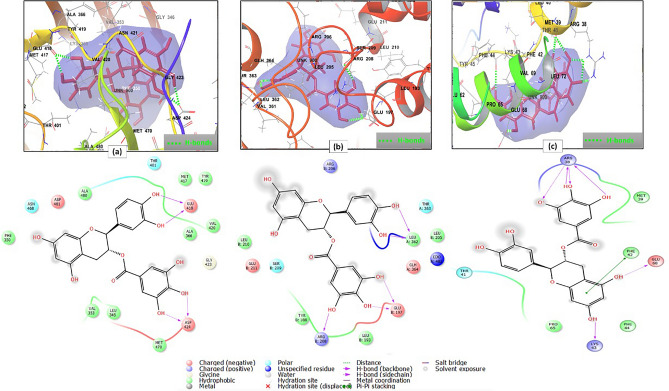
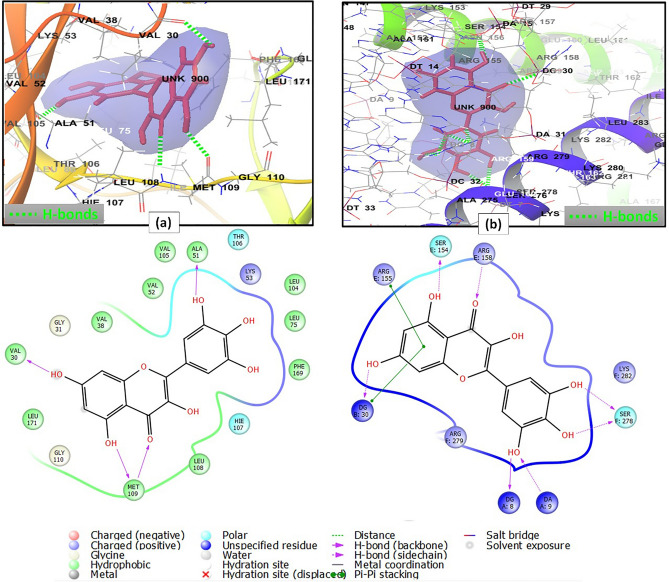
Lantana camara L. is widely used in folk medicine for alleviation of inflammatory disorders, but studies that proved this folk use and that revealed the molecular mechanism of action in inflammation mitigation are not enough. Therefore, this study aimed to identify L. camara phytoconstituents using UPLC-MS/MS and explain their multi-level mechanism of action in inflammation alleviation using network pharmacology analysis together with molecular docking and in vitro testing. Fifty-seven phytoconstituents were identified in L. camara extract, from which the top hit compounds related to inflammation were ferulic acid, catechin gallate, myricetin and iso-ferulic acid. Whereas the most enriched inflammation related genes were PRKCA, RELA, IL2, MAPK 14 and FOS. Furthermore, the most enriched inflammation-related pathways were PI3K-Akt and MAPK signaling pathways. Molecular docking revealed that catechin gallate possessed the lowest binding energy against PRKCA, RELA and IL2, while myricetin had the most stabilized interaction against MAPK14 and FOS. In vitro cytotoxicity and anti-inflammatory testing indicated that L. camara extract is safer than piroxicam and has a strong anti-inflammatory activity comparable to it. This study is a first step in proving the folk uses of L. camara in palliating inflammatory ailments and institutes the groundwork for future clinical studies.
© 2022. The Author(s).
Conflict of interest statement
The authors declare no competing interests.
Figures
References
-
- Gopi S, Amalraj A, Kunnumakkara A, Thomas S. Inflammation and Natural Products. Academic Press; 2021.
-
- Patil SM, Saini R. Anti-inflammatory and analgesic activities of methanol extract of roots of Lantana camara Linn. J. Pharm. Res. 2012;5:1034–1036.
-
- Ashal TF, Ifora I, Oktavia S. Potential anti-inflammatory effects of Lantana camara L.: A review. Int. Res. J. Pharm. Med. Sci. 2020;3:1–4.
-
- Kohli RK, Batish DR, Singh HP, Dogra KS. Status, invasiveness and environmental threats of three tropical American invasive weeds (Parthenium hysterophorus L., Ageratum conyzoides L., Lantana camara L.) in India. Biol. Invasions. 2006;8:1501–1510. doi: 10.1007/s10530-005-5842-1. - DOI
Publication types
MeSH terms
Substances
LinkOut - more resources
Full Text Sources
Miscellaneous
