


Comparison between cuff-based and invasive systolic blood pressure amplification
- PMID: 36052526
- PMCID: PMC7614121
- DOI: 10.1097/HJH.0000000000003228
Comparison between cuff-based and invasive systolic blood pressure amplification
Abstract
Objective: Accurate measurement of central blood pressure (BP) using upper arm cuff-based methods is associated with several factors, including determining the level of systolic BP (SBP) amplification. This study aimed to determine the agreement between cuff-based and invasively measured SBP amplification.
Methods: Patients undergoing coronary angiography had invasive SBP amplification (brachial SBP - central SBP) measured simultaneously with cuff-based SBP amplification using a commercially available central BP device (device 1: Sphygmocor Xcel; n = 171, 70% men, 60 ± 10 years) and a now superseded model of a central BP device (device 2: Uscom BP+; n = 52, 83% men, 62 ± 10 years).
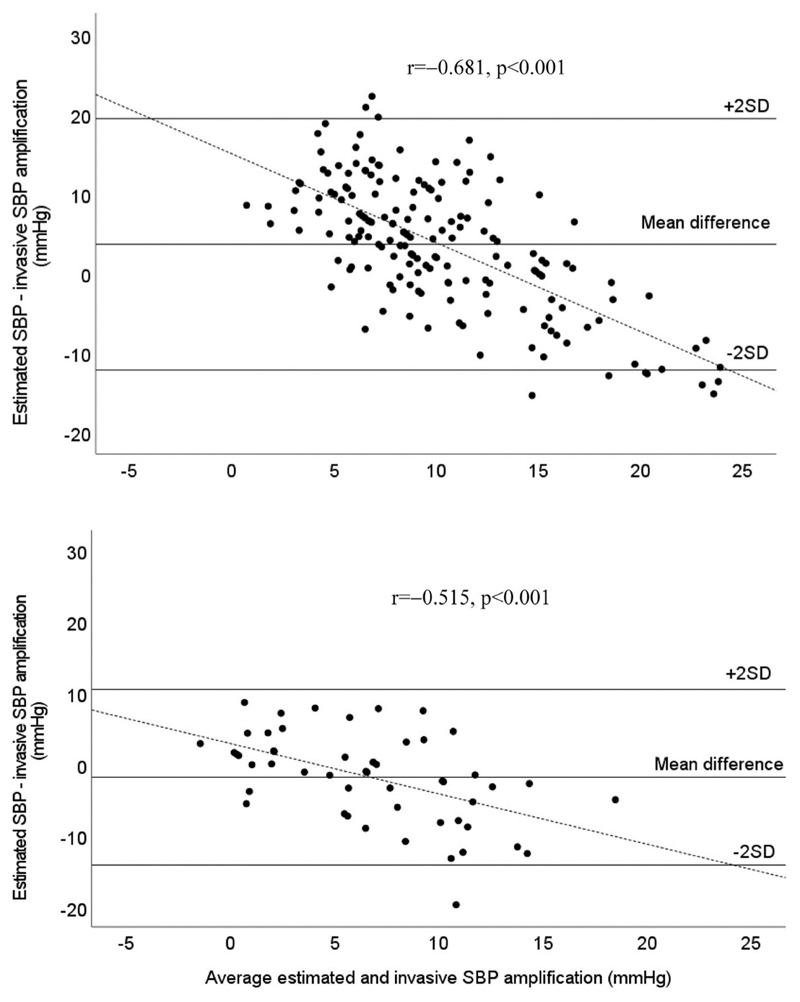
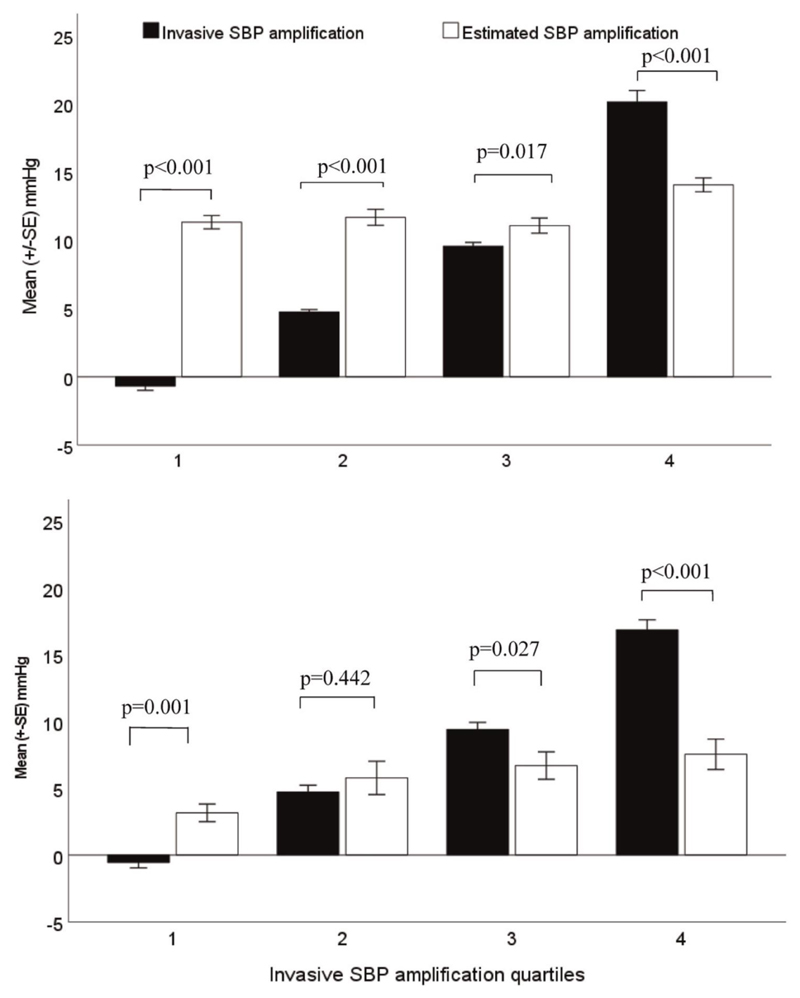
Results: Mean difference (±2SD, limits of agreement) between cuff-based and invasive SBP amplification was 4 mmHg (-12, +20 mmHg, P < 0.001) for device 1 and -2 mmHg (-14, +10 mmHg, P = 0.10) for device 2. Both devices systematically overestimated SBP amplification at lower levels and underestimated at higher levels of invasive SBP amplification, but with stronger bias for device 1 (r = -0.68 vs. r = -0.52; Z = 2.72; P = 0.008). Concordance of cuff-based and invasive SBP amplification across quartiles of invasive SBP amplification was low, particularly in the lowest and highest quartiles. The root mean square errors from regression between cuff-based central SBP and brachial SBP were significantly lower (indicating less variability) than from invasive regression models (P < 0.001).
Conclusions: Irrespective of the difference from invasive measurements, cuff-based estimates of SBP amplification showed evidence of proportional systematic bias and had less individual variability. These observations could provide insights on how to improve the performance of cuff-based central BP.
Copyright © 2022 Wolters Kluwer Health, Inc. All rights reserved.
Conflict of interest statement
There are no conflicts of interest.
Figures
References
-
- Olsen MH, Angell SY, Asma S, Boutouyrie P, Burger D, Chirinos JA, et al. A call to action and a lifecourse strategy to address the global burden of raised blood pressure on current and future generations: the Lancet Commission on hypertension. Lancet. 2016;388:2665–2712. - PubMed
-
- Picone DS, Schultz MG, Otahal P, Aakhus S, Al-Jumaily AM, Black JA, et al. Accuracy of cuff-measured blood pressure: systematic reviews and meta-analyses. JAm Coll Cardiol. 2017;0:572–586. - PubMed
-
- Millasseau S, Agnoletti D. Noninvasive estimation of aortic blood pressures: a close look at current devices and methods. Curr Pharm Des. 2015;21:709–718. - PubMed
Publication types
MeSH terms
Grants and funding
LinkOut - more resources
Full Text Sources
