


The challenges and gains of delivering a home-exercise intervention: a qualitative study of physiotherapists and physiotherapy assistants
- PMID: 36057590
- PMCID: PMC9440491
- DOI: 10.1186/s12891-022-05790-z
The challenges and gains of delivering a home-exercise intervention: a qualitative study of physiotherapists and physiotherapy assistants
Abstract
Objectives: The paper presents insights from the Community based Rehabilitation after Knee Arthroplasty (CORKA) trial. We aimed to explore physiotherapists and physiotherapy assistants' experiences of delivering a home-base exercise intervention following knee replacement surgery. We were particularly interested in the feasibility, potential benefits and barriers of a community-based exercise programme from the perspective of physiotherapists and physiotherapy assistants and to understand any constraints or training needs that arose. DESIGN: Qualitative thematic analysis of semi-structured interviews. SETTING: The Community based Rehabilitation after Knee Arthroplasty (CORKA) trial.
Participants: Five physiotherapists and six physiotherapy assistants with a range of clinical experience.
Methods: Interviews were digitally recorded and transcribed verbatim. We used the stages of reflexive thematic analysis suggested by Braun and Clarke. One researcher conducted the interviewers whilst three researchers with experience in qualitative research methods contributed to the coding and analysis of data.
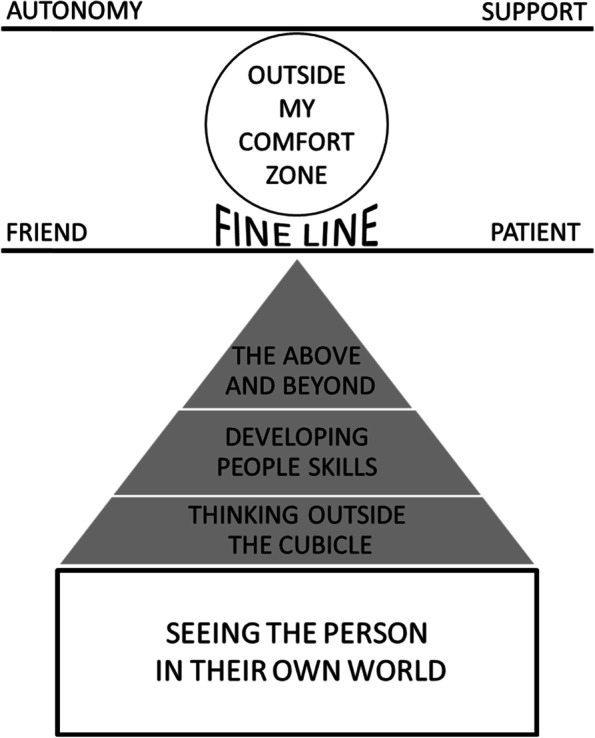
Results: We developed seven themes that help to understand the benefits and challenges of delivering treatment interventions in a person's home: seeing the person in their own world; thinking outside the cubicle;developing people skills; enjoying the above and beyond; treading a fine line between patient and friend; feeling outside my comfort zone; needing a support network.
Conclusions: Treating people in their own homes facilitates a holistic approach. Our findings highlight areas for clinical education: (1) how do we help clinicians to tread the fine line between friend and professional (2) how do we balance the need to provide support and structure with the freedom to work creatively and independently?
Keywords: Knee arthroplasty; Physiotherapy; Physiotherapy assistant; Qualitative research.
© 2022. The Author(s).
Conflict of interest statement
The authors declare that they have no competing interests.
References
-
- National Joint Registry 18th Annual Report 2021. https://reports.njrcentre.org.uk/Portals/0/PDFdownloads/NJR%2018th%20Ann.... Accessed 30 July 2022.
-
- Barker KL, Room J, Knight R, Dutton SJ, Toye F, Leal J, Kent S, Kenealy N, Schussel MM, Collins G, Beard DJ, Price A, Underwood M, Drummond A, Cook E, Lamb SE. Home-based rehabilitation programme compared with traditional physiotherapy for patients at risk of poor outcome after knee arthroplasty: the CORKA randomised controlled trial. BMJ Open. 2021;11(8):e052598. doi: 10.1136/bmjopen-2021-052598. - DOI - PMC - PubMed
-
- NHS-ENGLAND 2019. The NHS Long Term Plan. https://www.longtermplan.nhs.uk/wpcontent/uploads/2019/08/nhs-long-term-.... Accessed 23 July 2022.
MeSH terms
Grants and funding
LinkOut - more resources
Full Text Sources
