


Hot water plumbing in residences and office buildings have distinctive risk of Legionella pneumophila contamination
- PMID: 36058110
- PMCID: PMC9848435
- DOI: 10.1016/j.ijheh.2022.114023
Hot water plumbing in residences and office buildings have distinctive risk of Legionella pneumophila contamination
Abstract
Aim: To observe how Legionella pneumophila, the causative agent for legionellosis, can transmit through the hot water plumbing of residences and office buildings.
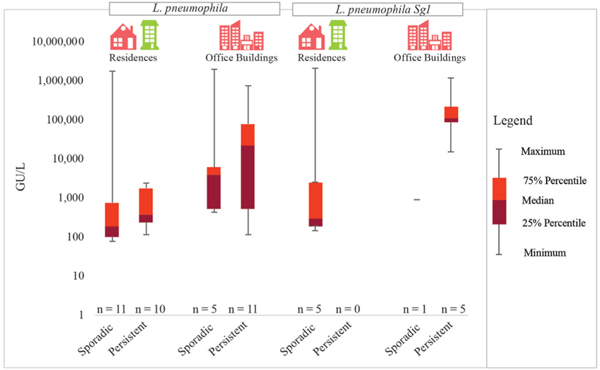
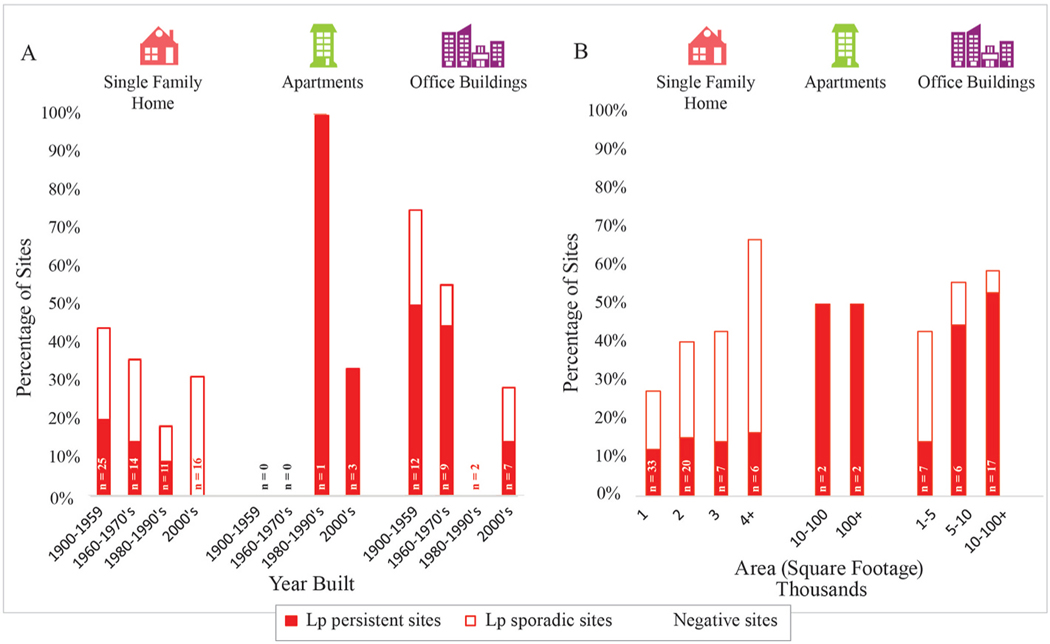
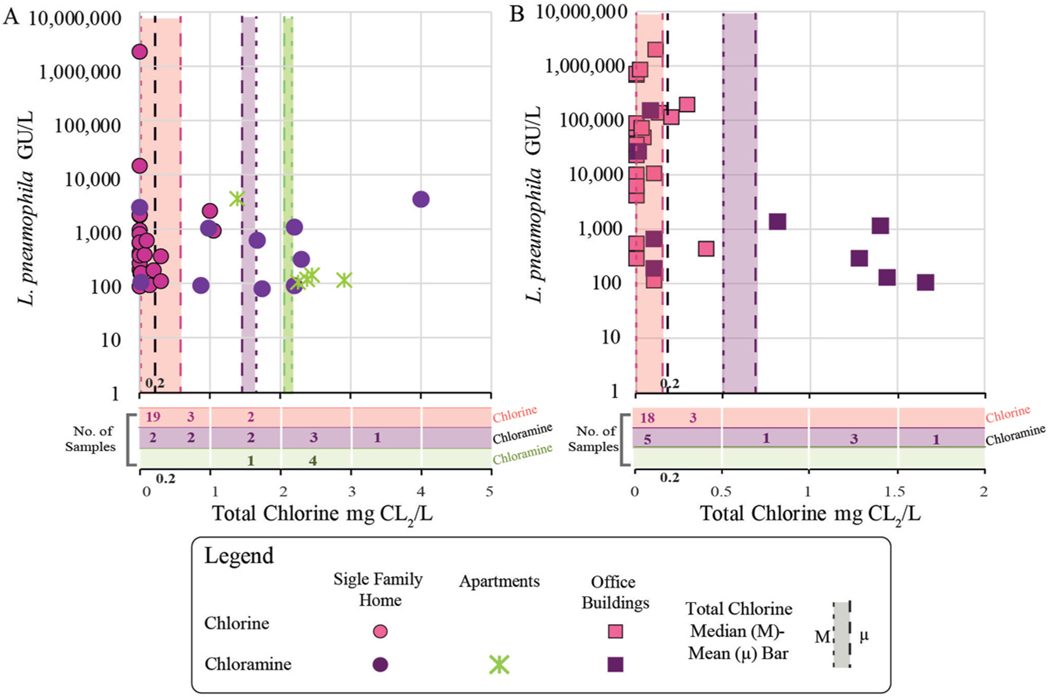
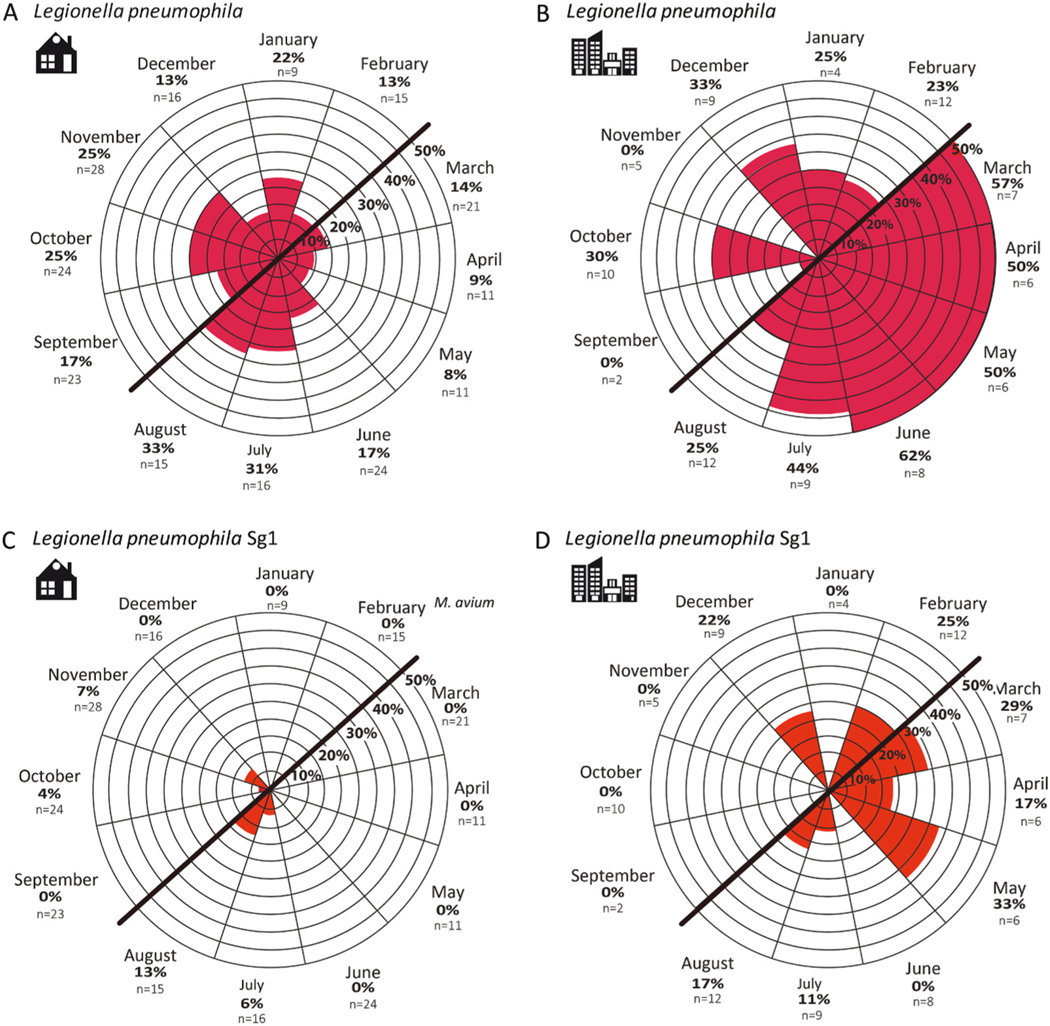
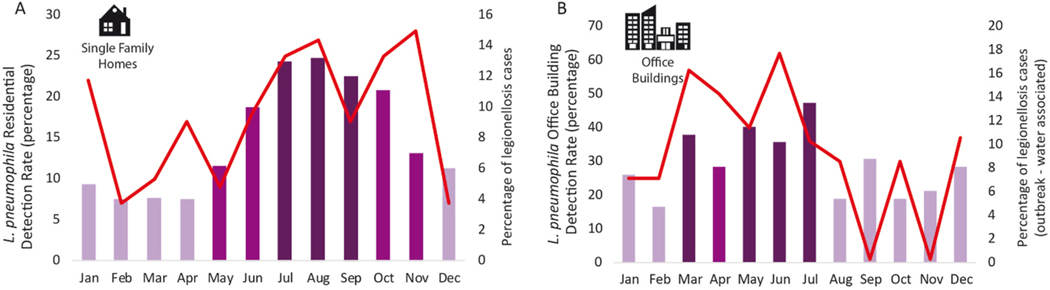
Method and results: Using qPCR, L. pneumophila and L. pneumophila Serogroup (Sg)1 were measured in hot water samples collected from 100 structures, consisting of 70 residences and 30 office buildings. The hot water samples collected from office buildings had a higher L. pneumophila detection frequency of 53% (16/30) than residences, with a 103 GU/L (median) concentration. An office building's age was not a statistically significant predictor of contamination, but its area (>100,000 sq. ft.) was, P = <0.001. Hot water samples collected at residences had a lower L. pneumophila detection frequency of 36% (25/70) than office buildings, with a 100 GU/L (median) concentration. A residence's age was a significant predictor of contamination, P = 0.009, but not its area. The water's secondary disinfectant type did not affect L. pneumophila detection frequency nor its concentration in residences, but the secondary disinfectant type did affect results in office buildings. Legionella pneumophila's highest detection frequencies were in samples collected in March-August for office buildings and in June-November for residences.
Conclusion: This study revealed that the built environment influences L. pneumophila transport and fate. Residential plumbing could be a potential "conduit" for L. pneumophila exposure from a source upstream of the hot water environment. Both old and newly built office buildings had an equal probability of L. pneumophila contamination. Legionella-related remediation efforts in office buildings (that contain commercial functions only) might not significantly improve a community's public health.
Keywords: Buildings; Households; Legionella pneumophila; Legionellosis; Premise plumbing; Residences; Water.
Published by Elsevier GmbH.
Conflict of interest statement
Declaration of competing interest Authors have no conflicts of interest to report.
Figures

References
-
- Baron JL, Harris JK, Holinger EP, Duda S, Stevens MJ, Robertson CE, Ross KA, Pace NR, Stout JE, 2015. Effect of monochloramine treatment on the microbial ecology of Legionella and associated bacterial populations in a hospital hot water system. Syst. Appl. Microbiol 38, 198–205. - PubMed
-
- Barskey AE, Lackraj D, Tripathi PS, Cooley LA, Lee S, Smith J, Edens C, 2020. In: Legionnaires’ Disease Surveillance Summary Report, United States, 2016 – 2017. Centers for Disease Control and Prevention, Atlanta, GA, pp. 1–49.
Publication types
MeSH terms
Substances
Grants and funding
LinkOut - more resources
Full Text Sources
Molecular Biology Databases
