


Essen transition model for neuromuscular diseases
- PMID: 36058951
- PMCID: PMC9442978
- DOI: 10.1186/s42466-022-00206-8
Essen transition model for neuromuscular diseases
Abstract
Background: With the optimization of medical care structures and the rapid progress in the development of new therapeutic methods, an increase in life expectancy is observed in patients with neuromuscular diseases. This leads to an expansion of the phenotypic spectrum, whereby new or previously less relevant disease manifestations in different organ systems gain more importance. The care of adolescents and young adults with neuromuscular diseases, therefore, requires increasingly close interdisciplinary collaboration within neuromuscular centers.
Research question: How can the transition process from pediatric to adult care be structured so that the individual disciplines are efficiently integrated into the complex treatment and care process, and the patients' quality of life is improved?
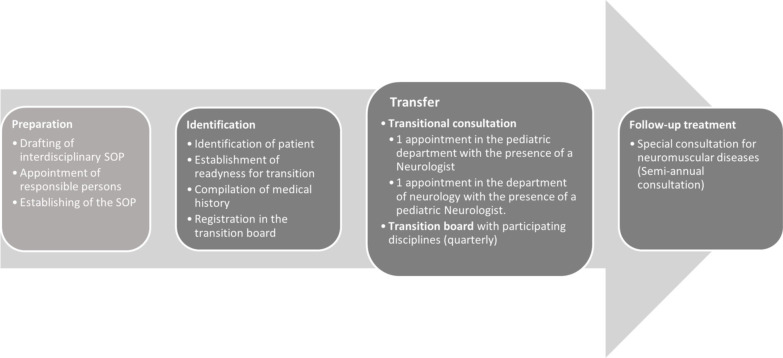
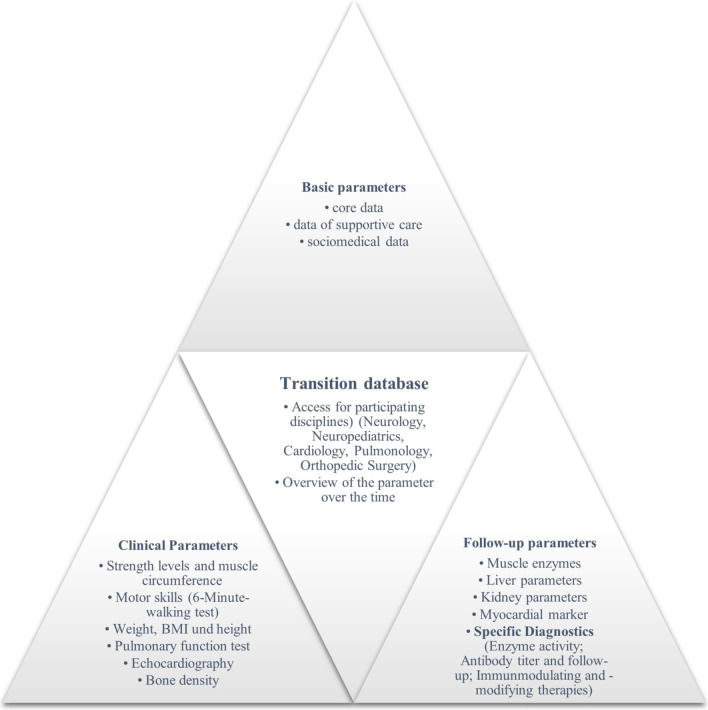
Material and methods: A structured transition process was established at the University Hospital in Essen, Germany. Exemplarily, a comparable care concept was developed based on Pompe disease, Duchenne muscular dystrophy, and juvenile myasthenia gravis comprising four elements: (1) With the introduction of cross-department standard operating procedures, the logistical processes, as well as the diagnostic and therapeutic measures, are uniformly coordinated, and the transition process is bindingly defined. (2) To ensure a seamless transition, young patients are seen with their parents during joint consultations before they reach their 17th birthday. This creates an opportunity for patients to get to know the subsequent department structure and build a lasting relationship of trust. (3) A quarterly "transition board" regularly brings together the participating disciplines from pediatric and adult care systems for a case-related interdisciplinary exchange and continuous optimization of the transition process. (4) A cross-department "Transition Database", in which medical findings and parameters are recorded, was implemented as a common information platform and database.
Conclusion: The Essen Transition Model aims to close the gap in care for young patients with neuromuscular diseases during the critical transition from pediatric to adult medicine and to create a successful continuation of treatment in adulthood.
Keywords: Duchenne muscular dystrophy; Interdisciplinarity; Juvenile myasthenia gravis; Late-onset Pompe disease; Neuromuscular diseases; The concept of care; Transition.
© 2022. The Author(s).
Conflict of interest statement
This publication was supported by Sanofi Genzyme/Sanofi-Aventis Deutschland GmbH. TH has received lecture and consulting fees from Biogen, Roche, Novartis Gene therapies, Sanofi-Genzyme, and Alexion. US has received speaking and consulting fees from Biogen, Roche, Novartis Gene therapies, Sanofi-Genzyme, and Alexion. HK has received lecture fees from Pfizer, Roche, Novartis, and Sanofi) and is on the Advisory Board (Avexis/Novartis). MF, BC, BS, ADM, HL, MN, CK have no conflicts of interest to declare.
Figures
References
-
- Oldhafer M, Berlien H. Tranistionsmedizin: Multiprofessionelle Begleitung junger Erwachsener mit chronischer Krankheit. Schattauer; 2016.
-
- Thun-Hohenstein T. Transitionsmedizin: Übergang von kinder- und jungendmedizinische in erwachenenmedizininsche Betreuung. Pädiatrie & Pädiologie. 2016;51:10–15. doi: 10.1007/s00608-016-0380-x. - DOI
LinkOut - more resources
Full Text Sources
Miscellaneous