


Woodhouse-Sakati Syndrome Presenting With Psychotic Features After Starting Trihexyphenidyl: A Case Report
- PMID: 36059322
- PMCID: PMC9433055
- DOI: 10.7759/cureus.27576
Woodhouse-Sakati Syndrome Presenting With Psychotic Features After Starting Trihexyphenidyl: A Case Report
Abstract
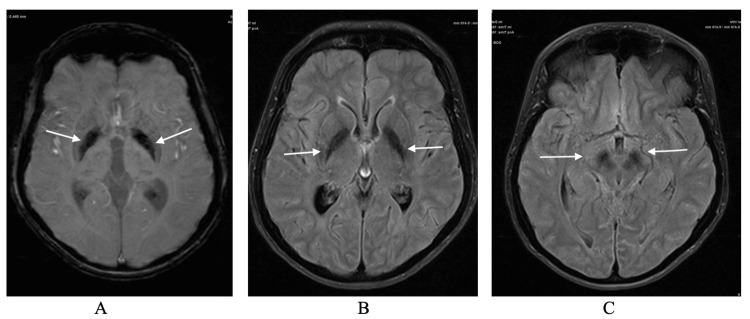
Woodhouse-Sakati syndrome is a rare, autosomal recessive, multisystemic disorder first identified as a constellation of hypogonadism, mental retardation, diabetes, alopecia, deafness, and electrocardiogram abnormalities. We report a case of a 33-year-old woman who was born to consanguineous parents. She is suffering from hypergonadotropic hypogonadism, extrapyramidal symptoms, hypothyroidism, alopecia, and sensorineural hearing loss. Her MRI showed iron depositions in globus pallidus bilaterally. She underwent genetic testing and was diagnosed with Woodhouse-Sakati syndrome. She was started on trihexyphenidyl to treat her extrapyramidal symptoms. A few months later, she started to have psychotic symptoms in the form of auditory hallucinations and delusions of persecution. Although she exhibited psychotic symptoms after starting trihexyphenidyl, it is less likely to be causing her symptoms since the symptoms started a few months after taking the medication and she was not on high doses. Thus, it is more likely to be a part of Woodhouse-Sakati syndrome.
Keywords: case report; drug-induced psychosis; dystonia; trihexyphenidyl; woodhouse-sakati syndrome.
Copyright © 2022, Aljaffer et al.
Conflict of interest statement
The authors have declared that no competing interests exist.
Figures
References
-
- Bohlega SA, Abusrair A. GeneReviews® [Internet] Seattle: University of Washington, Seattle; 1993-2022. Woodhouse-Sakati syndrome. - PubMed
-
- Woodhouse-Sakati syndrome with psychosis and basal ganglia calcification: a case report. Alasiri T, Alshehri A, Alzahrani A. J Med Cases. 2018;9:73–75.
-
- Patterns of neurological manifestations in Woodhouse-Sakati Syndrome. Bohlega S, Abusrair AH, Al-Ajlan FS, et al. Parkinsonism Relat Disord. 2019;69:99–103. - PubMed
Publication types
LinkOut - more resources
Full Text Sources