


Placental damage in pregnancies with systemic lupus erythematosus: A narrative review
- PMID: 36059466
- PMCID: PMC9428442
- DOI: 10.3389/fimmu.2022.941586
Placental damage in pregnancies with systemic lupus erythematosus: A narrative review
Abstract
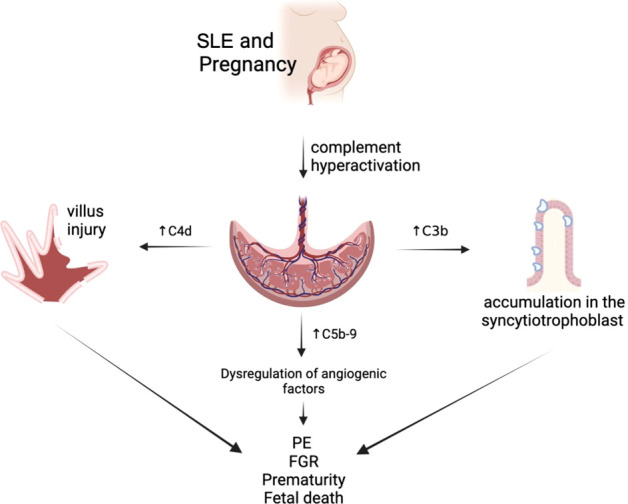
Systemic lupus erythematosus (SLE) is a chronic inflammatory autoimmune disease of unknown cause, which mainly affects women of childbearing age, especially between 15 and 55 years of age. During pregnancy, SLE is associated with a high risk of perinatal morbidity and mortality. Among the most frequent complications are spontaneous abortion, fetal death, prematurity, intrauterine Fetal growth restriction (FGR), and preeclampsia (PE). The pathophysiology underlying obstetric mortality and morbidity in SLE is still under investigation, but several studies in recent years have suggested that placental dysfunction may play a crucial role. Understanding this association will contribute to developing therapeutic options and improving patient management thus reducing the occurrence of adverse pregnancy outcomes in this group of women. In this review, we will focus on the relationship between SLE and placental insufficiency leading to adverse pregnancy outcomes.
Keywords: antiphospholipid antibodies; complement system; cytokines; histopathology; neutrophil extracellular traps; placenta; systemic lupus erythematosus.
Copyright © 2022 Castellanos Gutierrez, Figueras, Morales-Prieto, Schleußner, Espinosa and Baños.
Conflict of interest statement
The authors declare that the research was conducted in the absence of any commercial or financial relationships that could be construed as a potential conflict of interest.
Figures
References
Publication types
MeSH terms
LinkOut - more resources
Full Text Sources
Medical
Miscellaneous
