


Analysis of the management of ventriculitis cases at a UK neurosurgery centre
- PMID: 36060478
- PMCID: PMC9437802
- DOI: 10.1016/j.infpip.2022.100240
Analysis of the management of ventriculitis cases at a UK neurosurgery centre
Abstract
Background: Ventriculitis is an infection of the ventricular system of the central nervous system associated with neurosurgery and/or indwelling medical devices mainly caused by coagulase-negative staphylococci and increasingly by Gram-negative bacilli and other Gram-positive bacteria. The Infectious Diseases Society of America (IDSA) and the neurosurgery department University Hospital Coventry and Warwickshire (UHCW) have treatment guidelines for ventriculitis which recommend antimicrobials and device removal.
Methods: Data on ventriculitis cases, their management and outcomes were collected from electronic laboratory and hospital records as well as patients' paper records from 2009 to 2019. Cases included patients with CSF shunts or external ventricular drainage. The management of the cases was then compared to both Infectious Diseases Society of America (IDSA) and UHCW guidelines. The data collected included the causative organisms and the use of inappropriate antimicrobials. The cost of inappropriate antimicrobials was calculated.
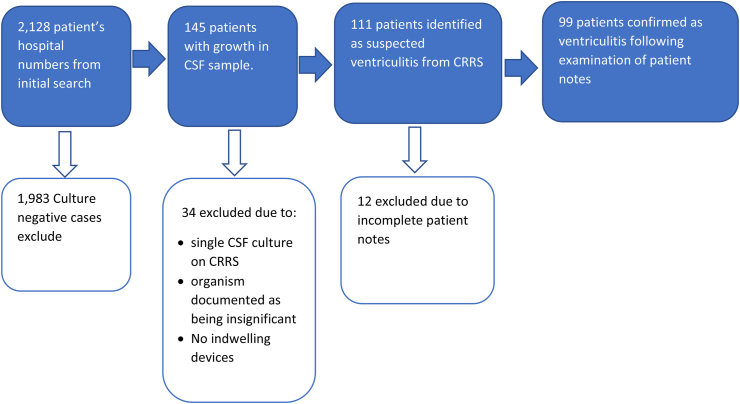
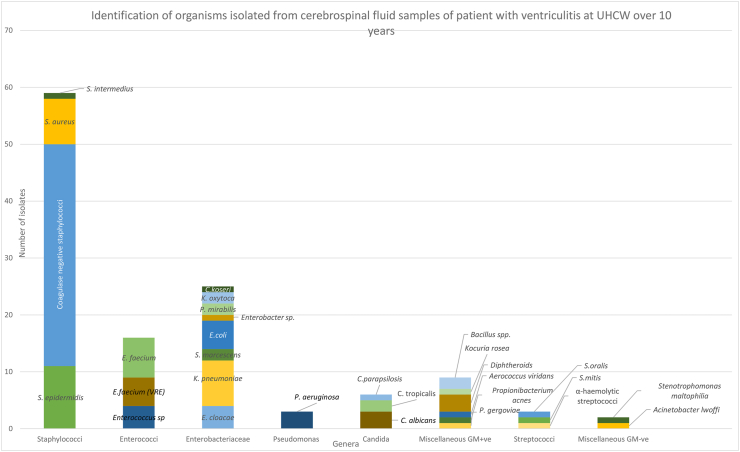
Results: 99 patients with microbiologically confirmed ventriculitis were identified. Some cases had multiple devices and the total number of devices was 105.98% of cases had medical device removal as part of their care. Only 50% and 56% of cases had antimicrobial treatment which was compliant with local (UHCW) and IDSA guidelines, respectively. The most frequently inappropriate antimicrobials used were meropenem and linezolid, at an estimated cost of £201,172 over 10 years. The most frequently isolated organisms were coagulase negative staphylococci. Mortality rate was estimated at 14% of cases.
Conclusions: We report the first analysis of the management of ventriculitis cases at UHCW over a 10-year period and demonstrate the importance of antimicrobial stewardship. We also report the local epidemiology of causes of ventriculitis at UHCW which will guide the empirical treatment of ventriculitis at UHCW.
Keywords: Antimicrobial stewardship; CSF shunts; External-ventricular drainage; Neurosurgery; Ventriculitis.
© 2022 Published by Elsevier Ltd on behalf of The Healthcare Infection Society.
Figures
References
-
- Kourbeti I.S., Vakis A.F., Ziakas P., Karabetsos D., Potolidis E., Christou S., et al. Infections in patients undergoing craniotomy: risk factors associated with post-craniotomy meningitis. J Neurosurg. 2015;122:1113–1119. - PubMed
-
- Lin C., Zhao X., Sun H. Analysis on the risk factors of intracranial infection secondary to traumatic brain injury. Chin J Traumatol. 2015;18:81–83. - PubMed
-
- Lozier A.P., Sciacca R.R., Romagnoli M.F., Connolly E.S., Jr. Ventriculostomy-related infections: a critical review of the literature. Neurosurgery. 2002;51:170–181. ; discussion 81-2. - PubMed
-
- Humphreys H. Jenks PJ Surveillance and management of ventriculitis following neurosurgery. J Hosp Infect. 2015;89:281–286. - PubMed
LinkOut - more resources
Full Text Sources
