


Pre-service Chemistry Teachers' Views about the Tentative and Durable Nature of Scientific Knowledge
- PMID: 36060862
- PMCID: PMC9419127
- DOI: 10.1007/s11191-022-00374-8
Pre-service Chemistry Teachers' Views about the Tentative and Durable Nature of Scientific Knowledge
Abstract
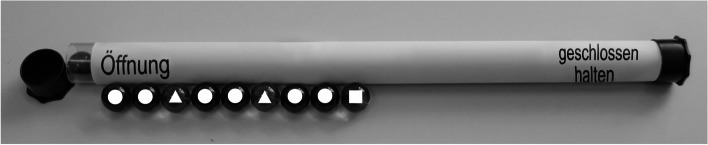
With regard to current controversial public discussions about the credibility of scientific knowledge, it seems particularly important that students possess adequate ideas about the tentativeness of scientific knowledge, which is a key aspect of nature of science. However, international studies show that many pre-service science teachers tend to have naïve conceptions about the tentativeness and these conceptions turn out to be resistant to change. So far, no research was done, on the conceptions of German pre-service chemistry teachers about tentativeness. Therefore, two empirical, qualitative research studies were conducted. The first study with 50 participants was to investigate, which conceptions about tentativeness German pre-service chemistry teachers possess, what the origins of these conceptions are and if they are resistant to change. In a second study with 56 participants, it was examined how a more adequate and functional understanding could be promoted. Data were collected by using different methods, such as open-ended questionnaires and semi-structured interviews. The participants' views about tentativeness were assigned to different categories. Results show that most participants held inconsistent or only partially informed views on tentativeness. The views turn out to be resistant to change, and many participants are not able to explain their ideas. And if so, their explanations are mostly restricted to scientific theories. Additionally, dealing with tentativeness unsettles some participants. To promote an adequate understanding, new approaches were developed, like the BlackTube activity. Additionally, instructions should focus on the durability of scientific knowledge. Furthermore, a differentiated reflection on different types of scientific knowledge seems necessary.
© The Author(s) 2022.
Conflict of interest statement
Conflict of InterestThe authors declare that they have no conflict of interest.
Figures
References
-
- Abd-El-Khalick F. Over and over and over again: College students’ views of nature of science. In: Flick LB, Lederman NG, editors. Scientific inquiry and nature of science: Implications for teaching, learning, and teacher education. Springer; 2006. pp. 389–425.
-
- Abd-El-Khalick F, Akerson V. Learning as conceptual change: Factors mediating the development of preservice elementary teachers’ views of nature of science. Science Education. 2004;88(5):785–810. doi: 10.1002/sce.10143. - DOI
-
- Abd-El-Khalick F, Akerson V. The influence of metacognitive training on preservice elementary teachers’ conceptions of nature of science. International Journal of Science Education. 2009;31(16):2161–2184. doi: 10.1080/09500690802563324. - DOI
-
- Abd-El-Khalick F, Lederman NG. Improving science teachers’ conceptions of nature of science: A critical review of the literature. International Journal of Science Education. 2000;22(7):665–701. doi: 10.1080/09500690050044044. - DOI
-
- Abd-El-Khalick F, Waters M, Le A-P. Representations of nature of science in high school chemistry textbooks over the past four decades. Journal of Research on Science Teaching. 2008;45(7):835–855. doi: 10.1002/tea.20226. - DOI
LinkOut - more resources
Full Text Sources