Review
. 2022 Dec:6:100079.
doi: 10.1016/j.ejmcr.2022.100079. Epub 2022 Aug 28.

Some natural compounds and their analogues having potent anti- SARS-CoV-2 and anti-proteases activities as lead molecules in drug discovery for COVID-19

Affiliations
Review

Some natural compounds and their analogues having potent anti- SARS-CoV-2 and anti-proteases activities as lead molecules in drug discovery for COVID-19

Biswanath Dinda et al. Eur J Med Chem Rep. 2022 Dec.

Abstract

Currently an emerging human pathogenic coronavirus, severe acute respiratory syndrome coronavirus 2 (SARS-CoV-2), caused coronavirus disease 2019 (COVID-19) that has posed a serious threat to public health worldwide. As it is a novel severe pneumonia-type viral disease, no effective therapeutic agents are available to treat this infection to date, emphasizing an urgent need for development of effective anti-SARS-CoV-2 agents. Based on screening in computational biology and biological in vitro assays, a good number of natural compounds and their synthetic analogues have been confirmed to possess target-specific inhibitory effects against the activity of host and viral proteases, namely, cathepsin-L, TMPRSS2, Sec61, Mpro (3CL-protease), RNA-dependent RNA protease (RdRp), helicase cap-binding proteases eEF1A, eIF4A, eIF4E, which play dominant roles in progression of infection and replication of SARS-CoV-2 virus in host cells. This review paper describes the potent antiviral activity and target-specific anti-proteases activity of some natural compounds and their synthetic analogues against SARS-CoV-2 infection. It will inspire the researchers to unleash their own creativity and to design potent and safe drugs to fight the current COVID-19 pandemic.

Keywords: COVID-19; COVID-19, coronavirus disease-2019; Host/virus proteases inhibitors; Natural analogues; Natural compounds; SARS-CoV-2.


Conflict of interest statement

The authors declare that they have no known competing financial interests or personal relationships that could have appeared to influence the work reported in this paper.

Figures
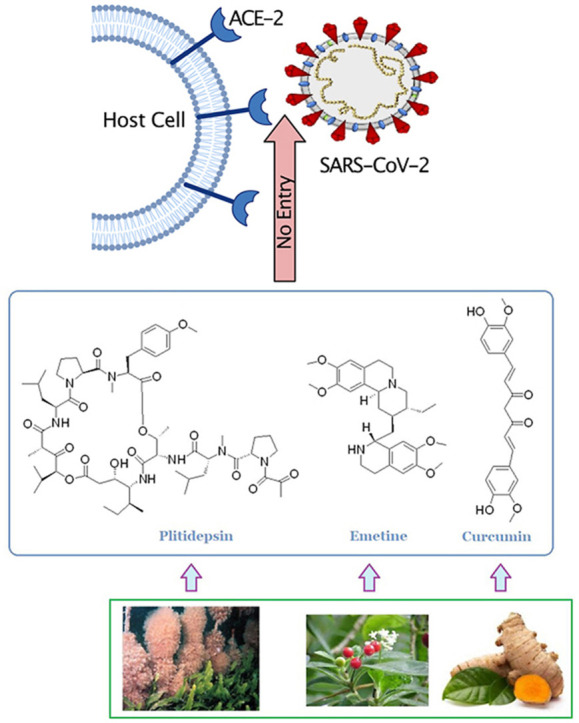
Image 1
Graphical abstract
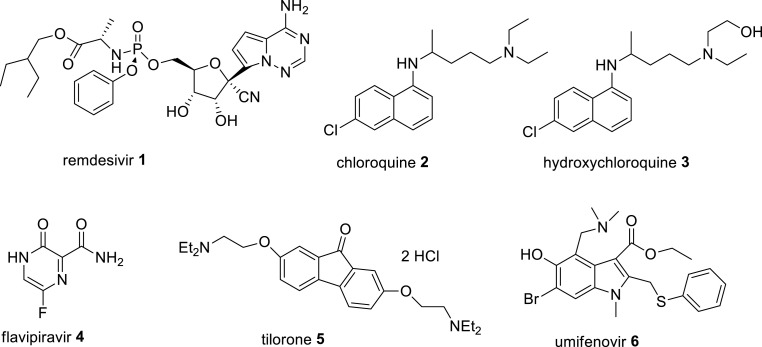
Fig. 1
Fig. 1
Chemical structures of some currently prescribed clinical drugs for COVID-19 treatment.
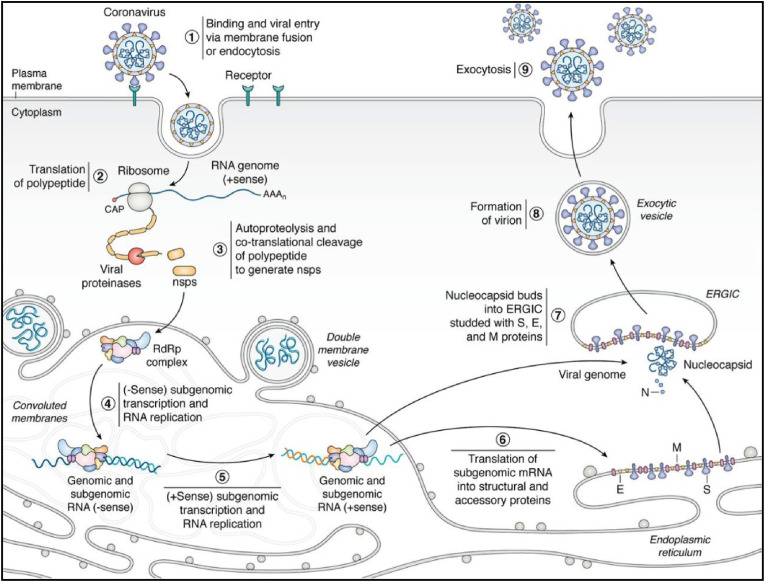
Fig. 2
Fig. 2
The mechanism of infection and replication (life-cycle) of SARS-CoV-2 and other coronaviruses in host cells. (1) The viral entry into host cell on binding to host cell ACE2 receptor followed by membrane fusion or endocytosis and deposition of viral genomic RNA (g-RNA) into host cell cytoplasm. (2) The virus replicase genes ORF1a and ORF1b from (+)-sense- g-RNA are translated by host translation machinery into functional polyproteins pp1a and pp1ab, respectively. (3) The polyproteins 1a and 1 ​ab are cotranslationally cleaved by two virus cysteine proteases, papain-like protease (PLpro) and 3-chymotrypsin-like protease (3CLpro) or main protease (Mpro) into 16 non-structural proteins (nsp1-16) and to form viral replicase-transcriptase complex (RTC) or RdRp complex. (4) The RTC uses the viral g-RNA as a template to generate (−)-sense subgenomic (sg) and genome-length (g) RNAs. (5) These (−)-sense sg- and g-RNAs are used as templates for synthesis of (+)- sense full-length progeny genomes and sg- RNAs. (6) The components of RTC carry out transcription and replication of virus in CMs adjacent to DMVs that are both derived from host cell rough endoplasmic reticulum (ER). (7) The (+)-sense g-RNA is bound by viral nucleocapsid (N) protein and buds into ERGIC and these nucleocapsid buds are decorated with structural proteins S, E, and M translated from (+)-sense sg-RNAs to form enveloped virions. (8) and (9) The newly formed enveloped virions are exported from the infecred cell into adjacent host cell by exocytosis for infection and replication. [Adapted from Ref. [24]].
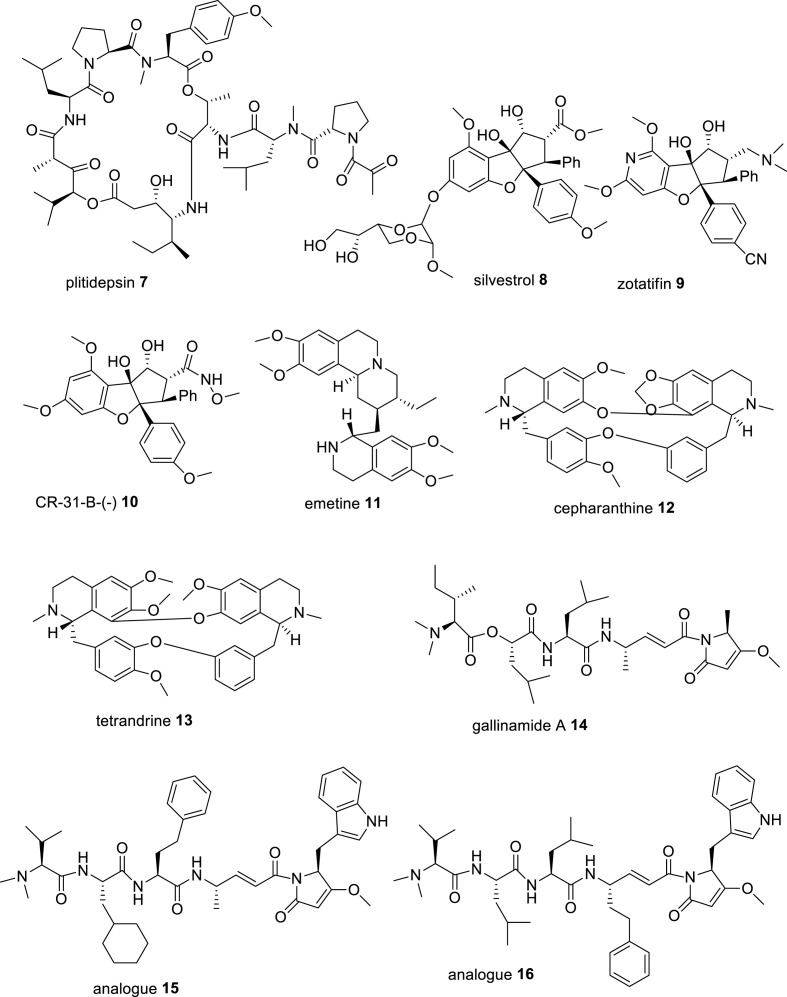
Fig. 3
Fig. 3
Chemical structures of some natural compounds and their analogues having potent in vitro anti-SARS-CoV-2 and anti-proteases activities.
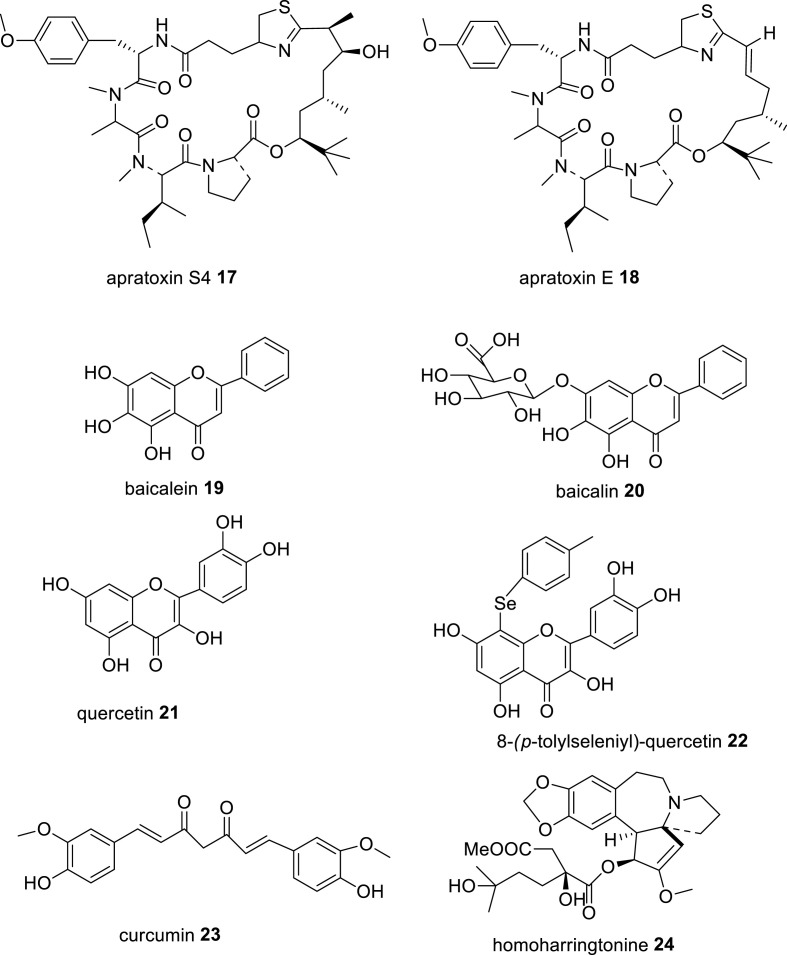
Fig. 4
Fig. 4
Chemical structures of some natural compounds and their analogues having potent in vitro anti-SARS-CoV-2 and anti-proteases activities.

References

    1. Coronaviridae Study Group of the International Committee on Taxonomy of Viruses The species severe acute respiratory syndrome-related coronavirus: classifying 2019-nCoV and naming it SARS-Cov-2. Nat. Microbiol. 2020;5:536–544. - PMC - PubMed
    1. Coronavirus disease (COVID-19) pandemic. http://www.who.int./emergencies/diseases/novel-coronavirus-2019/ad group... Available at: Accessed.
    1. Aassve A., Alfani G., Gandolfi F., LeMoglie M. Epidemics and trust: the case of the Spanish Flu. Health Econ. 2021;30:840–857. - PMC - PubMed
    1. Zhou P., Yang X.L., Wang X.G., Hu B., Zhang L., Zhang W., Shi H.R., Zhu Y., Li B., Huang C.L., Chen H.D., Chen J., Luo Y., Guo H., Jiang R.D., Liu M.Q., Chen Y., Shen X.R., Wang X., Zheng X.S., Zhao K., Chen Q.J., Deng F., Liu L.L., Yan B., Zhan R.X., Wang Y.Y., Xiao G.F., Shi Z.L. A pneumonia outbreak associated with a new coronavirus of probable bat origin. Nature. 2020;579(7798):270–273. - PMC - PubMed
    1. Wu A., Peng Y., Huang B., Ding X., Wang X., Niu P., Meng J., Zhu Z., Zhang Z., Wang J., Sheng J., Quan L., Xia Z., Tan W., Cheng G., Jiang T. Genome composition and divergence of the novel coronavirus (2019-nCoV) originating in China. Cell Host Microbe. 2020;27(3):325–328. - PMC - PubMed