


Overexpression of leucoanthocyanidin reductase or anthocyanidin reductase elevates tannins content and confers cassava resistance to two-spotted spider mite
- PMID: 36061805
- PMCID: PMC9433999
- DOI: 10.3389/fpls.2022.994866
Overexpression of leucoanthocyanidin reductase or anthocyanidin reductase elevates tannins content and confers cassava resistance to two-spotted spider mite
Abstract
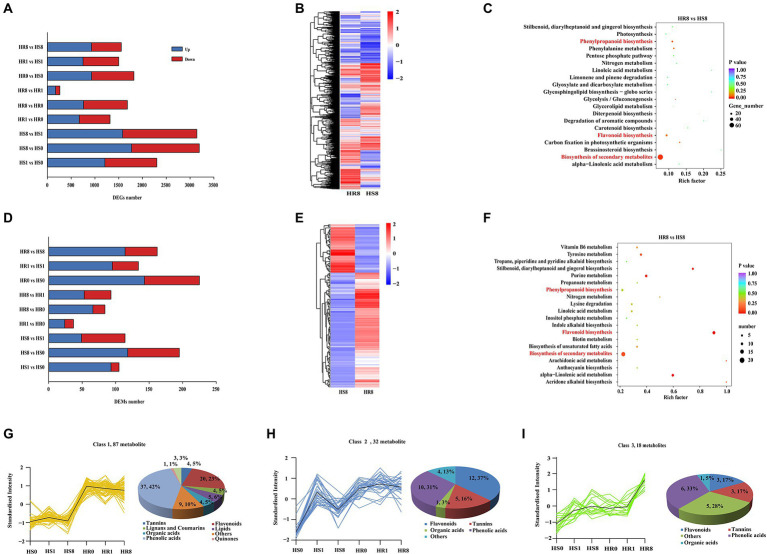
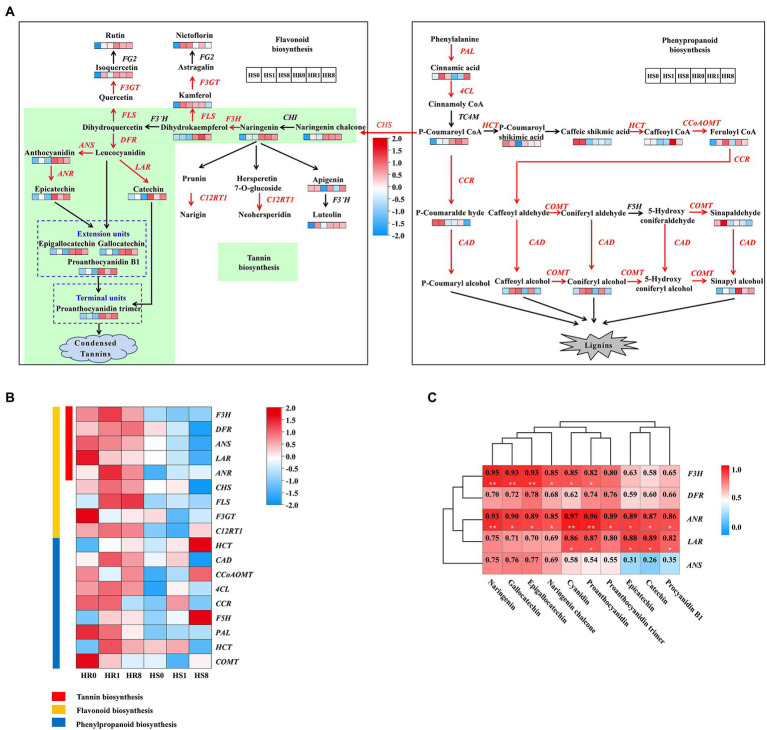
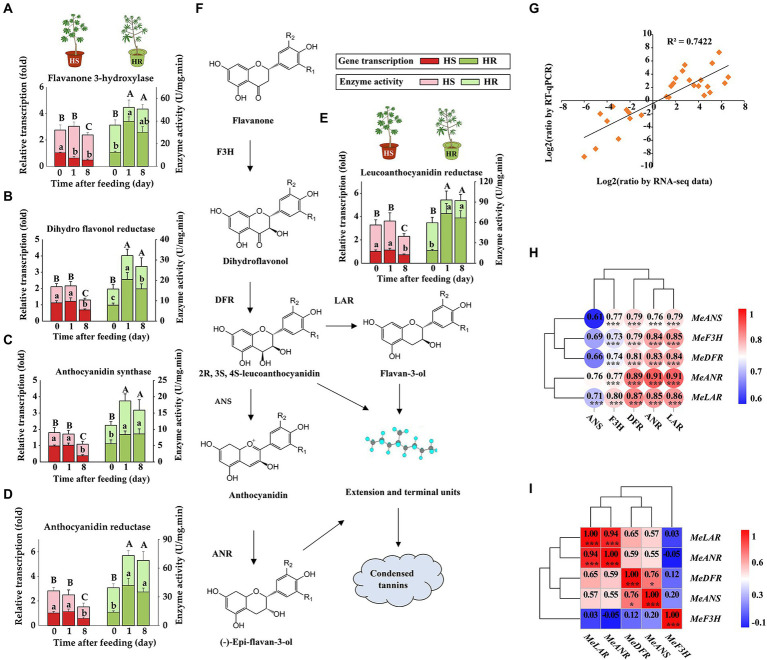
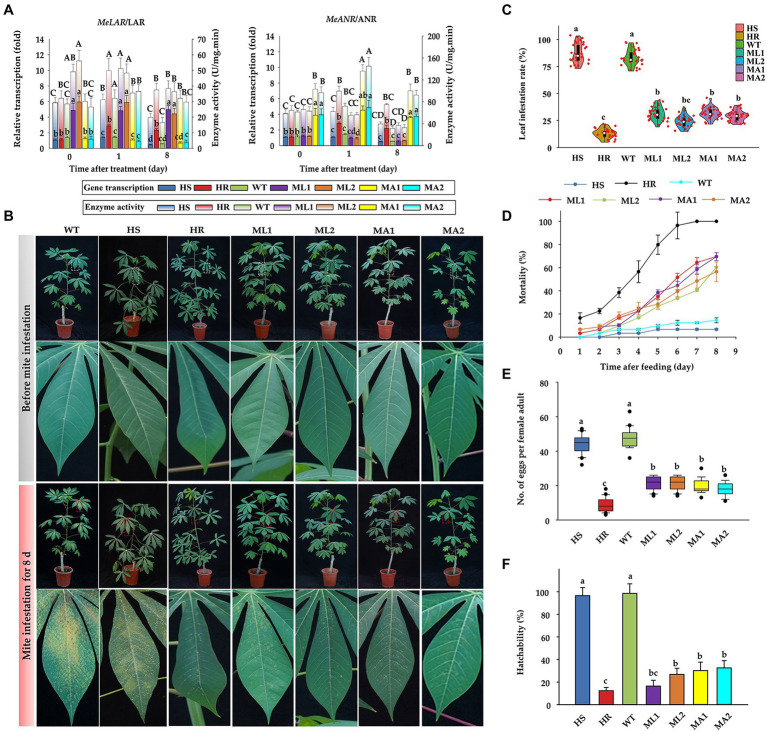
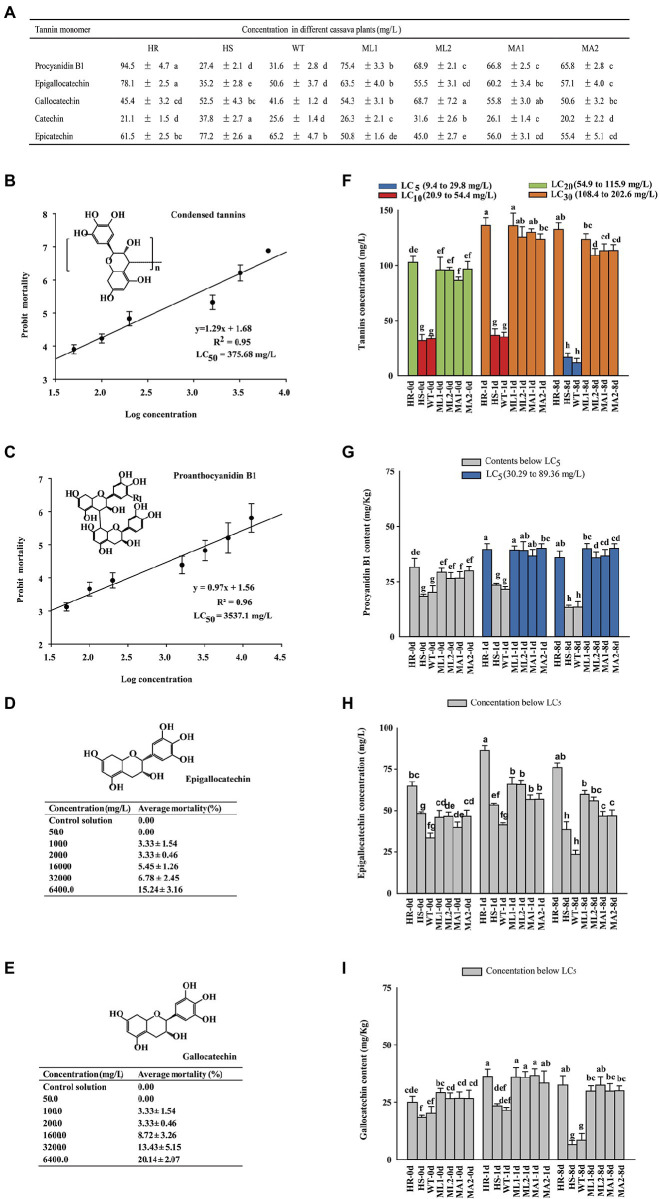
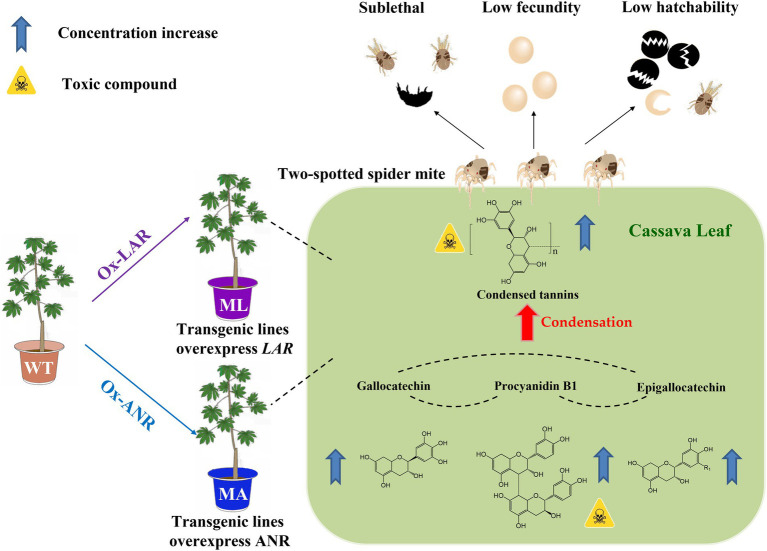
The two-spotted spider mite (TSSM) is a destructive cassava pest. Intensive demonstration of resistance mechanism greatly facilitates the creation of TSSM-resistant cassava germplasm. Gene to metabolite network plays a crucial role in modulating plant resistance, but little is known about the genes and related metabolites which are responsible for cassava resistance to TSSM. Here, a highly resistant (HR) and a highly susceptible (HS) cassava cultivar were used, integrative and comparative transcriptomic and metabolomic analyses between these two cultivars after TSSM infestation revealed that several genes and metabolites were closely related and significantly different in abundance. In particular, the expression of leucoanthocyanidin reductase (LAR) and anthocyanidin reductase (ANR) genes showed a high positive correlation with most of the metabolites in the tannin biosynthesis pathway. Furthermore, transgenic cassava lines overexpressing either of the genes elevated tannin concentrations and conferred cassava resistance to TSSM. Additionally, different forms of tannins possessed distinct bioactivity on TSSM, of which total condensed tannins (LC50 = 375.68 mg/l) showed maximum lethal effects followed by procyanidin B1 (LC50 = 3537.10 mg/l). This study accurately targets LAR, ANR and specific tannin compounds as critical genes and metabolites in shaping cassava resistance to TSSM, which could be considered as biomarkers for evaluation and creation of pest-resistant cassava germplasm.
Keywords: anthocyanidin reductase; cassava (Manihot esculenta Crantz); leucoanthocyanidin reductase; resistance mechanism; tannins (condensed); two-spotted spider mite (Tetranychus urticae Koch).
Copyright © 2022 Chen, Liang, Wu, Liu, Liu, Zhao, Li, Chen, Wang, Han, Wu, Yao, Shui, Qiao, Zhan and Zhang.
Conflict of interest statement
The authors declare that the research was conducted in the absence of any commercial or financial relationships that could be construed as a potential conflict of interest.
Figures
References
LinkOut - more resources
Full Text Sources
Other Literature Sources
Miscellaneous
