


Outcomes and complications reported from a multiuser canine hip replacement registry over a 10-year period
- PMID: 36062338
- PMCID: PMC10087566
- DOI: 10.1111/vsu.13885
Outcomes and complications reported from a multiuser canine hip replacement registry over a 10-year period
Abstract
Objective: To report outcomes and complications associated with total hip replacements (THR) using a multiuser canine hip registry (CHR) and owner-administered questionnaire.
Study design: Prospective longitudinal clinical study.
Animals: Dogs (n = 1852).
Methods: Total hip replacement cases submitted to a CHR were reviewed. An online questionnaire including an adapted "Liverpool Osteoarthritis in Dogs" (LOAD) score was e-mailed to owners. Data were analyzed to determine associations between clinical variables and the agreement by veterinary surgeons and owners for complications.
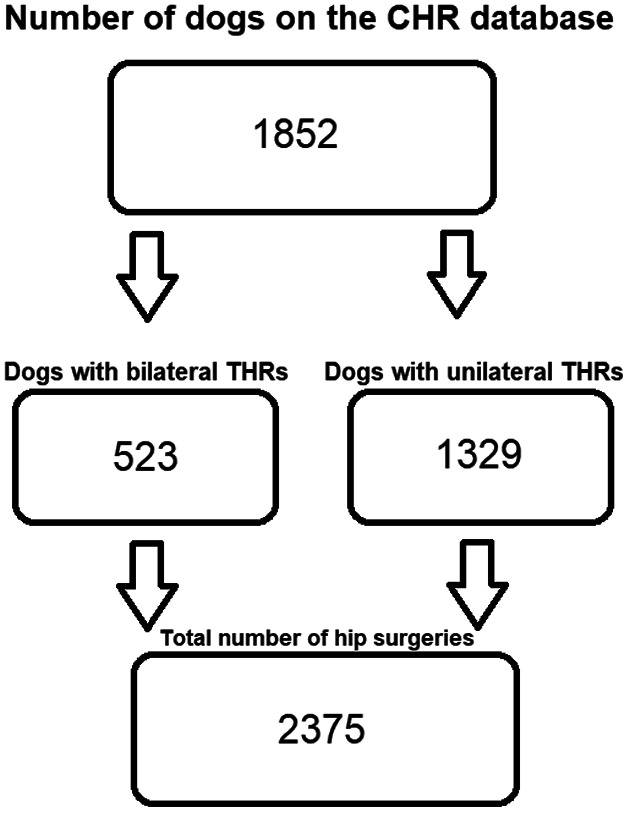
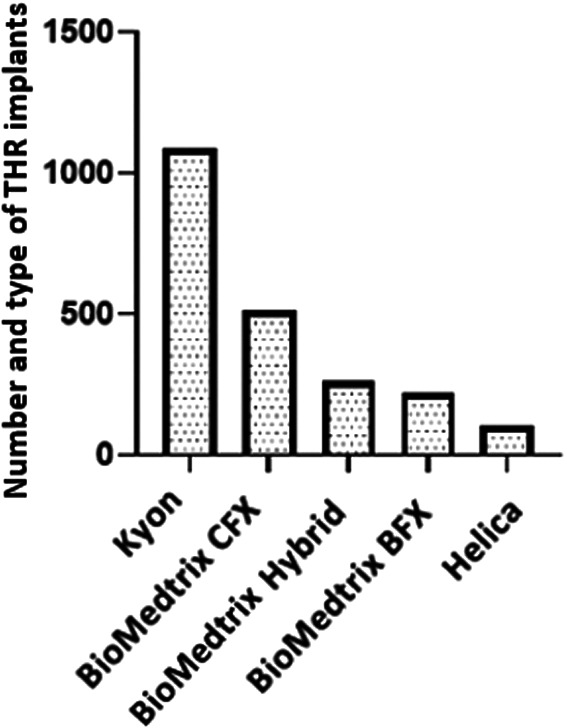
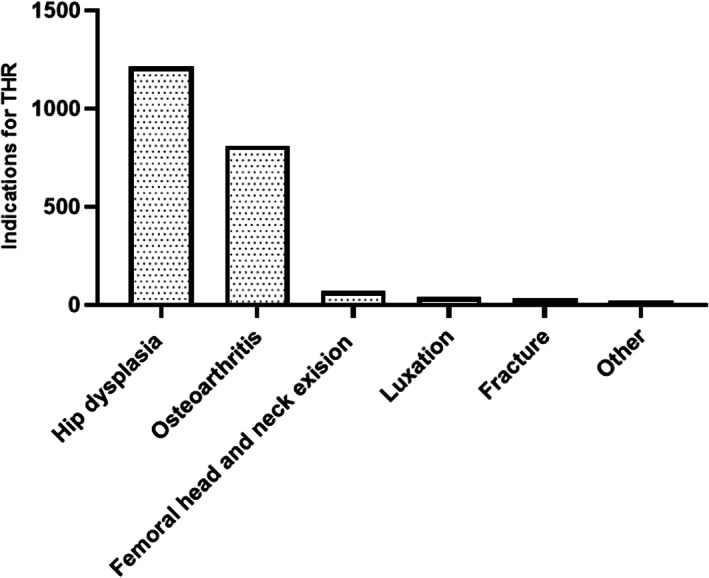
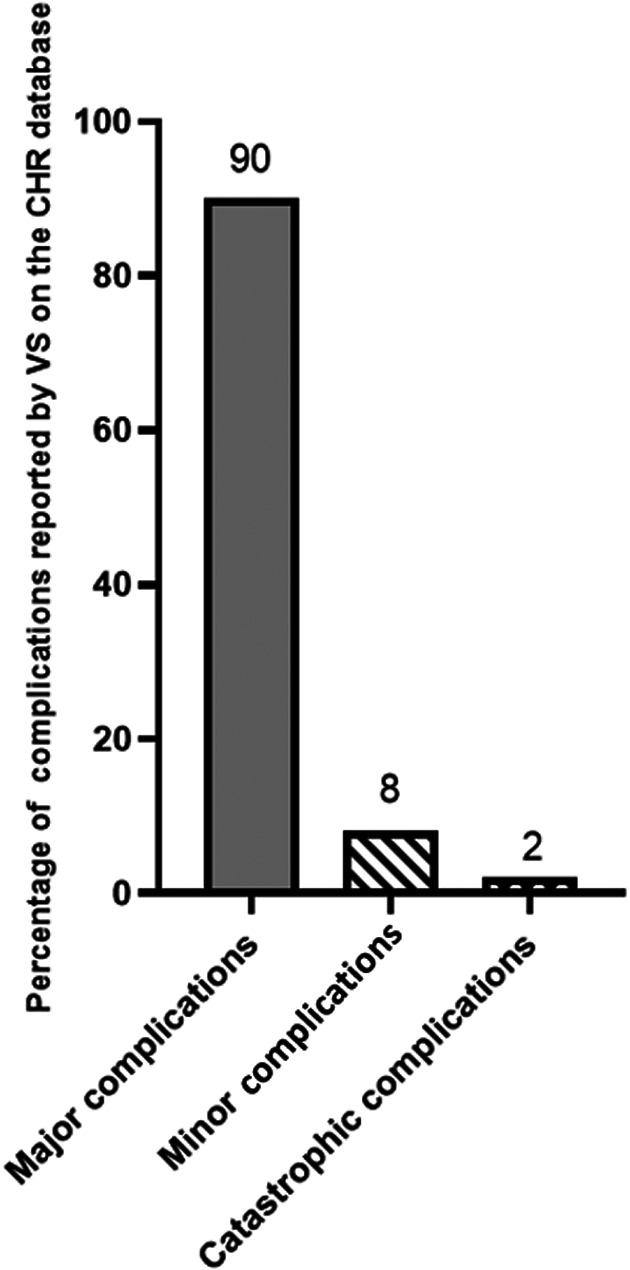
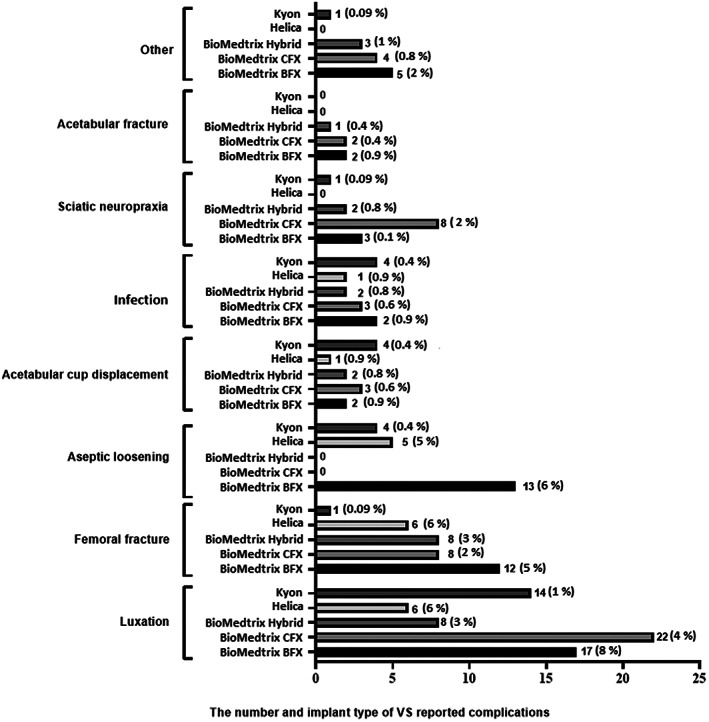
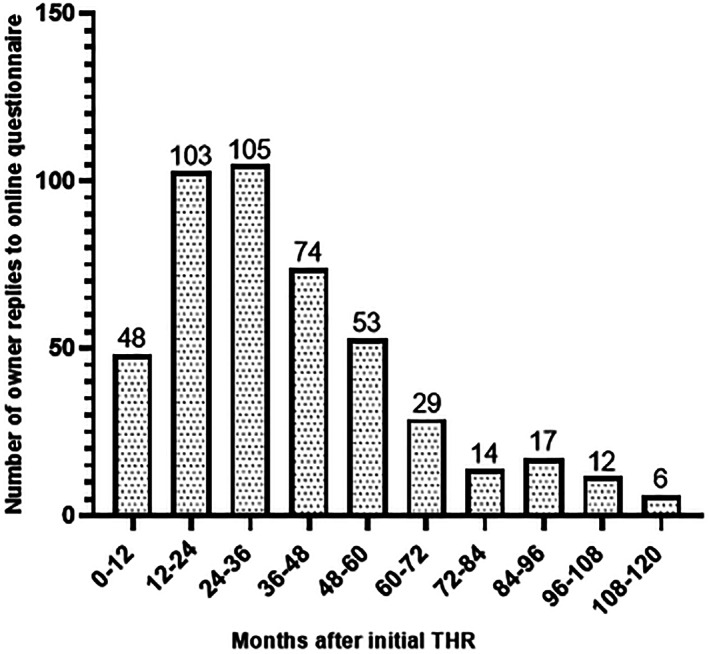
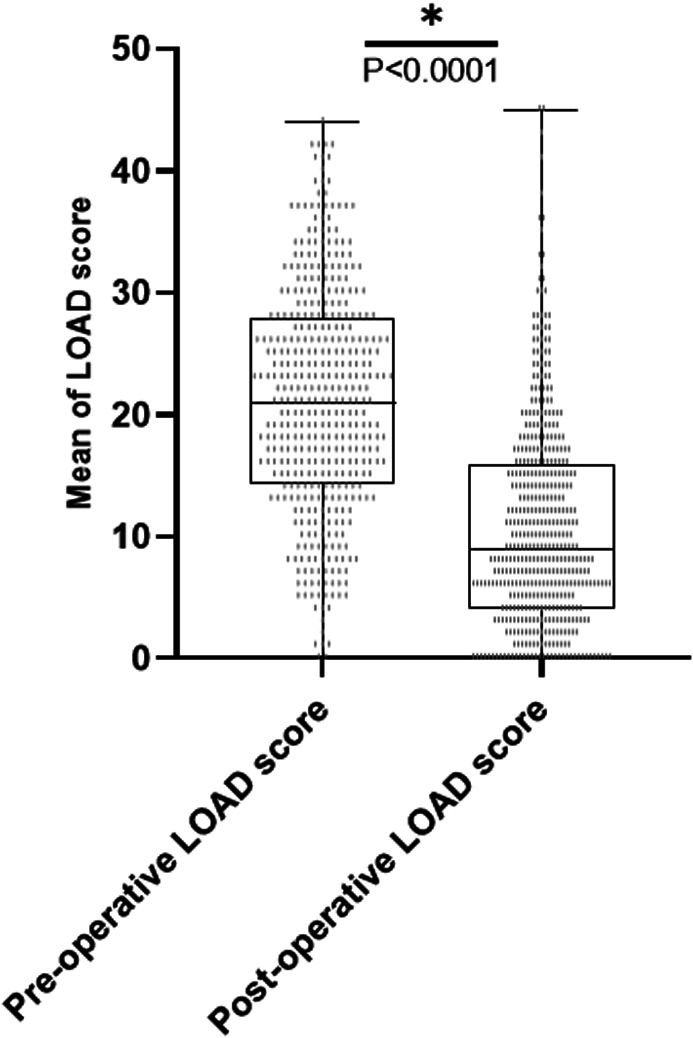
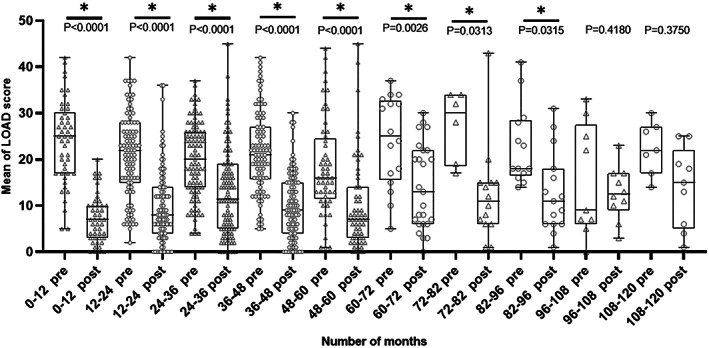
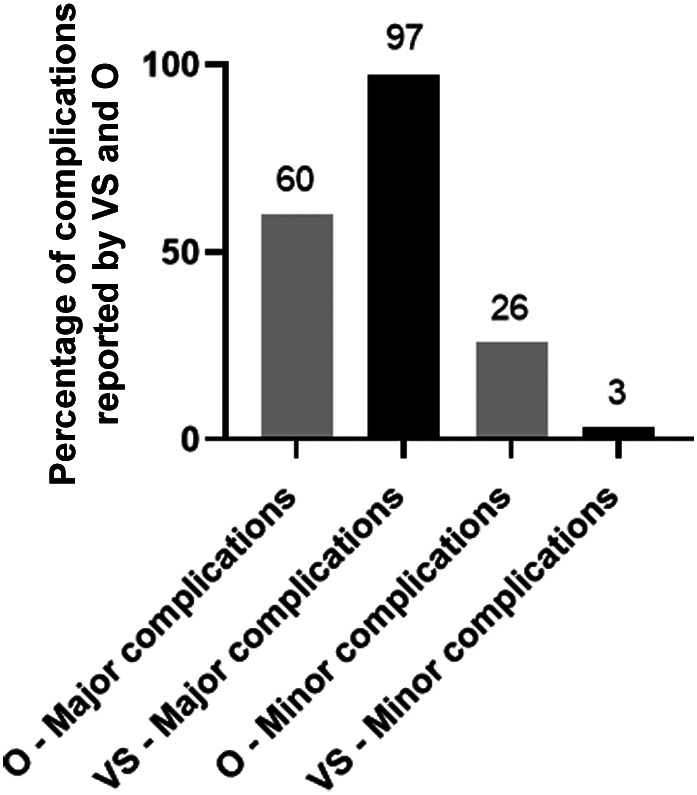
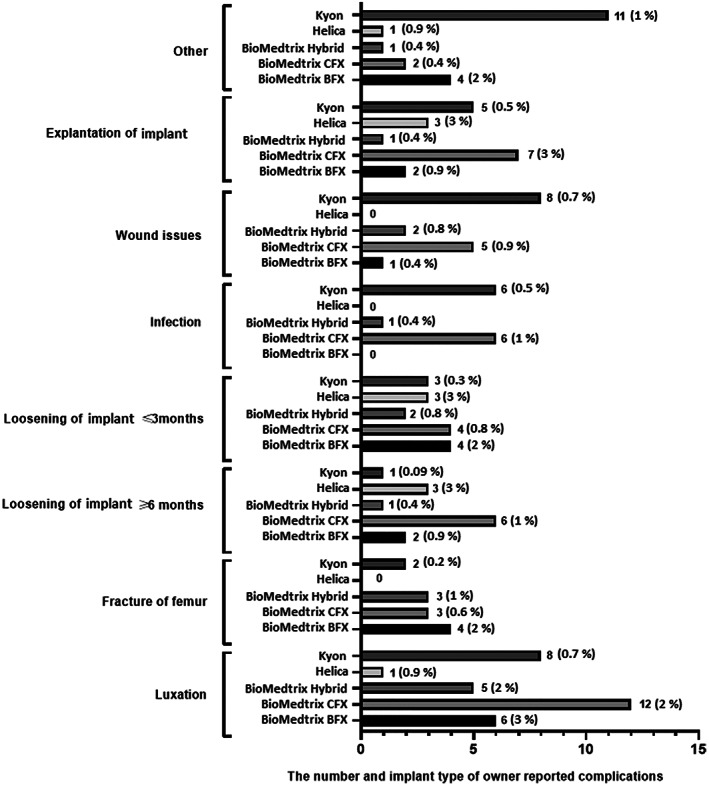
Results: A group of 1329 (72%) dogs had unilateral THRs and another group of 523 (28%) dogs had bilateral THRs, resulting in 2375 THRs. Indications included hip dysplasia and osteoarthritis (n = 2028/2375, 85%). Implants were manufactured by Kyon (n = 1087, 46%), BioMedtrix CFX (n = 514, 22%), BioMedtrix hybrid (n = 264, 11%), BioMedtrix BFX (n = 221, 9%), and Helica (n = 107, 4.5%). Median veterinary surgeon and owner follow up were 1328 and 900 days respectively. Postoperative LOAD scores (21 ± 9) reported by 461 owners improved compared to preoperative scores (11 ± 9) (P < .001). Veterinary surgeons reported complications in 201/2375 (8.5%) THRs and owners in 107/461 (23%) THRs, with moderate agreement (weighted kappa = 0.44). No associations were identified between complications and weight, age, sex, or breed. BioMedtrix BFX and Helica implants were associated with increased complications (P = .031) when used for revisions of femoral head and neck excisions.
Conclusion: Excellent outcomes, including improved canine mobility, were reported after THRs. Complications were underreported by veterinary surgeons compared to owners in this first multiuser CHR.
Clinical significance: Canine THRs are safe, effective procedures but THR implants should be carefully selected when revising femoral head and neck excisions.
© 2022 The Authors. Veterinary Surgery published by Wiley Periodicals LLC on behalf of American College of Veterinary Surgeons.
Conflict of interest statement
The authors declare no conflict of interest related to this report.
Figures
References
-
- Olmstead ML, Hohn RB, Turner TM. A five‐year study of 221 total hip replacements in the dog. J Am Vet Med Assoc. 1983;183:191‐194. - PubMed
-
- Chang RW, Pellisier JM, Hazen GB. A cost‐effectiveness analysis of total hip arthroplasty for osteoarthritis of the hip. JAMA. 1996;275:858‐865. - PubMed
-
- Cook JL, Evans R, Conzemius MG, et al. Proposed definitions and criteria for reporting time frame, outcome, and complications for clinical orthopedic studies in veterinary medicine. Vet Surg. 2010;39:905‐908. - PubMed
-
- Massat BJ, Vasseur PB. Clinical and radiographic results of total hip arthroplasty in dogs: 96 cases (1986–1992). J Am Vet Med Assoc. 1994;205:448‐454. - PubMed
-
- Marcellin‐Little DJ, DeYoung BA, Doyens DH, DeYoung DJ. Canine uncementless porous‐coated anatomic total hip arthroplasty: results of a long‐term prospective evaluation of 50 consecutive cases. Vet Surg. 1999;28:10‐20. - PubMed
MeSH terms
Grants and funding
LinkOut - more resources
Full Text Sources
Medical
