


Role of mechanistic target of rapamycin in autophagy and alcohol-associated liver disease
- PMID: 36062877
- PMCID: PMC9550572
- DOI: 10.1152/ajpcell.00281.2022
Role of mechanistic target of rapamycin in autophagy and alcohol-associated liver disease
Abstract
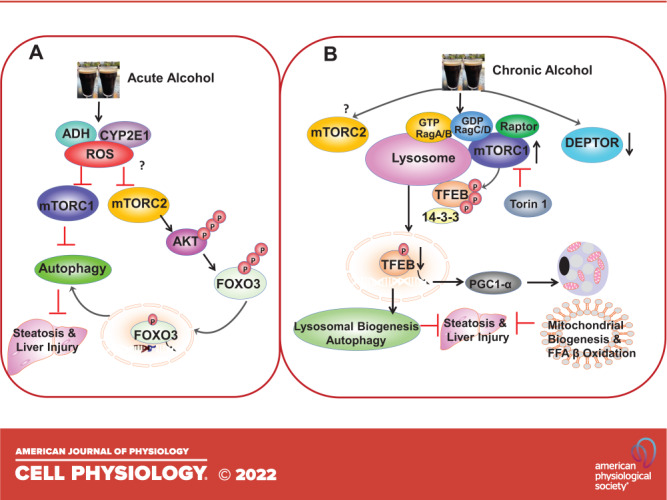
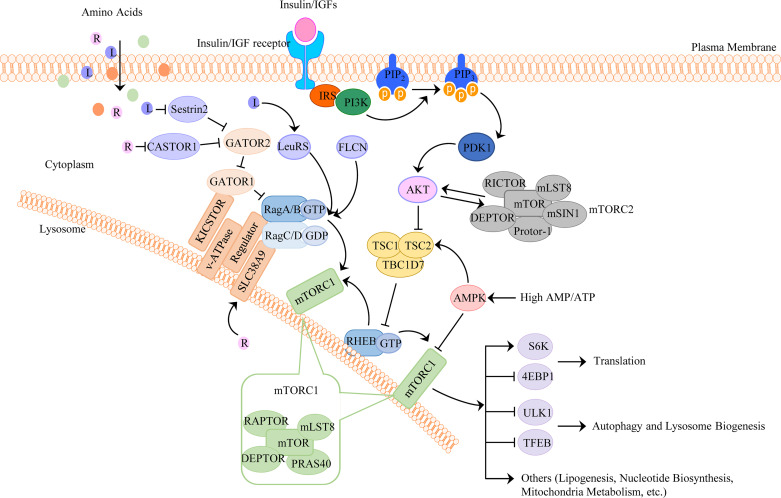
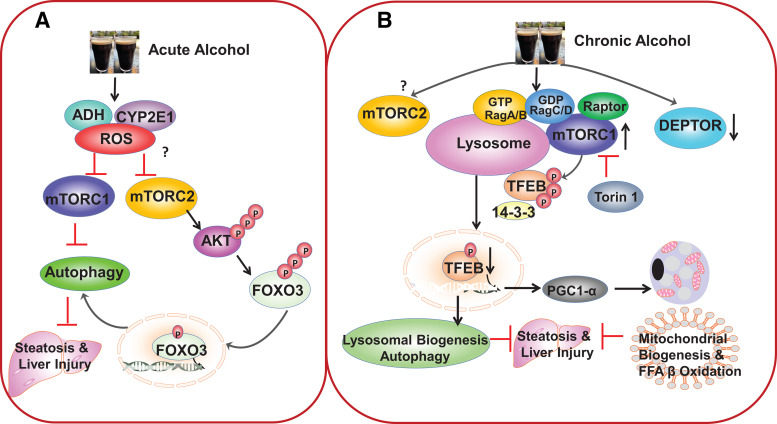
Mechanistic target of rapamycin (mTOR) is a serine-threonine kinase and a cellular sensor for nutrient and energy status, which is critical in regulating cell metabolism and growth by governing the anabolic (protein and lipid synthesis) and catabolic process (autophagy). Alcohol-associated liver disease (ALD) is a major chronic liver disease worldwide that carries a huge financial burden. The spectrum of the pathogenesis of ALD includes steatosis, fibrosis, inflammation, ductular reaction, and eventual hepatocellular carcinoma, which is closely associated with metabolic changes that are regulated by mTOR. In this review, we summarized recent progress of alcohol consumption on the changes of mTORC1 and mTORC2 activity, the potential mechanisms and possible impact of the mTORC1 changes on autophagy in ALD. We also discussed the potential beneficial effects and limitations of targeting mTORC1 against ALD.
Keywords: alcohol-associated liver disease; autophagy; ethanol; mTOR; transcription factor EB.
Conflict of interest statement
No conflicts of interest, financial or otherwise, are declared by the authors.
Figures
References
Publication types
MeSH terms
Substances
Grants and funding
LinkOut - more resources
Full Text Sources
Miscellaneous
