


Clinical implications of asthma endotypes and phenotypes
- PMID: 36065106
- PMCID: PMC10326743
- DOI: 10.2500/aap.2022.43.220047
Clinical implications of asthma endotypes and phenotypes
Abstract
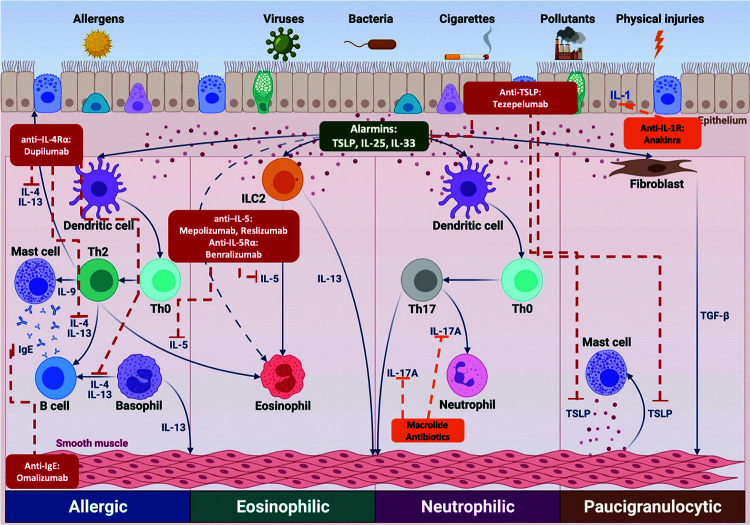
Background: Asthma is a complex disorder with variable clinical expression. Recognizable clinical and laboratory features define phenotypes, and specific biologic pathways define endotypes. Identifying the specific pathway responsible for persistent asthma would enable the clinician to select the optimal inhibitors, which currently are biologic therapies. Objective: To provide an up-to-date review of the current clinical status of endotype and phenotype characterizations of asthma and discuss these categories in relation to the available, or likely available, biologic therapies for asthma. Methods: The medical literature was reviewed based on the search terms: asthma biologics, severe asthma, uncontrolled asthma, corticosteroid-dependent asthma, phenotype, endotype, and type 2. We also used our knowledge of the literature and current research. Results: All of the current biologics, including the recently approved tezepelumab, were most effective with increased type 2 biomarkers, which identify exacerbation-prone asthma. Current biomarkers do not permit consistent identification of specific endotypes to facilitate informed selection of the optimal therapy for an individual patient. Thus, empiricism and the art of care continue to play major roles in treatment selection. Conclusion: Current biologic therapies for asthma and those likely to be U.S. Food and Drug Administration approved within the near future work best in subjects with strong type 2 signatures. Available biomarkers and observable characteristics do not enable clinicians to recognize specific endotypes, but rather subphenotypes or overlapping endotypes. The goal of identifying the optimal patient for a specific therapy remains elusive, but worthy of pursuit. In the interim, the availability of an increasing number of treatment options allows the clinician to help most of his or her patients.
Conflict of interest statement
JC Cardet is a consultant or has received fees from GSK, Genentech and AstraZeneca. DK Ledford is a consultant or has received fees from BioCryst, GSK, AstraZeneca, Genentech and Sanofi Regeneron. ST Taunk has no conflicts of interest to declare
Figures
References
-
- Global Initiative for Asthma. Global Strategy for Asthma Management and Prevention, 2020. Available online at https://www.ginasthma.org; accessed 08/29/2021.
-
- Centers for Disease Control and Prevention. Most Recent National Asthma Data 2021. Available online at https://www.cdc.gov/asthma/most_recent_national_asthma_data.htm; accesssed November 18, 2021.
-
- Asher I, Pearce N. Global burden of asthma among children. Int J Tuberc Lung Dis. 2014; 18:1269–1278. - PubMed
-
- Custovic A, Henderson J, Simpson A. Does understanding endotypes translate to better asthma management options for all? J Allergy Clin Immunol. 2019; 144:25–33. - PubMed
-
- Agache I, Akdis C, Jutel M, et al. . Untangling asthma phenotypes and endotypes. Allergy. 2012; 67:835–846. - PubMed
MeSH terms
Substances
Grants and funding
LinkOut - more resources
Full Text Sources
Medical
