


Anti-atherosclerotic therapies: Milestones, challenges, and emerging innovations
- PMID: 36065464
- PMCID: PMC9552812
- DOI: 10.1016/j.ymthe.2022.08.024
Anti-atherosclerotic therapies: Milestones, challenges, and emerging innovations
Abstract
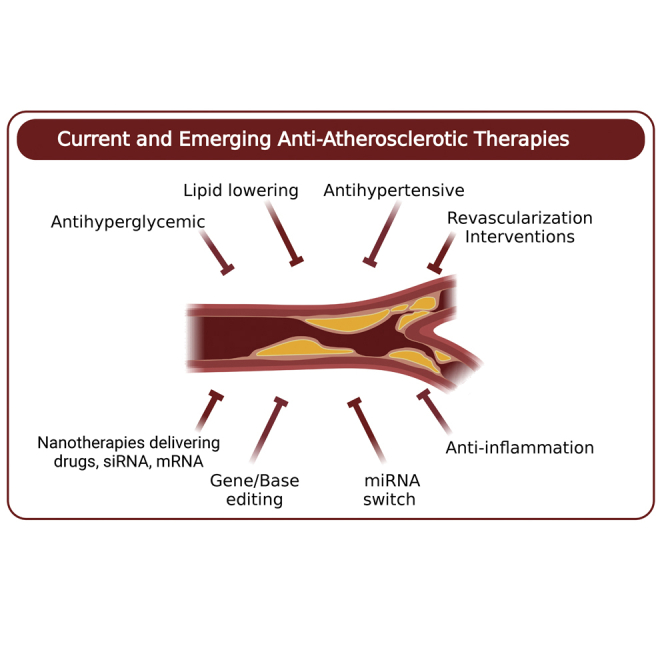
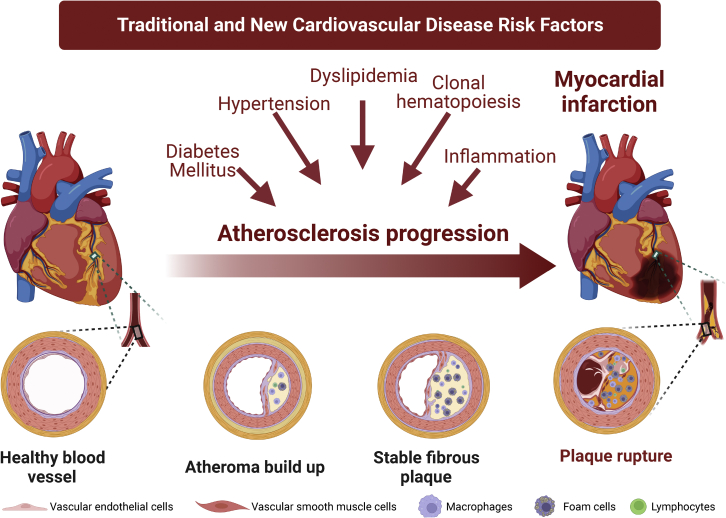
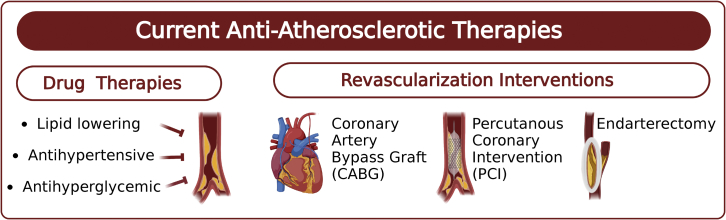
Atherosclerosis is the main underlying pathology for many cardiovascular diseases (CVDs), which are the leading cause of death globally and represent a serious health crisis. Atherosclerosis is a chronic condition that can lead to myocardial infarction, ischemic cardiomyopathy, stroke, and peripheral arterial disease. Elevated plasma lipids, hypertension, and high glucose are the major risk factors for developing atherosclerotic plaques. To date, most pharmacological therapies aim to control these risk factors, but they do not target the plaque-causing cells themselves. In patients with acute coronary syndromes, surgical revascularization with percutaneous coronary intervention has greatly reduced mortality rates. However, stent thrombosis and neo-atherosclerosis have emerged as major safety concerns of drug eluting stents due to delayed re-endothelialization. This review summarizes the major milestones, strengths, and limitations of current anti-atherosclerotic therapies. It provides an overview of the recent discoveries and emerging game-changing technologies in the fields of nanomedicine, mRNA therapeutics, and gene editing that have the potential to revolutionize CVD clinical practice by steering it toward precision medicine.
Keywords: atherosclerosis; base editing; cardiovascular disease; coronary artery disease; inflammation; mRNA therapeutics; miRNA-switch; nanomedicine; nanotherapy; precision medicine; stroke.
Copyright © 2022 The Author(s). Published by Elsevier Inc. All rights reserved.
Conflict of interest statement
Declaration of interests The authors declare no competing interests.
Figures
References
-
- Roth G.A., Mensah G.A., Johnson C.O., Addolorato G., Ammirati E., Baddour L.M., Barengo N.C., Beaton A.Z., Benjamin E.J., Benziger C.P., et al. Global burden of cardiovascular diseases and risk factors, 1990-2019: update from the GBD 2019 study. J. Am. Coll. Cardiol. 2020;76:2982–3021. doi: 10.1016/j.jacc.2020.11.010. - DOI - PMC - PubMed
-
- Campbell I.C., Suever J.D., Timmins L.H., Veneziani A., Vito R.P., Virmani R., Oshinski J.N., Taylor W.R. Biomechanics and inflammation in atherosclerotic plaque erosion and plaque rupture: implications for cardiovascular events in women. PLoS One. 2014;9:e111785. doi: 10.1371/journal.pone.0111785. - DOI - PMC - PubMed
Publication types
MeSH terms
Substances
Grants and funding
LinkOut - more resources
Full Text Sources
Medical
