


Real-world experience with weight gain among pregnant women living with HIV who are using integrase inhibitors
- PMID: 36065478
- PMCID: PMC9985658
- DOI: 10.1111/hiv.13388
Real-world experience with weight gain among pregnant women living with HIV who are using integrase inhibitors
Abstract
Objectives: We assessed real-world weight change and pregnancy outcomes among pregnant women living with HIV who used integrase strand transferase inhibitor (INSTI)-based combined antiretroviral therapy (cART).
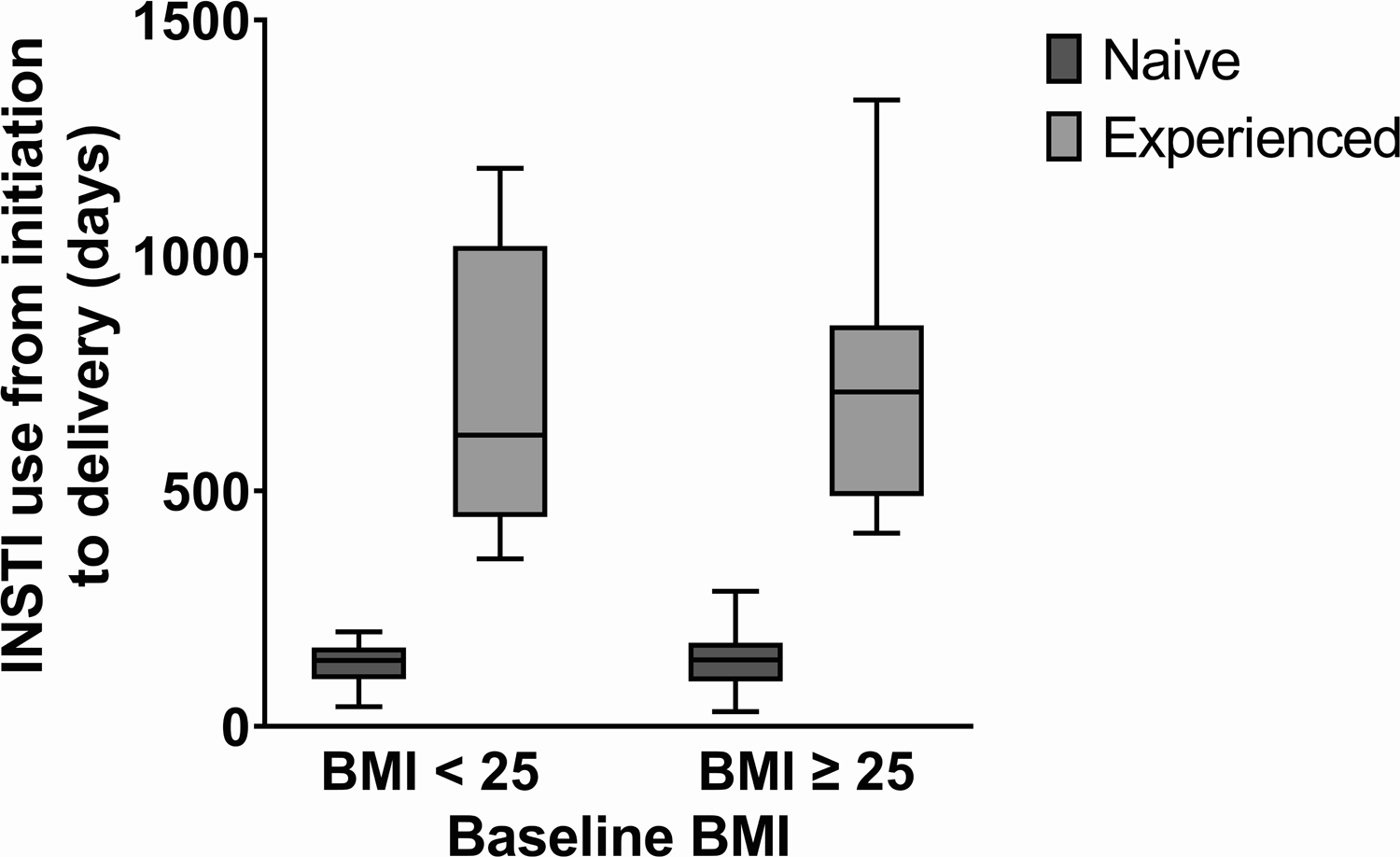
Methods: In a retrospective cohort study from 2014 to 2021 for prevention of perinatal HIV infection, we evaluated changes in weight from the first prenatal visit to near delivery for two groups. The categories of change were: low (< 0.18 kg/week), normal (0.18-0.59 kg/week), and high (> 0.59 kg/week). The backbones were lamivudine + tenofovir disoproxil or lamivudine + zidovudine. The comparison groups were women with body mass index (BMI) < 25 kg/m2 versus BMI ≥ 25 kg/m2 and INSTI-naïve versus INSTI-experienced. Continuous variables were analysed with a Kruskal-Wallis test and count or categorical data with χ2 tests.
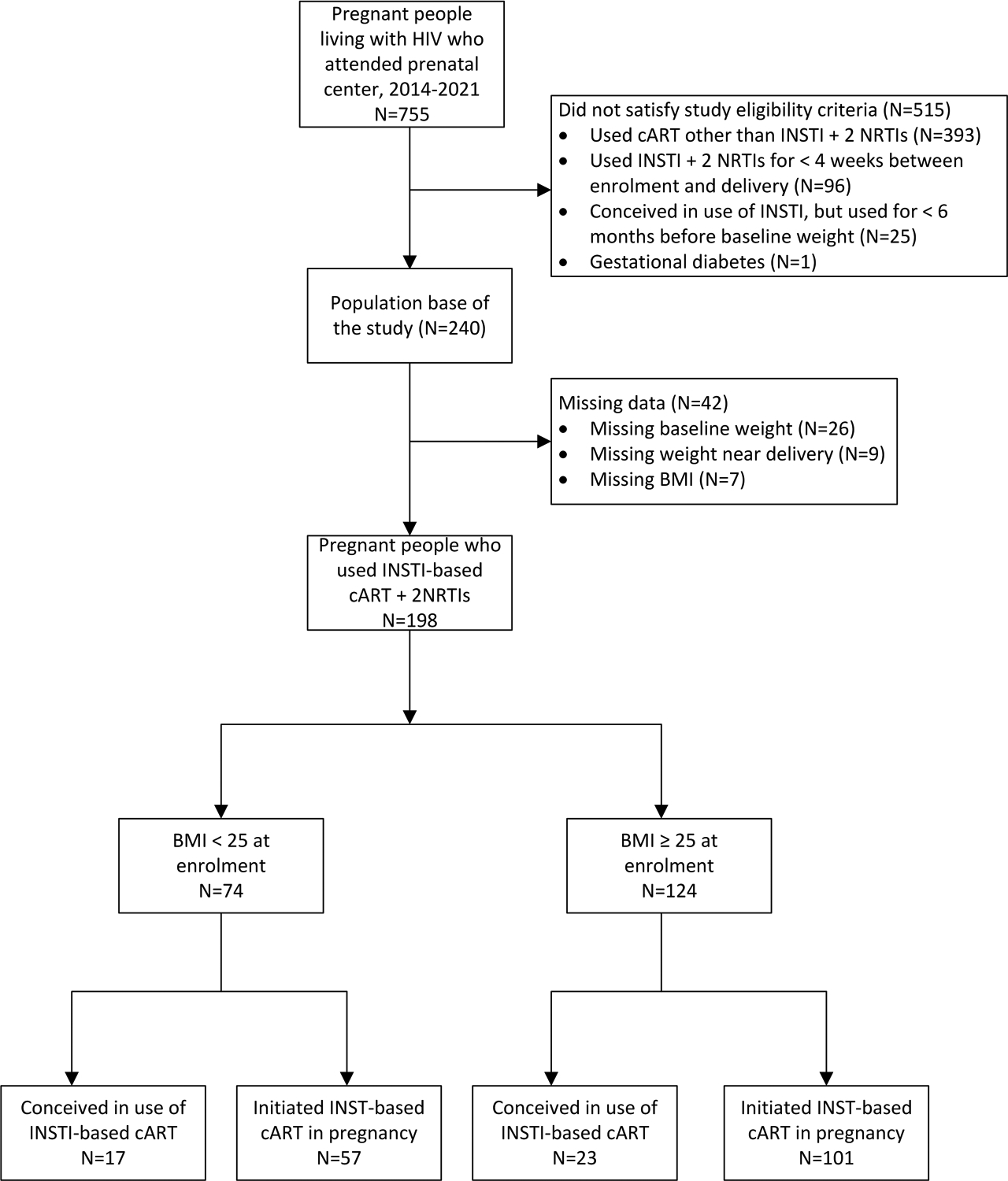
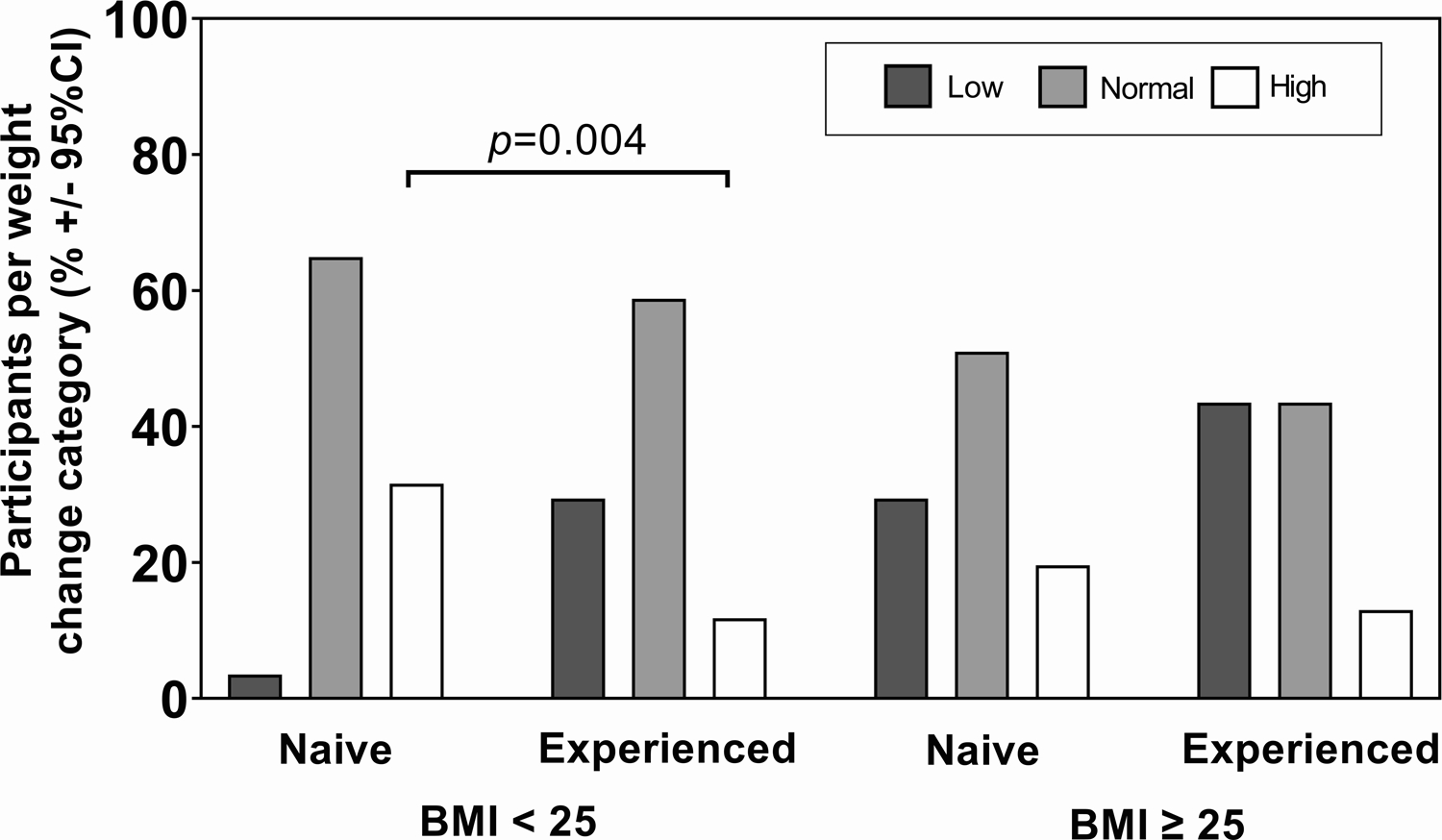
Results: We enrolled 198 pregnant women. At study entry, 74 had BMI < 25 kg/m2 and 124 had BMI ≥ 25 kg/m2 . Excess gestational weight gain was more frequent among women who were INSTI-naïve among both BMI groups (< 25 and ≥ 25). However, the proportion of participants per weight change category was only significantly different between INSTI-naïve women with baseline BMI < 25 kg/m2 and INSTI-experienced women with BMI < 25 kg/m2 . In particular, INSTI-naïve women with BMI < 25 kg/m2 had significantly higher rates of excess gestational weight gain (31.6%) compared with participants with BMI < 25 kg/m2 who conceived while on INSTIs (11.8%, p = 0.004). Rates of unfavourable pregnancy outcomes were low and did not differ significantly between groups.
Conclusions: INSTI-naïve participants with BMI < 25 kg/m2 gained more weight during pregnancy than participants with BMI ≥ 25 kg/m2 who conceived while using INSTIs. Rates of adverse pregnancy outcomes did not differ between the groups.
Keywords: HIV integrase inhibitors; anti-HIV agents; gestational weight gain; pregnancy outcomes.
© 2022 British HIV Association.
Conflict of interest statement
Figures
References
-
- World Health Organization. Updated Recommendations on HIV Prevention, Infant Diagnosis, Antiretroviral Initiation and Monitoring. Geneva: WHO; 2021. - PubMed
-
- U.S. Department of Health and Human Services Panel on Antiretroviral Guidelines for Adults and Adolescents Panel Members and Consultants. Guidelines for the Use of Antiretroviral Agents in Adults and Adolescents Living with HIV. Washington, DC: U. S. Department of Health and Human Services; 2021.
-
- European AIDS Clinical Society. Guidelines. Version 11.0. Brussels, Belgium: EACS; 2021.
-
- British HIV Association. BHIVA guidelines on antiretroviral treatment for adults living with HIV-1 2022 - consultation version. London: BHIVA; 2022.
-
- Venter WDF, Moorhouse M, Sokhela S, et al. Dolutegravir plus two different prodrugs of tenofovir to treat HIV. New England Journal of Medicine. 2019; 381:803–15. - PubMed
