


Differences In Care Between Special Needs Plans And Other Medicare Coverage For Dual Eligibles
- PMID: 36067441
- PMCID: PMC9575653
- DOI: 10.1377/hlthaff.2022.00463
Differences In Care Between Special Needs Plans And Other Medicare Coverage For Dual Eligibles
Abstract
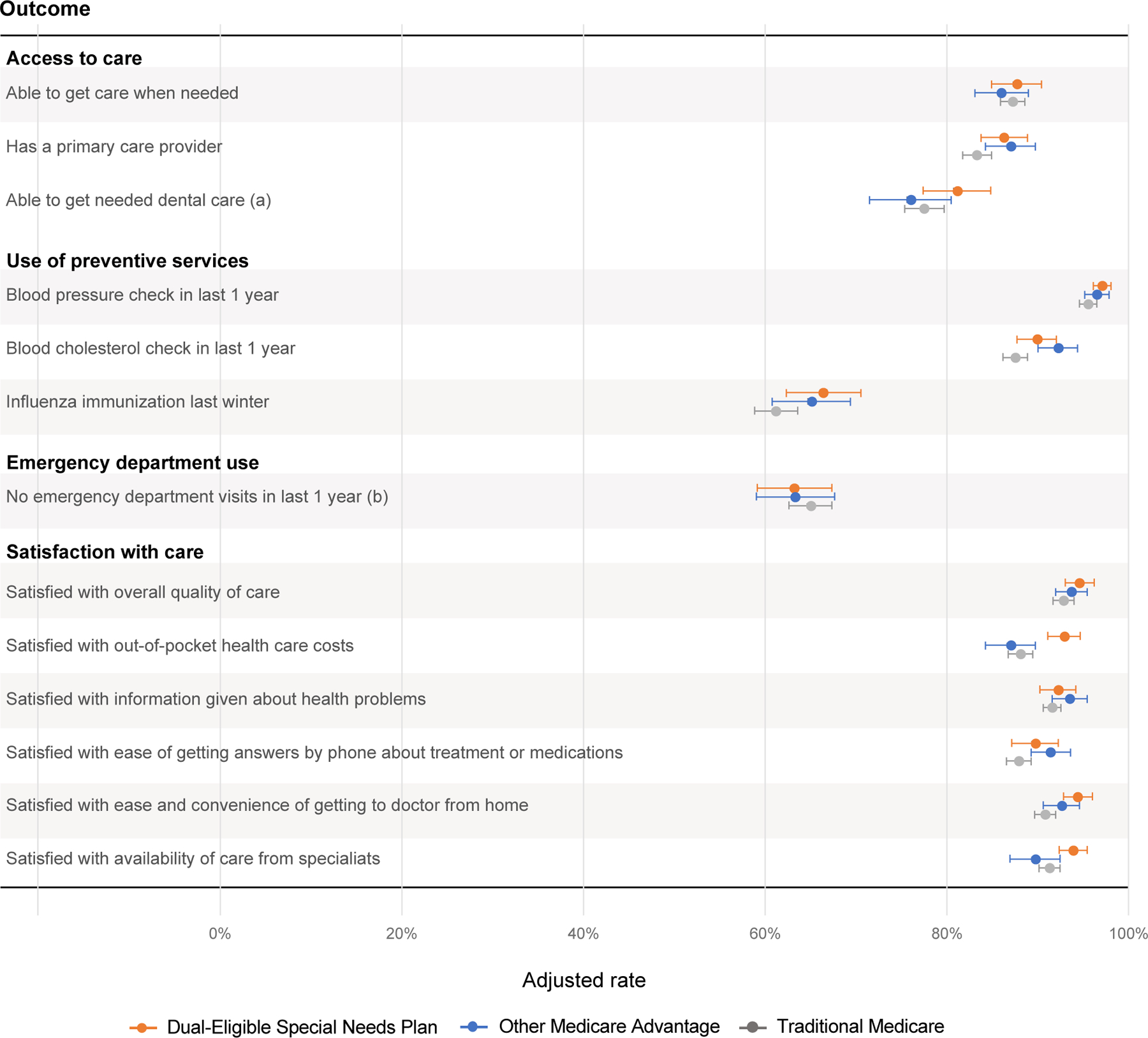
Policy makers are pursuing strategies to integrate Medicare and Medicaid coverage for people enrolled in both programs, who are known as dual eligibles. Dual Eligible Special Needs Plans (D-SNPs) are Medicare Advantage plans that exclusively serve this population, with several features intended to enhance care and facilitate integration with Medicaid. This study compared access to, use of, and satisfaction with care among dual eligibles enrolled in D-SNPs versus those enrolled in two other forms of Medicare coverage: other Medicare Advantage (MA) plans not exclusively serving dual eligibles and traditional Medicare. Compared with those in traditional Medicare, dual eligibles generally reported greater access to care, preventive service use, and satisfaction with care in D-SNPs. However, we found fewer differences in these outcomes among dual eligibles in D-SNPs versus other MA plans. Compared with non-Hispanic White dual eligibles, dual eligibles of color (for example, those identifying as Black or Hispanic) were less likely to report receiving better care in D-SNPs versus other Medicare coverage. These findings suggest that D-SNPs altogether have not provided consistently superior or more equitable care, and they highlight areas where federal and state policy could strengthen incentives for D-SNPs to improve care.
Figures
References
-
- Data Book: Beneficiaries dually eligible for Medicare and Medicaid. Report Washington, DC: Medicare Payment Advisory Commission and Medicaid and CHIP Payment and Access Commission; 2022. February 2022.
-
- Kasper JD, O’Malley Watts M, Lyons B. Chronic Disease and Co‐Morbidity Among Dual Eligibles: Implications for Patterns of Medicaid and Medicare Service Use and Spending Washington, DC: Kaiser Family Foundation; 2010. July 2010.
-
- Young K, Garfield R, Musumeci M, Clemans-Cope L, Lawton E. Medicaid’s Role for Dual Eligible Beneficiaries Washington, DC: Kaiser Family Foundation; 2013. August 2013.
Publication types
MeSH terms
Grants and funding
LinkOut - more resources
Full Text Sources
