


Identification and functional characterization of BICD2 as a candidate disease gene in an consanguineous family with dilated cardiomyopathy
- PMID: 36068540
- PMCID: PMC9446846
- DOI: 10.1186/s12920-022-01349-y
Identification and functional characterization of BICD2 as a candidate disease gene in an consanguineous family with dilated cardiomyopathy
Abstract
Background: Familial dilated cardiomyopathy (DCM) is a genetic cardiomyopathy that is associated with reduced left ventricle function or systolic function. Fifty-one DCM-causative genes have been reported, most of which are inherited in an autosomal dominant manner. However, recessive DCM-causative gene is rarely observed.
Methods: Whole-exome sequencing (WES) was performed in a consanguineous family with DCM to identify candidate variants. Sanger sequencing was utilized to confirm the variant. We then checked the DCM candidate gene in 210 sporadic DCM cases. We next explored BICD2 function in both embryonic and adult bicd2-knockout zebrafish models. In vivo cardiac function of bicd2-knockout fish was detected by echocardiography and RNA-seq.
Results: We identified an autosomal recessive and evolutionarily conserved missense variant, NM_001003800.1:c.2429G > A, in BICD2, which segregated with the disease phenotype in a consanguineous family with DCM. Furthermore, we confirmed the presence of BICD2 variants in 3 sporadic cases. Knockout of bicd2 resulted in partial embryonic lethality in homozygotes, suggesting a vital role for bicd2 in embryogenesis. Heart dilation and decreased ejection fraction, cardiac output and stroke volume were observed in bicd2-knockout zebrafish, suggesting a phenotype similar to human DCM. Furthermore, RNA-seq confirmed a larger transcriptome shift in in bicd2 homozygotes than in heterozygotes. Gene set enrichment analysis of bicd2-deficient fish showed the enrichment of altered gene expression in cardiac pathways and mitochondrial energy metabolism.
Conclusions: Our study first shows that BICD2 is a novel candidate gene associated with familial DCM, and our findings will facilitate further insights into the molecular pathological mechanisms of DCM.
Keywords: BICD2; Dilated cardiomyopathy; RNA-seq; Zebrafish model.
© 2022. The Author(s).
Conflict of interest statement
The authors declare that they have no competing interests.
Figures

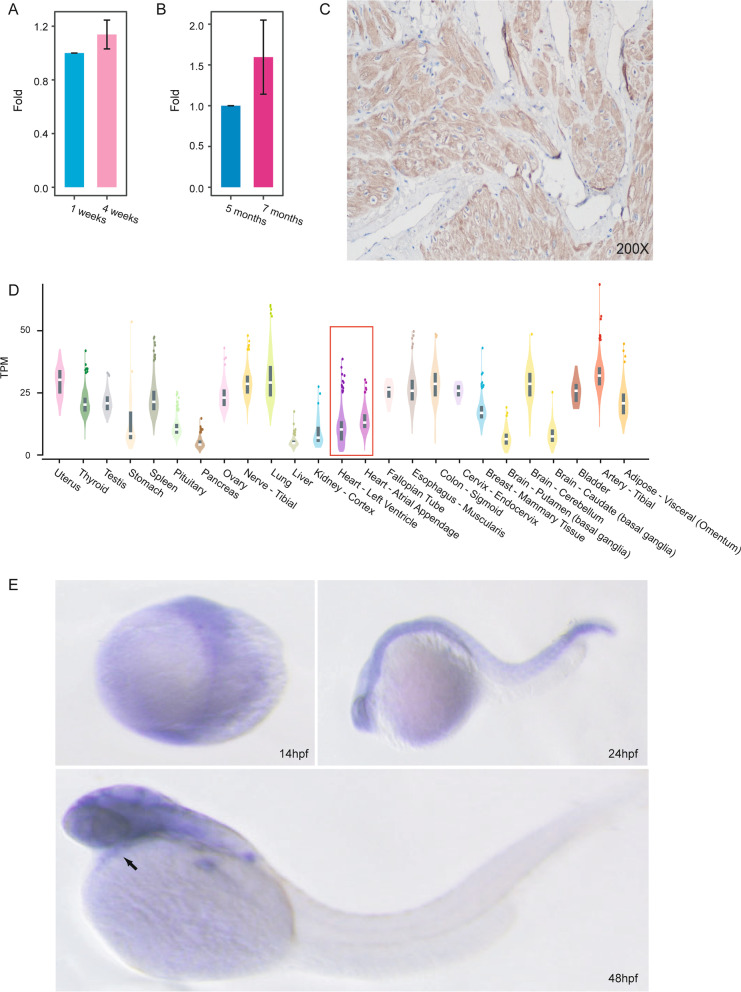


References
-
- Douglas P, Zipes PLMP, Robert OB, Douglas LM, Gordon FT. Braunwald's heart disease: a textbook of cardiovascular medicine. Berlin: Springer; 2018.
-
- Maron BJ, Towbin JA, Thiene G, Antzelevitch C, Corrado D, Arnett D, Moss AJ, Seidman CE, Young JB, American Heart A, et al. Contemporary definitions and classification of the cardiomyopathies: an American Heart Association Scientific Statement from the Council on Clinical Cardiology, Heart Failure and Transplantation Committee; Quality of Care and Outcomes Research and Functional Genomics and Translational Biology Interdisciplinary Working Groups; and Council on Epidemiology and Prevention. Circulation. 2006;113(14):1807–1816. doi: 10.1161/CIRCULATIONAHA.106.174287. - DOI - PubMed
-
- Harakalova M, Kummeling G, Sammani A, Linschoten M, Baas AF, van der Smagt J, Doevendans PA, van Tintelen JP, Dooijes D, Mokry M, et al. A systematic analysis of genetic dilated cardiomyopathy reveals numerous ubiquitously expressed and muscle-specific genes. Eur J Heart Fail. 2015;17(5):484–493. doi: 10.1002/ejhf.255. - DOI - PubMed
Publication types
MeSH terms
Substances
Supplementary concepts
LinkOut - more resources
Full Text Sources
Molecular Biology Databases
