


In vivo measurement of intradiscal pressure changes related to thrust and non-thrust spinal manipulation in an animal model: a pilot study
- PMID: 36068588
- PMCID: PMC9446573
- DOI: 10.1186/s12998-022-00445-1
In vivo measurement of intradiscal pressure changes related to thrust and non-thrust spinal manipulation in an animal model: a pilot study
Abstract
Background: The intervertebral disc is a known back pain generator and is frequently the focus of spinal manipulative therapy evaluation and treatment. The majority of our current knowledge regarding intradiscal pressure (IDP) changes related to spinal manual therapy involves cadaveric studies with their inherent limitations. Additional in vivo animal models are needed to investigate intervertebral disc physiological and molecular mechanisms related to spinal manipulation and spinal mobilization treatment for low back disorders.
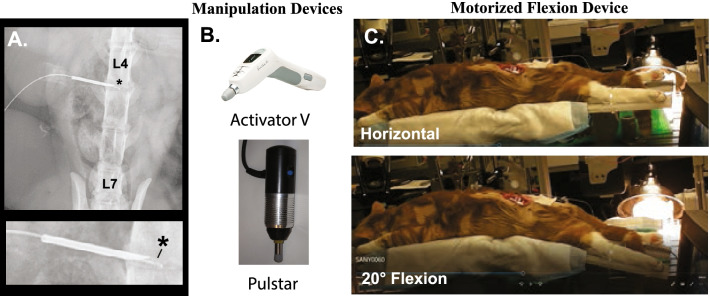
Methods: Miniature pressure catheters (Millar SPR-1000) were inserted into either the L4-L5 or L5-L6 intervertebral disc of 3 deeply anesthetized adult cats (Oct 2012-May 2013). Changes in IDP were recorded during delivery of instrument-assisted spinal manipulation (Activator V® and Pulstar®) and motorized spinal flexion with/without manual spinous process contact.
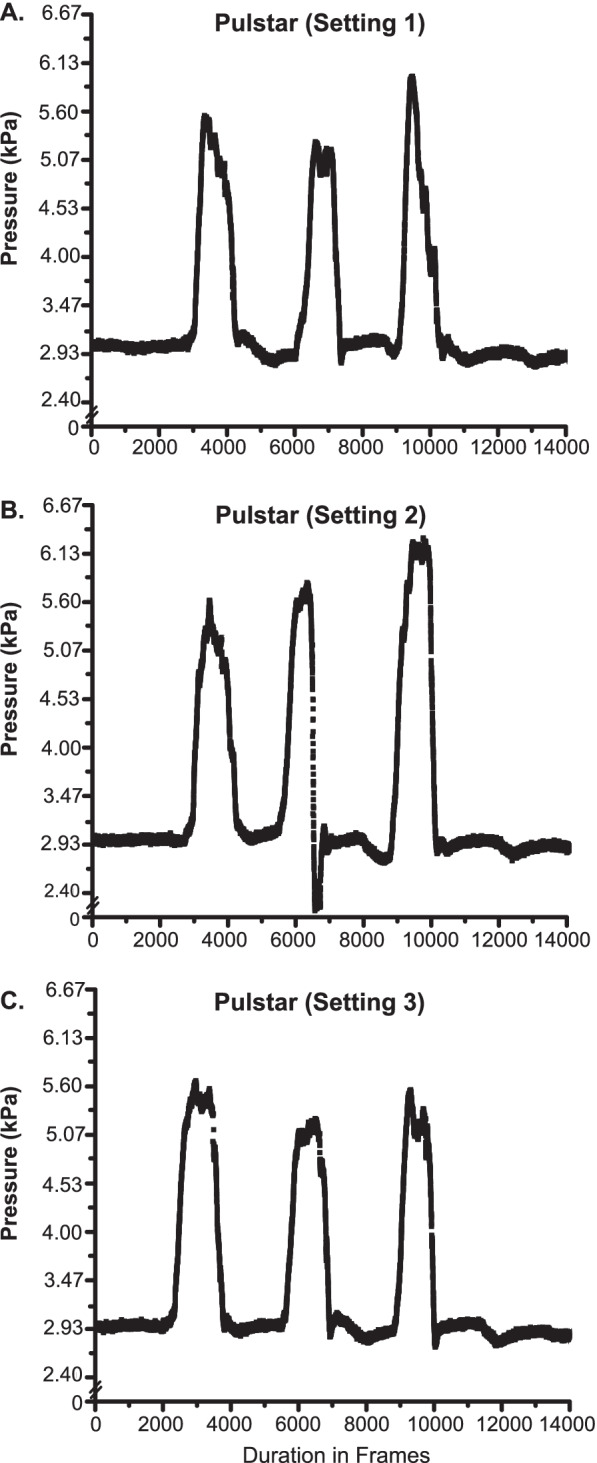
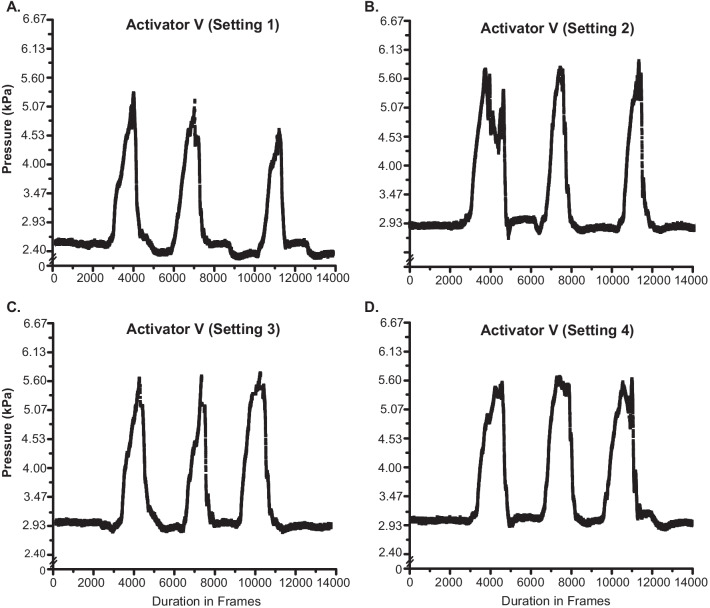
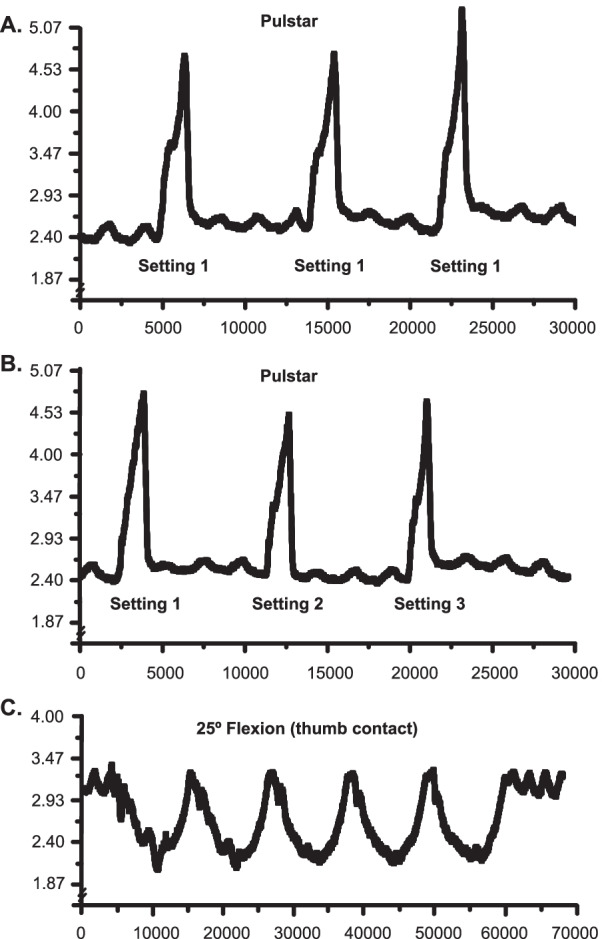
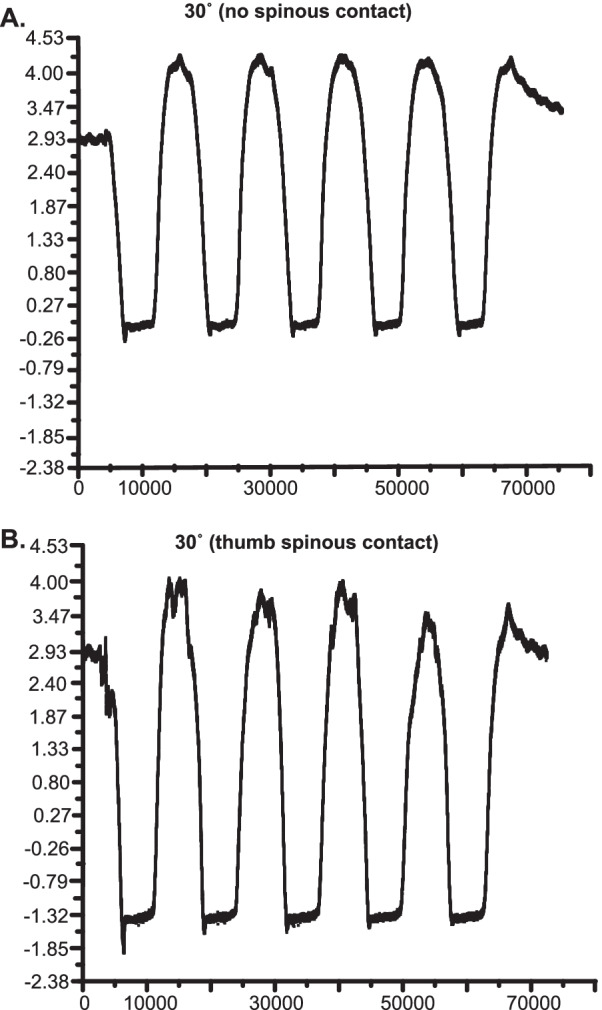
Results: Motorized flexion of 30° without spinous contact decreased IDP of the L4-L5 disc by ~ 2.9 kPa, while physical contact of the L4 spinous process decreased IDP an additional ~ 1.4 kPa. Motorized flexion of 25° with L5 physical contact in a separate animal decreased IDP of the L5-L6 disc by ~ 1.0 kPa. Pulstar® impulses (setting 1-3) increased IDP of L4-L5 and L5-L6 intervertebral discs by ~ 2.5 to 3.0 kPa. Activator V® (setting 1-4) impulses increased L4-L5 IDP to a similar degree. Net changes in IDP amplitudes remained fairly consistent across settings on both devices regardless of device setting suggesting that viscoelastic properties of in vivo spinal tissues greatly dampen superficially applied manipulative forces prior to reaching deep back structures such as the intervertebral disc.
Conclusions: This study marks the first time that feline in vivo changes in IDP have been reported using clinically available instrument-assisted spinal manipulation devices and/or spinal mobilization procedures. The results of this pilot study indicate that a feline model can be used to investigate IDP changes related to spinal manual therapy mechanisms as well as the diminution of these spinal manipulative forces due to viscoelastic properties of the surrounding spinal tissues. Additional investigation of IDP changes is warranted in this and/or other in vivo animal models to provide better insights into the physiological effects and mechanisms of spinal manual therapy at the intervertebral disc level.
Keywords: Chiropractic; Intervertebral disc; Intradiscal pressure; Lumbar; Spinal manipulation.
© 2022. The Author(s).
Conflict of interest statement
The authors declare that they have no competing interests.
Figures
References
-
- Cheung KM, Karppinen J, Chan D, Ho DW, Song YQ, Sham P, Cheah KS, Leong JC, Luk KD. Prevalence and pattern of lumbar magnetic resonance imaging changes in a population study of one thousand forty-three individuals. Spine (Phila Pa 1976) 2009;34(9):934–940. doi: 10.1097/BRS.0b013e3181a01b3f. - DOI - PubMed
-
- Yamamoto J, Maeno K, Takada T, Kakutani K, Yurube T, Zhang Z, Hirata H, Kurakawa T, Sakai D, Mochida J, et al. Fas ligand plays an important role for the production of pro-inflammatory cytokines in intervertebral disc nucleus pulposus cells. J Orthop Res. 2013;31(4):608–615. doi: 10.1002/jor.22274. - DOI - PubMed
Publication types
MeSH terms
Grants and funding
LinkOut - more resources
Full Text Sources
Miscellaneous
