


Individualized Risk Prediction for Improved Chronic Wound Management
- PMID: 36070447
- PMCID: PMC10125399
- DOI: 10.1089/wound.2022.0017
Individualized Risk Prediction for Improved Chronic Wound Management
Abstract
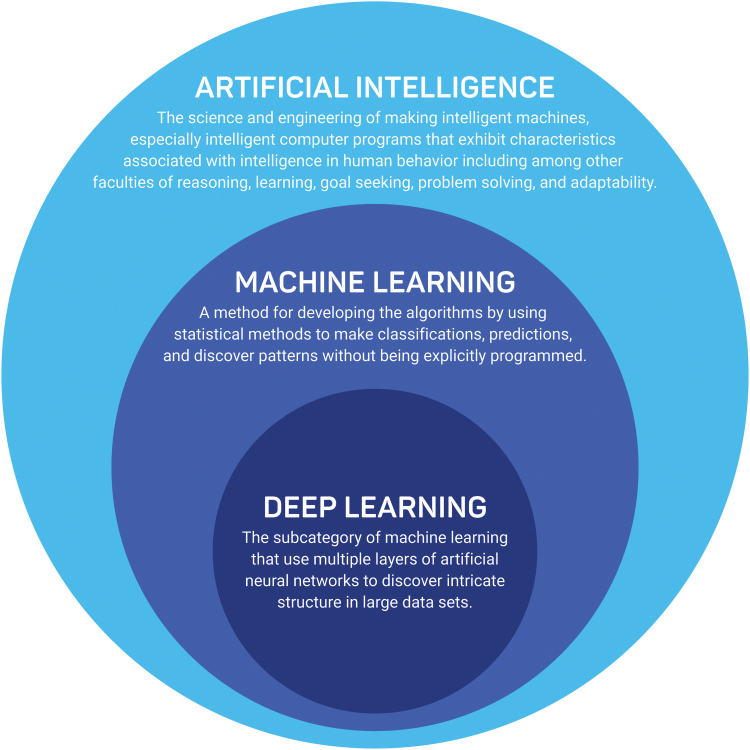
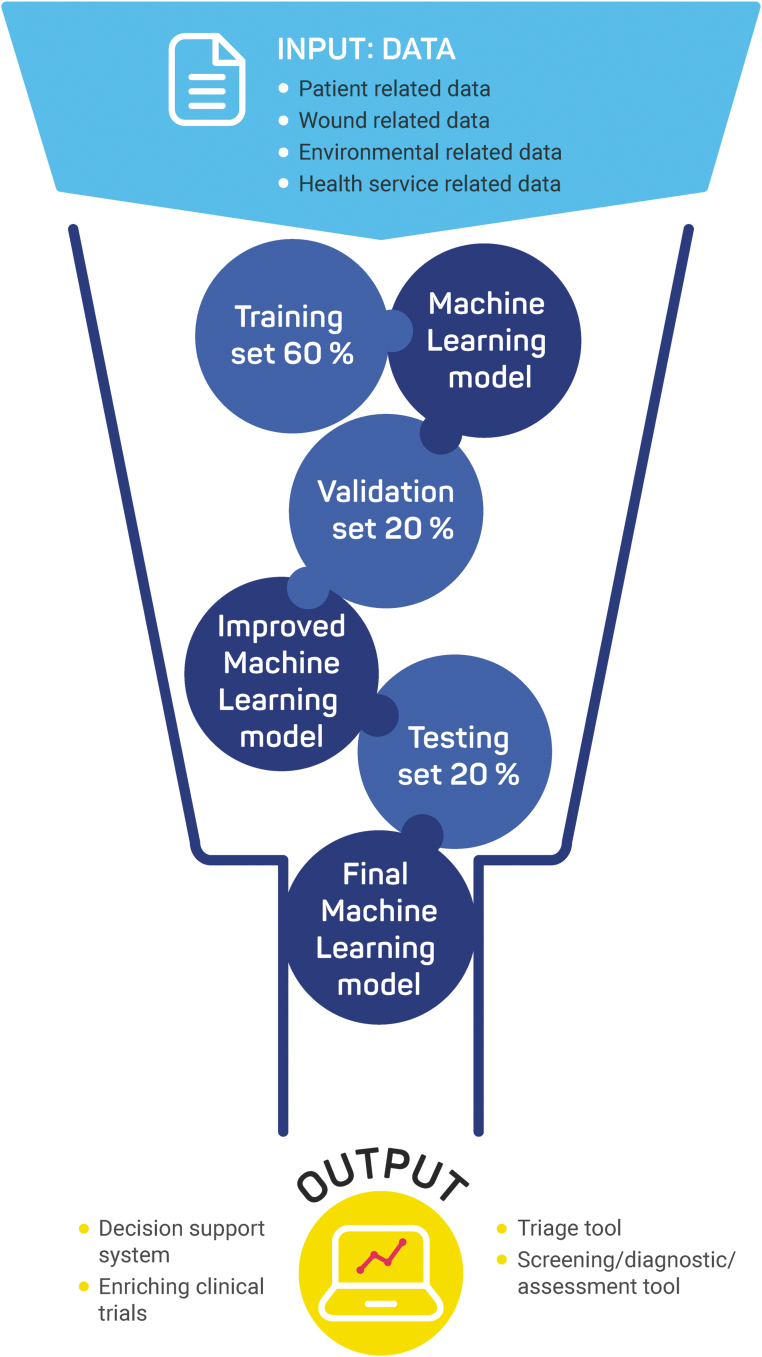
Significance: Chronic wounds are associated with significant morbidity, marked loss of quality of life, and considerable economic burden. Evidence-based risk prediction to guide improved wound prevention and treatment is limited by the complexity in their etiology, clinical underreporting, and a lack of studies using large high-quality datasets. Recent Advancements: The objective of this review is to summarize key components and challenges in the development of personalized risk prediction tools for both prevention and management of chronic wounds, while highlighting several innovations in the development of better risk stratification. Critical Issues: Regression-based risk prediction approaches remain important for assessment of prognosis and risk stratification in chronic wound management. Advances in statistical computing have boosted the development of several promising machine learning (ML) and other semiautomated classification tools. These methods may be better placed to handle large number of wound healing risk factors from large datasets, potentially resulting in better risk prediction when combined with conventional methods and clinical experience and expertise. Future Directions: Where the number of predictors is large and heterogenous, the correlations between various risk factors complex, and very large data sets are available, ML may prove a powerful adjuvant for risk stratifying patients predisposed to chronic wounds. Conventional regression-based approaches remain important, particularly where the number of predictors is relatively small. Translating estimated risk derived from ML algorithms into practical prediction tools for use in clinical practice remains challenging.
Keywords: chronic wounds; personalized therapy; risk prediction; risk stratification; wound management.
Conflict of interest statement
V.V. is an employee of HARTMANN GROUP.
T.S. received compensation from serving on advisory boards for Biogen; speaker fees from Biogen and Novartis.
M.C. received speaker fees from Arjo.
S.P. declares no competing interests for this publication
D.G.A. This study is partially supported by National Institutes of Health, National Institute of Diabetes and Digestive and Kidney Diseases Award Number 1R01124789-01A1 and partially supported by National Science Foundation (NSF) Center to Stream Health care in Place (#C2SHiP) CNS Award Number 2052578
E.S. declares no competing interests
The content of this article was expressly written by the authors listed.
Figures

References
-
- Vos T, Allen C, Arora M, et al. . Global, regional, and national incidence, prevalence, and years lived with disability for 310 diseases and injuries, 1990–2015: A systematic analysis for the Global Burden of Disease Study 2015. Lancet 2016;388(10053):1545–1602; doi: 10.1016/s0140-6736(16)31678-6 - DOI - PMC - PubMed
Publication types
MeSH terms
Grants and funding
LinkOut - more resources
Full Text Sources
