


Modelling metabolic diseases and drug response using stem cells and organoids
- PMID: 36071283
- PMCID: PMC9449917
- DOI: 10.1038/s41574-022-00733-z
Modelling metabolic diseases and drug response using stem cells and organoids
Abstract
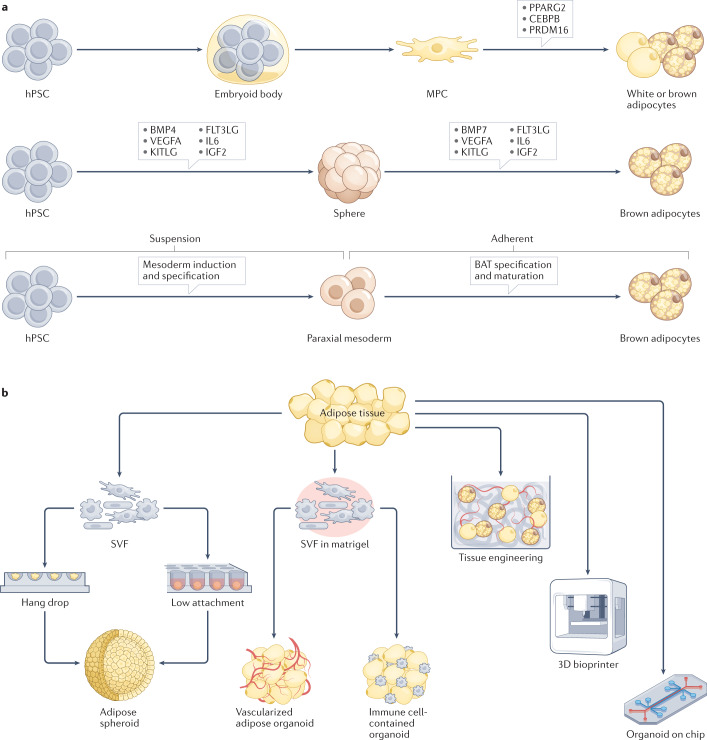
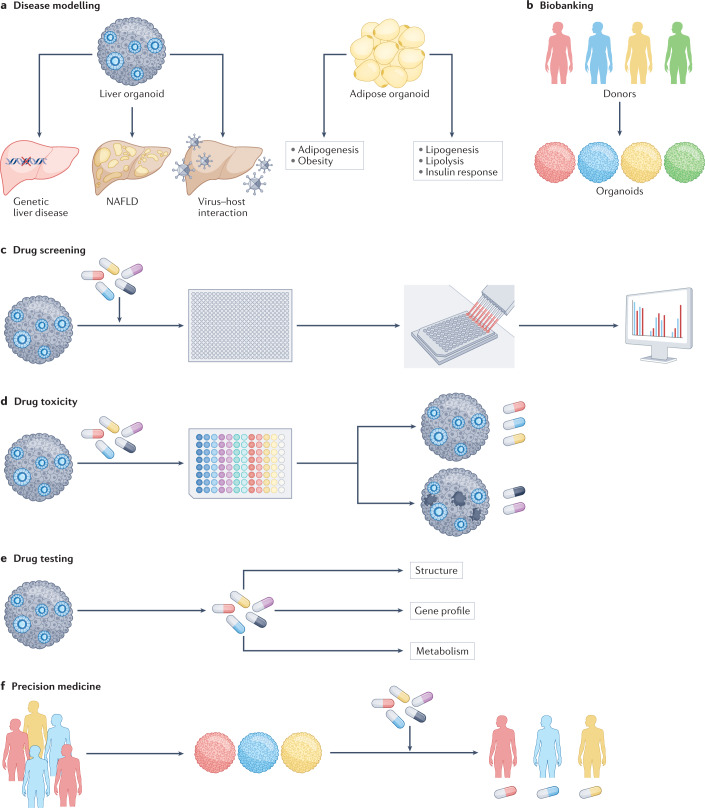
Metabolic diseases, including obesity, diabetes mellitus and cardiovascular disease, are a major threat to health in the modern world, but efforts to understand the underlying mechanisms and develop rational treatments are limited by the lack of appropriate human model systems. Notably, advances in stem cell and organoid technology allow the generation of cellular models that replicate the histological, molecular and physiological properties of human organs. Combined with marked improvements in gene editing tools, human stem cells and organoids provide unprecedented systems for studying mechanisms of metabolic diseases. Here, we review progress made over the past decade in the generation and use of stem cell-derived metabolic cell types and organoids in metabolic disease research, especially obesity and liver diseases. In particular, we discuss the limitations of animal models and the advantages of stem cells and organoids, including their application to metabolic diseases. We also discuss mechanisms of drug action, understanding the efficacy and toxicity of existing therapies, screening for new treatments and pursuing personalized therapies. We highlight the potential of combining stem cell-derived organoids with gene editing and functional genomics to revolutionize the approach to finding treatments for metabolic diseases.
© 2022. Springer Nature Limited.
Conflict of interest statement
M.A.L. is an advisory board member for Pfizer Inc., a consultant to Madrigal and Calico, and receives support from Pfizer for research not overlapping with the work reported here. W.H. declares no competing interests.
Figures


References
Publication types
MeSH terms
Grants and funding
LinkOut - more resources
Full Text Sources
Medical
Miscellaneous
