


Respiratory infections in children born preterm in low and middle-income countries: A systematic review
- PMID: 36071597
- PMCID: PMC9825919
- DOI: 10.1002/ppul.26128
Respiratory infections in children born preterm in low and middle-income countries: A systematic review
Abstract
Context: Studies from high-income countries indicates that infants born preterm are at increased risk of respiratory infections; however in the low and middle-income countries (LMICs) data are limited. Our aim was to systematically review the studies evaluating the risk of respiratory infections in preterm children born in LMICs.
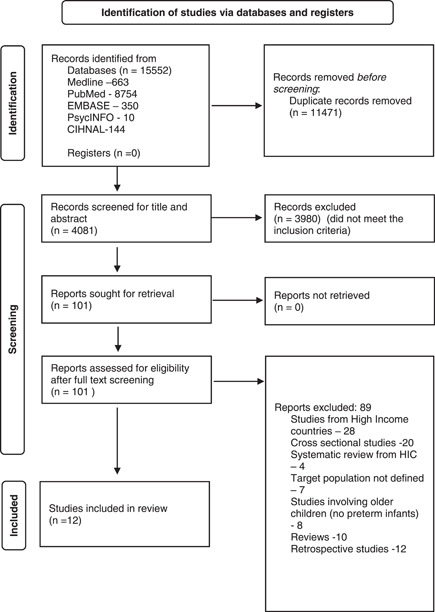
Methods: We searched Medline, PubMed, Cumulative Index of Nursing and Allied Health Literature, Embase, and Psych-INFO databases for studies reporting respiratory outcomes in children born preterm in LMICs. Two authors extracted the data and evaluated the risk of bias with appropriate assessment methods independently.
Results: Twelve observational studies evaluating 5969 children were included in the review. The risk of lower respiratory tract infection varied from 5% to 73.9%. Similarly, respiratory syncytial virus (RSV) infection risk ranged from 4.4% to 22.7%. The unadjusted relative risk for any respiratory tract infection or lower respiratory tract infection was significantly higher in the children born preterm than in children born at term (1.52 [95% confidence interval 1.25-1.85]). We also noted wide-ranging risk of respiratory infections requiring in-hospital or emergency care (range: 0.5%-27.7%) and hospital stay in children born preterm (range: 6-14.3 days).
Conclusions: Preterm-born children in LMICs are at risk of increased respiratory infections compared to term-born children; however, the baseline risk is variable, although substantial; This highlights the need for preventive strategies, including RSV immunoprophylaxis.
Keywords: LRTI; bronchiolitis; low birth weight; pneumonia; premature; respiratory syncytial virus; ventilation.
© 2022 The Authors. Pediatric Pulmonology published by Wiley Periodicals LLC.
Conflict of interest statement
The authors declare no conflict of interest.
Figures
References
-
- Blencowe H, Cousens S, Oestergaard MZ, et al. National, regional, and worldwide estimates of preterm birth rates in the year 2010 with time trends since 1990 for selected countries: a systematic analysis and implications. Lancet. 2012;379:2162‐2172. - PubMed
-
- Sweet DG, Carnielli V, Greisen G, et al. European consensus guidelines on the management of neonatal respiratory distress syndrome in preterm infants—2010 update. Neonatology. 2010;97:402‐417. - PubMed
-
- Frey HA, Klebanoff MA. The epidemiology, etiology, and costs of preterm birth. Semin Fetal Neonatal Med. 2016;21:68‐73. - PubMed
Publication types
MeSH terms
LinkOut - more resources
Full Text Sources
Medical
