


Differences in Classification Standards For the Prevalence of Overweight and Obesity in Children. A Systematic Review and Meta-Analysis
- PMID: 36071986
- PMCID: PMC9444235
- DOI: 10.2147/CLEP.S375981
Differences in Classification Standards For the Prevalence of Overweight and Obesity in Children. A Systematic Review and Meta-Analysis
Abstract
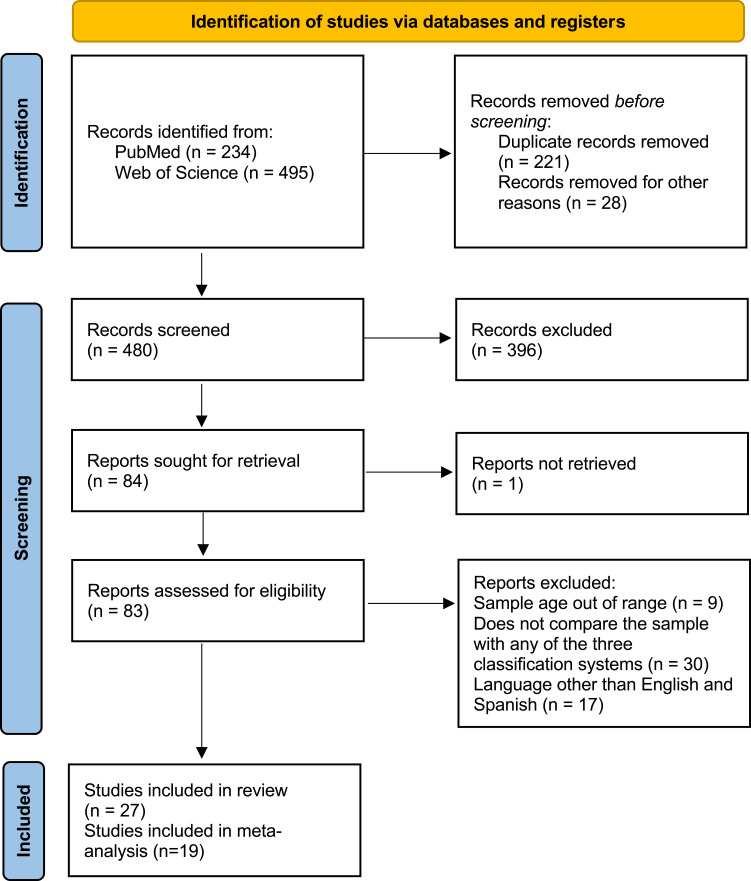
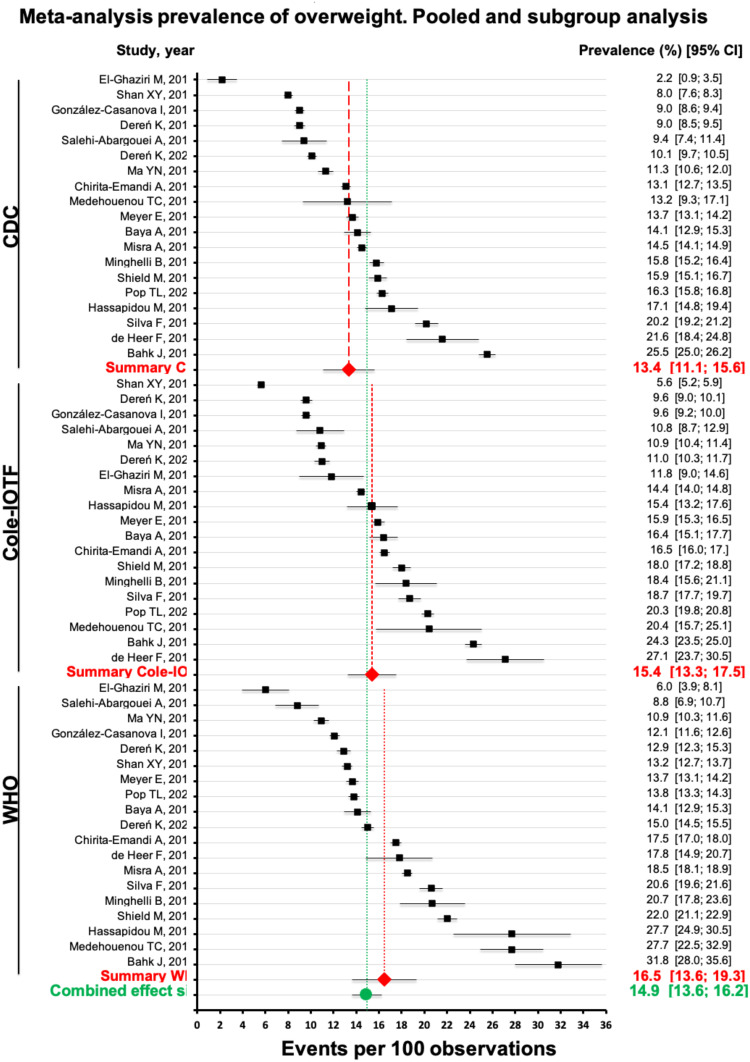
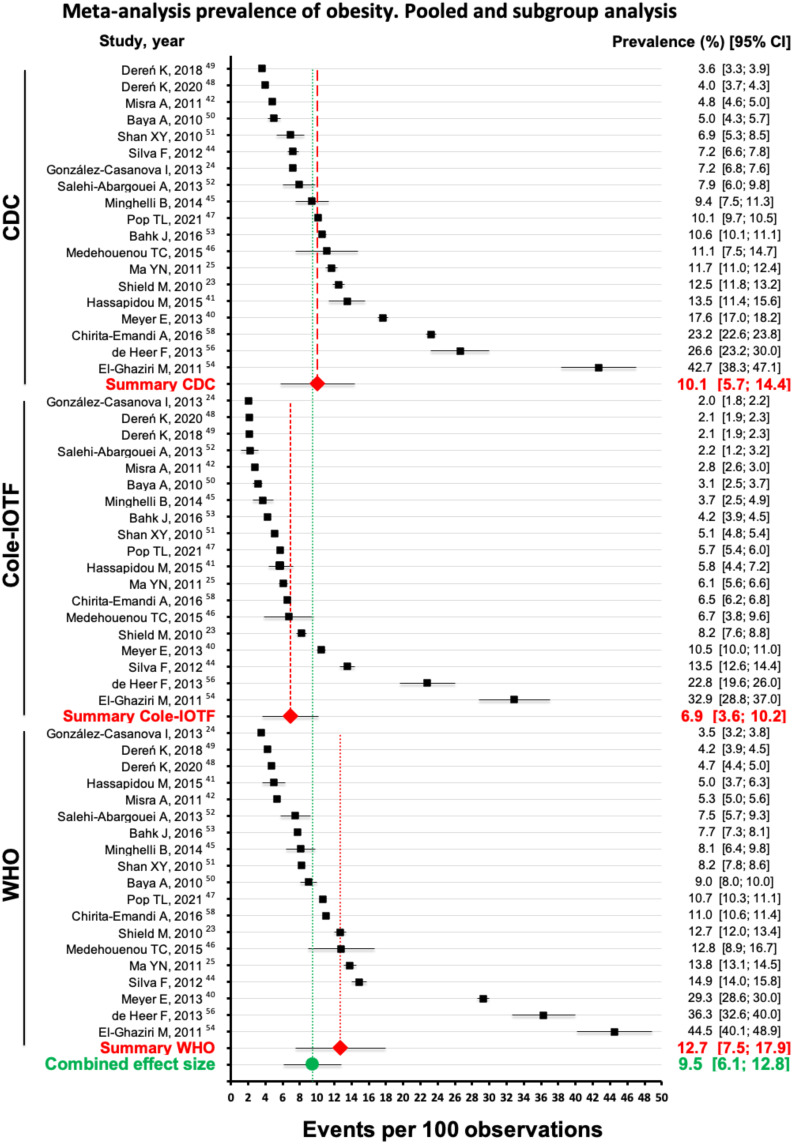
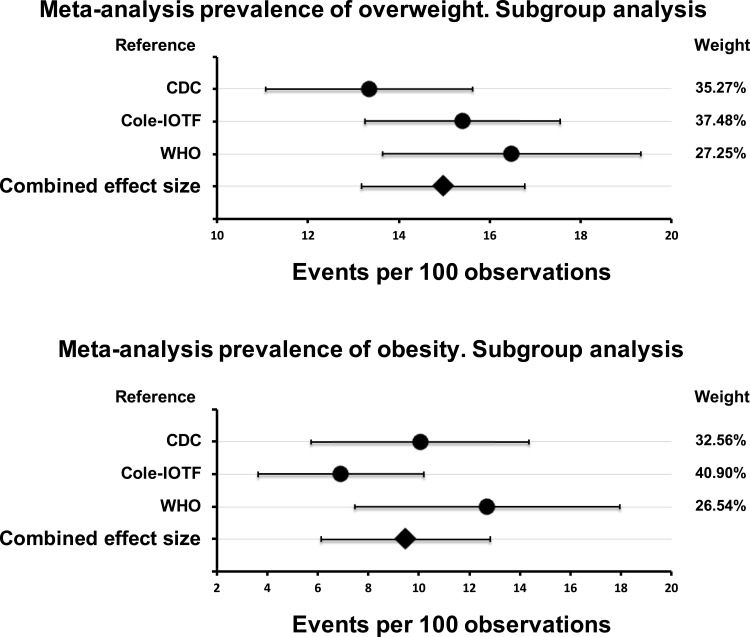
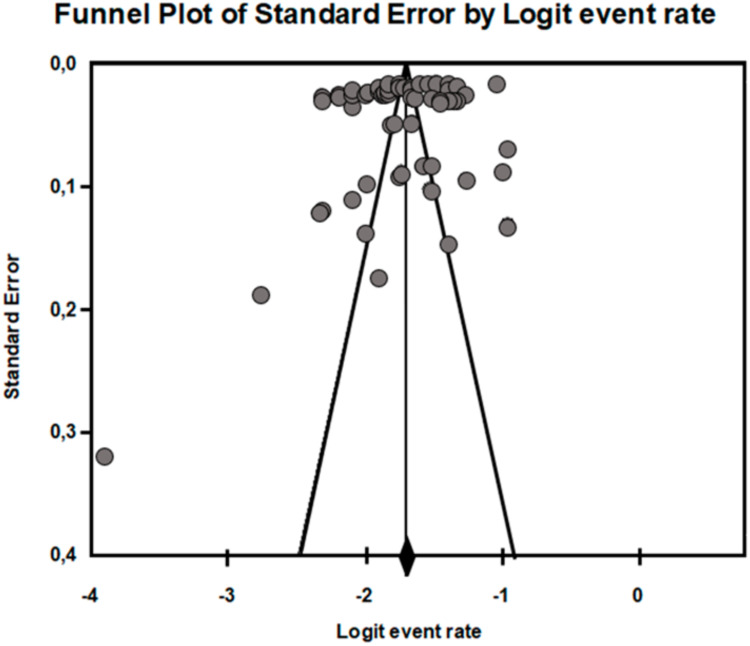
The prevalence of childhood obesity has increased dramatically all over the world in recent years. While obesity in adults can be easily measured using the BMI calculation, determining overweight and obesity in children is more controversial. The aim was to compare the three most used international classification systems (WHO 2007, CDC 2000 and Cole-IOTF) to determine overweight and obesity in infant and adolescent populations. We performed a systematic review in accordance with the PRISMA 2020 guidelines of articles comparing any of the three classification systems. The main findings were that the WHO 2007 criteria show the highest prevalence of overweight and obesity in the child and youth population. The prevalence of childhood overweight and obesity was determined to be higher in boys than in girls in most studies, when analysing the classifications of the WHO 2007, CDC 2000 and Cole-IOTF together. However, there was a higher prevalence of overweight and obesity in girls than in boys when only the CDC 2000 and Cole-IOTF criteria were considered. Both the results of the review and the great heterogeneity found in the meta-analysis show that it is necessary to unify the criteria for the classification of childhood overweight and obesity. International standards are insufficient for working with the current population. A working group should be created to address this issue and agree on the unification of a gold standard, taking into account the geographical region, the ethnic groups and the age groups of the child and youth population and above all, the secular growth.
Keywords: BMI; CDC 2000; IOTF; WHO 2007; growth curve.
© 2022 Llorca-Colomer et al.
Conflict of interest statement
The authors report no conflicts of interest in this work.
Figures
References
-
- World Health Organization consultation. Obesity: preventing and managing the global epidemic. World Health Organ Tech Rep Ser. 2000;894:1–253. PMID: 11234459. - PubMed
Publication types
LinkOut - more resources
Full Text Sources
