


When uncertainty becomes the norm: The Chris Hani Baragwanath Academic Hospital's Speech Therapy and Audiology Department's response to the COVID-19 pandemic
- PMID: 36073072
- PMCID: PMC9452927
- DOI: 10.4102/sajcd.v69i2.913
When uncertainty becomes the norm: The Chris Hani Baragwanath Academic Hospital's Speech Therapy and Audiology Department's response to the COVID-19 pandemic
Abstract
Background: In March 2020 the World Health Organization declared the coronavirus disease 2019 (COVID-19) a pandemic. Management of this pandemic had significant implications for clinical departments across the world. Healthcare systems were urgently required to reorganise and redesign patient care as well as repurpose staff.
Objectives: We will share the lived experience of our response as speech therapy and audiology (STA) clinicians to the COVID-19 pandemic.
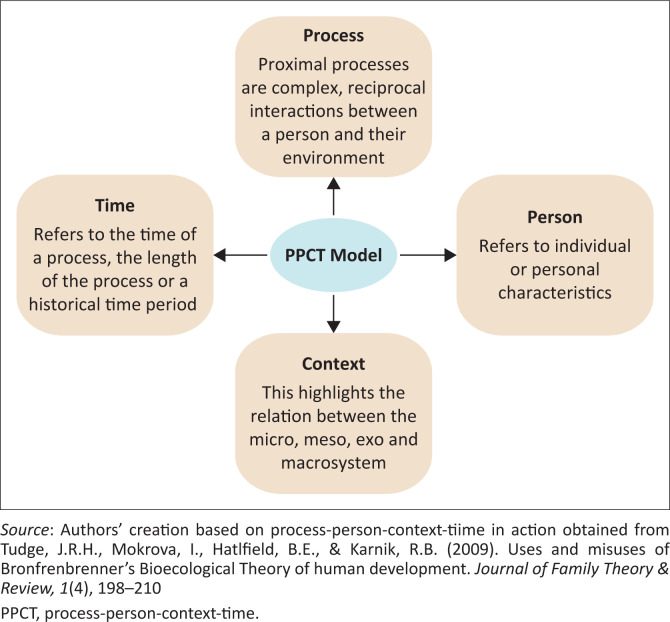
Method: This study adopted an autoethnographic approach within Bronfenbrenner's bioecological model to describe STA clinicians' response to the COVID-19 pandemic.
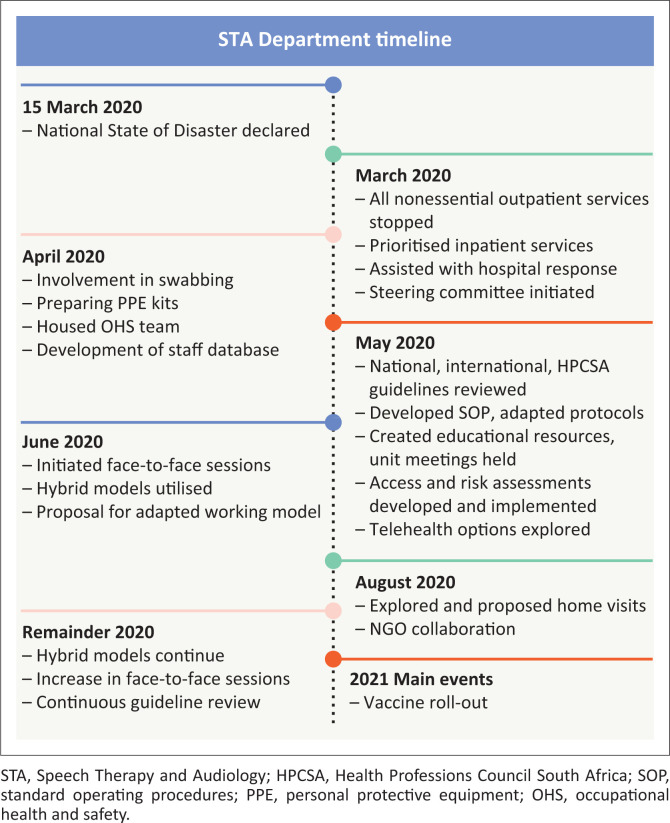
Results: Adaptations to practice were made to continue service provision whilst adhering to COVID-19 regulations. We assisted in other areas to meet the immediate needs of the hospital. Service delivery strategies consisted of a review of clinical and quality assurance protocols. We developed a telehealth service package which included a hybrid approach, within a context of digital poverty. We created resources to ensure continuity of care. Collaboration within our systems facilitated innovative solutions. Mental health and well-being of staff members were key to the response developed.
Conclusion: South African healthcare systems' inequalities were highlighted by the pandemic. The response showed that the needs of vulnerable populations were not accounted for when developing this public health response. Lessons learnt included the importance of adaptability, becoming comfortable with uncertainty and maintaining open and transparent communication. Consultation and collaboration within various levels of our healthcare system were critical in responding to the needs of patients. Commitment to compassionate leadership and staff well-being were crucial.
Keywords: COVID-19; South Africa; Speech Therapy and Audiology; adaptations; autoethnography; bioecological framework; collaboration; microsystem; solutions; telehealth; well-being.
Conflict of interest statement
The authors declare that they have no financial or personal relationships that may have inappropriately influenced them in writing this article.
Figures
References
-
- Abrahams, Z., Boisits, S., Schneider, M., Prince, M., & Lund, C. (2021). The relationship between common mental disorders (CMDs), food insecurity and domestic violence in pregnant women during the COVID-19 lockdown in Cape Town, South Africa. Social Psychiatry and Psychiatric Epidemiology, 57(1), 1–10. 10.1007/s00127-021-02140-7 - DOI - PMC - PubMed
-
- Adams, S.N., Seedat, J., Coutts, K., & Kater, K. (2021). ‘We are in this together’ voices of speech-language pathologists working in South African healthcare contexts during level 4 and level 5 lockdown of COVID. South African Journal of Communication Disorders, 68(1), a792. 10.4102/sajcd.v68i1.792 - DOI - PMC - PubMed
Publication types
MeSH terms
LinkOut - more resources
Full Text Sources
Medical