


Utility of constructed wetlands for treatment of hospital effluent and antibiotic resistant bacteria in resource limited settings: A case study in Ujjain, India
- PMID: 36073662
- PMCID: PMC9544608
- DOI: 10.1002/wer.10783
Utility of constructed wetlands for treatment of hospital effluent and antibiotic resistant bacteria in resource limited settings: A case study in Ujjain, India
Abstract
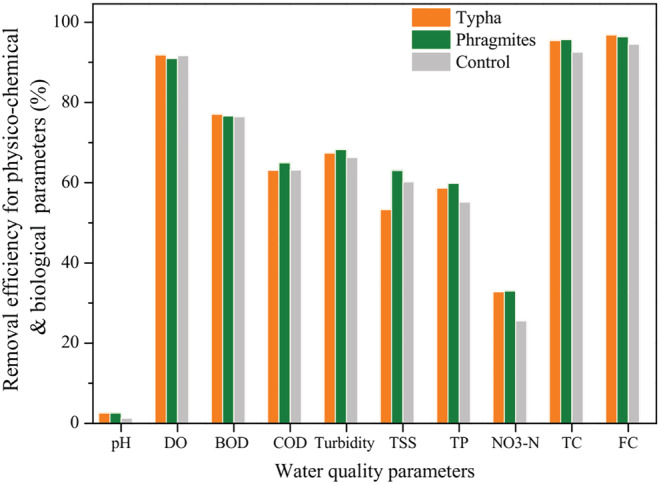
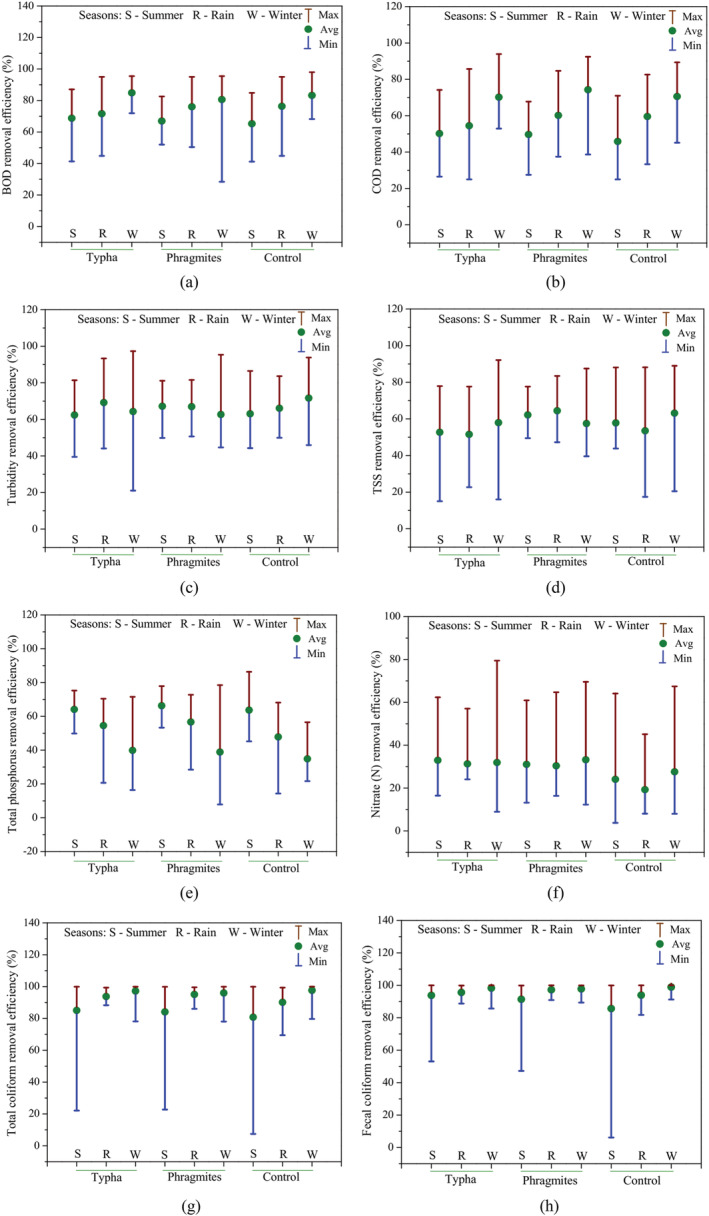
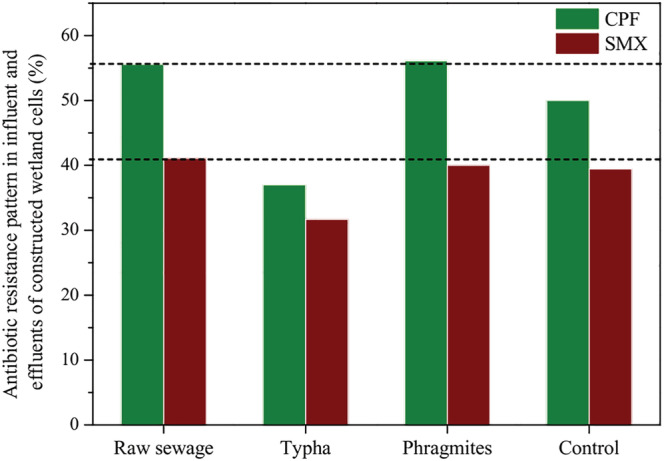
Increasing generation of wastewater and its indiscriminate disposal is detrimental to human and animal health. Resource-limited settings often struggle for efficient wastewater treatment systems owing to lack of funds and operational difficulties. Therefore, alternative treatment systems involving low expenditure and simplistic operations are need of the hour. Constructed wetlands are one such alternative that can efficiently remove variety of pollutants from wastewater. In this study, we have assessed the utility of constructed wetlands for treatment of hospital wastewater in Ujjain. An in-house wetland system was designed and constructed using Typha latifolia and Phragmites karka. Results showed that wetland was efficient for removal of various physico-chemical and biological contaminants, namely, biochemical-oxygen-demand (77.1%), chemical-oxygen-demand (64.9%), turbidity (68.3%), suspended-solids (63%), total-phosphorus (58.7%), nitrate-nitrogen (33%), fecal coliforms (96.8%), and total coliforms (95.6%). Paired t test revealed that removal efficiencies for various parameters were significantly different among Phragmites, Typha, and control cells (p ≤ 0.05). Study also depicted that most of the bacterial isolates in inlet wastewater were selectively resistant to antibiotics (ciprofloxacin and sulphamethaxazole) as well and these isolates were also removed. Precisely, Typha was fairly suitable for antibiotic resistant bacteria removal. Thus, constructed wetlands were found to be one of the suitable options for wastewater treatment in resource-limited settings. PRACTITIONER POINTS: Constructed wetlands are one of the suitable options for wastewater treatment in resource limited settings. These systems involve wetland vegetation, soil, and associated microbial assemblages to improve the water quality. Typha and Phragmites were found to be efficient for treating the hospital wastewater. Experiments showed that antibiotic resistant bacteria may also be removed through constructed wetland systems. Easy operation, cost effectiveness, and efficiency are important attributes.
Keywords: Phragmites; Typha; antibiotic resistant bacteria; constructed wetlands; wastewater.
© 2022 The Authors. Water Environment Research published by Wiley Periodicals LLC on behalf of Water Environment Federation.
Conflict of interest statement
The authors declare that there are no competing interest.
Figures
References
-
- Alvarez, J. A. , Avila, C. , Otter, P. , Kilian, R. , Istenic, D. , Rolletschek, M. , Molle, P. , Khalil, N. , Amersek, I. , Mishra, V. K. , Jorgensen, C. , Garfi, A. , Carvalho, P. , Brix, H. , & Arias, C. A. (2017). Constructed wetlands and solar‐driven disinfection technologies for sustainable wastewater treatment and reclamation in rural India: SWINGS project. Water Science and Technology, 76, 1474–1489. 10.2166/wst.2017.329 - DOI - PubMed
-
- Angassa, K. , Leta, S. , Mulat, W. , Kloos, H. , & Meers, E. (2019). Evaluation of pilot‐scale constructed wetland with Phragmites karka for phytoremediation of municipal wastewater and biomass production in Ethiopia. Environmental Processes, 6, 65–84. 10.1007/s40710-019-00358-x - DOI
-
- APHA . (Ed.) (2005). American public health association: Standard methods for examination of water and wastewater in (21st ed.). APHA.
-
- Billore, S. K. , Singh, N. , Sharma, J. K. , Dass, P. , & Nelson, R. M. (1999). Horizontal subsurface flow gravel bed constructed wetland with Phragmites karka in Central India. Water Science and Technology, 40, 163–171. 10.2166/wst.1999.0158 - DOI
MeSH terms
Substances
Grants and funding
LinkOut - more resources
Full Text Sources
