


Adding rapid diagnostic tests to community-based programmes for treating malaria
- PMID: 36073718
- PMCID: PMC9453882
- DOI: 10.1002/14651858.CD009527.pub3
Adding rapid diagnostic tests to community-based programmes for treating malaria
Abstract
Background: The World Health Organization (WHO) recommends parasitological testing of all suspected malaria cases using malaria rapid diagnostic tests (mRDTs) or microscopy prior to treatment. Some governments have extended this responsibility to community health workers (CHWs) to reduce malaria morbidity and mortality through prompt and appropriate treatment. This is an update of a Cochrane Review first published in 2013.
Objectives: To evaluate community-based management strategies for treating malaria or fever that incorporate both a definitive diagnosis with an mRDT and appropriate antimalarial treatment.
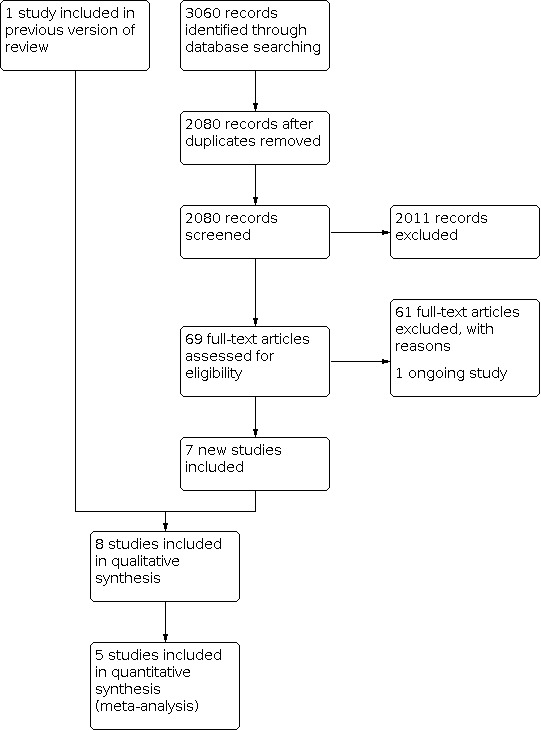
Search methods: We searched CENTRAL, MEDLINE, Embase, five other databases, and three trials registers up to 14 September 2021.
Selection criteria: We included individually randomized trials and cluster-randomized controlled trials (cRCTs), controlled before-after studies, and controlled interrupted time series studies in people living in malaria-endemic areas, comparing programmes that train CHWs and drug shop vendors to perform mRDTs and provide appropriate treatment versus similar programmes that do not use mRDTs, and versus routine health facility care.
Data collection and analysis: We used standard Cochrane methods. For each dichotomous outcome, we extracted the number of participants with the event and the total number of participants in each group, unless studies presented results at a population level only. Primary outcomes were all-cause mortality, hospitalizations, and number of people receiving an antimalarial within 24 hours. Secondary outcomes were malaria-specific mortality, severe malaria, outcomes related to antimalarial treatments, antibiotic prescribing to people with a negative microscopy or polymerase chain reaction (PCR) result, parasitaemia, anaemia, and all adverse events.
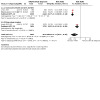
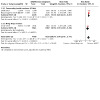
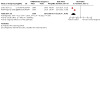
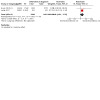
Main results: We included eight studies from several African countries, Afghanistan, and Myanmar. Staff included CHWs and drug shop vendors. Community use of malaria rapid diagnostic tests compared to clinical diagnosis Compared to clinical diagnosis, mRDT diagnosis results in reduced prescribing of antimalarials to people who are found to be malaria parasite-negative by microscopy or PCR testing (71 fewer per 100 people, 95% confidence interval (CI) 79 to 51 fewer; risk ratio (RR) 0.17, 95% CI 0.07 to 0.40; 3 cRCTs, 7877 participants; moderate-certainty evidence). This reduction may be greater among CHWs compared to drug shop vendors. People diagnosed by mRDT are more likely to receive appropriate treatment; that is, an antimalarial if they are microscopy- or PCR-positive and no antimalarial if they are microscopy- or PCR-negative (RR 3.04, 95% CI 2.46 to 3.74, 3 cRCTs, 9332 participants; high-certainty evidence). Three studies found that a small percentage of people with a negative mRDT result (as read by the CHW or drug shop vendors at the time of treatment) were nevertheless given an antimalarial: 38/1368 (2.8%), 44/724 (6.1%) and 124/950 (13.1%). Conversely, in two studies, a few mRDT-positive people did not receive an antimalarial (0.5% and 0.3%), and one small cross-over study found that 6/57 (10.5%) people classified as non-malaria in the clinical diagnosis arm received an antimalarial. Use of mRDTs probably increases antibiotic use compared to clinical diagnosis (13 more per 100 people, 95% CI 3 to 29 more; RR 2.02, 95% CI 1.21 to 3.37; 2 cRCTs, 5179 participants; moderate-certainty evidence). We were unable to demonstrate any effect on mortality. Community use of malaria rapid diagnostic tests compared to health facility care Results were insufficient to reach any conclusion.
Authors' conclusions: Use of mRDTs by CHWs and drug shop vendors compared to clinical diagnosis reduces prescribing of antimalarials to people without malaria. Deaths were uncommon in both groups. Antibiotic prescribing was higher in those with a negative mRDT than in those with a negative clinical diagnosis.
Copyright © 2022 The Authors. Cochrane Database of Systematic Reviews published by John Wiley & Sons, Ltd. on behalf of The Cochrane Collaboration.
Conflict of interest statement
EA: none AW: none MM: none
Figures
Update of
References
References to studies included in this review
Ansah 2015 {published data only}
Cohen 2015 {published data only}
-
- Cohen J, Fink G, Maloney K, Berg K, Jordan M, Svoronos T, et al. Introducing rapid diagnostic tests for malaria to drug shops in Uganda: a cluster-randomized controlled trial. Bulletin of the World Health Organization 2015;93:142-51.
Leslie 2017 {published data only}
Mubi 2011 {published data only}
Ndyomugyenyi 2016 {published data only}
-
- Ndyomugyenyi R, Magnussen P, Lal S, Hansen K, Clarke SE. Appropriate targeting of artemisinin-based combination therapy by community health workers using malaria rapid diagnostic tests: findings from randomized trials in two contrasting areas of high and low malaria transmission in south-western Uganda. Tropical Medicine and International Health 2016;21(9):1157-70. - PMC - PubMed
Ohnmar 2012 {published data only}
Swana 2016 {published data only}
Thiam 2012 {published data only}
References to studies excluded from this review
Awor 2014 {published data only}
Biemba 2016 {published data only}
-
- Biemba G, Yeboah-Antwi K, Vosburg KB, Prust ML, Keller B, Worku Y, et al. Effect of deploying community health assistants on appropriate treatment for diarrhoea, malaria and pneumonia: quasi-experimental study in two districts of Zambia. Tropical Medicine and International Health 2016;21(8):985-94. - PubMed
Gaye 2020 {published data only}
Kitutu 2017 {published data only}
Maloney 2017 {published data only}
Mbonye 2015 {published data only}
Mukanga 2012 {published data only}
-
- Mukanga D, Tiono AB, Anyorigiya T, Källander K, Konaté AT, Oduro AR, et al. Integrated community case management of fever in children under five using rapid diagnostic tests and respiratory rate counting: a multi-country cluster randomized trial. American Journal of Tropical Medicine and Hygiene 2012;87(5):21-9. - PMC - PubMed
Yeboah‐Antwi 2010 {published data only}
References to ongoing studies
Soniran 2020 {published data only}
-
- Soniran OT, Abuaku B, Ahorlu CS. Evaluating interventions to improve test, treat, and track (T3) malaria strategy among over-the-counter medicine sellers (OTCMS) in some rural communities of Fanteakwa North district, Ghana: study protocol for a cluster randomized controlled trial. Trials 2020;21(1):623. - PMC - PubMed
Additional references
Amouzou 2014
-
- Amouzou A, Morris S, Moulton LH, Mukanga D. Assessing the impact of integrated community case management (iCCM) programs on child mortality: review of early results and lessons learned in sub-Saharan Africa. Journal of Global Health 2014;4(2):020411. [DOI: 10.7189/jogh.04.020411] - DOI - PMC - PubMed
Aung 2015
-
- Aung T, White C, Montagu D, McFarland W, Hlaing T, Khin HS, et al. Improving uptake and use of malaria rapid diagnostic tests in the context of artemisinin drug resistance containment in eastern Myanmar: an evaluation of incentive schemes among informal private healthcare providers. Malaria Journal 2015;14:105. - PMC - PubMed
Awor 2014
Bath 2020
Boyce 2017
Boyce 2018
Bruxvoort 2014
-
- Bruxvoort K, Festo C, Kalolella A, Cairns M, Lyaruu P, Kenani M, et al. Cluster randomized trial of text message reminders to retail staff in Tanzanian drug shops dispensing artemether-lumefantrine: effect on dispenser knowledge and patient adherence. American Journal of Tropical Medicine and Hygiene 2014;91(4):844-53. - PMC - PubMed
Burchett 2017
Chandler 2008a
Chandler 2008b
-
- Chandler CI, Mwangi R, Mbakilwa H, Olomi R, Whitty CJ, Reyburn H. Malaria overdiagnosis: is patient pressure the problem? Health Policy and Planning 2008;23(3):170-8. - PubMed
Christopher 2011
-
- Christopher JB, Le May A, Lewin S, Ross DA. Thirty years after Alma-Ata: a systematic review of the impact of community health workers delivering curative interventions against malaria, pneumonia and diarrhoea on child mortality and morbidity in sub-Saharan Africa. Human Resources for Health 2011;9:27. [DOI: 10.1186/1478-4491-9-27] - DOI - PMC - PubMed
Danquah 2016
Deeks 2022
-
- Deeks JJ, Higgins JP, Altman DG. Chapter 10: Analysing data and undertaking meta-analyses. In: Higgins JP, Thomas J, Chandler J, Cumpston M, Li T, Page MJ, Welch VA, editor(s). Cochrane Handbook for Systematic Reviews of Interventions Version 6.3 (updated February 2022). Cochrane, 2022. Available from training.cochrane.org/handbook.
Diggle 2014
-
- Diggle E, Asgary R, Gore-Langton G, Nahashon E, Mungai J, Harrison R, et al. Perceptions of malaria and acceptance of rapid diagnostic tests and related treatment practises among community members and health care providers in Greater Garissa, North Eastern Province, Kenya. Malaria Journal 2014;13:502. - PMC - PubMed
Elven 2020
EPOC 2017
-
- Cochrane Effective Practice and Organisation of Care. Suggested risk of bias criteria for EPOC reviews. EPOC resources for review authors, 2017. Available at epoc.cochrane.org/resources/epoc-resources-review-authors (accessed 19 February 2019).
Gogtay 2013
Guyatt 2011
Higgins 2003
Higgins 2017
-
- Higgins JP, Altman DG, Sterne JA. Chapter 8: Assessing risk of bias in included studies. In: Higgins JP, Churchill R, Chandler J, Cumpston MS, editor(s), Cochrane Handbook for Systematic Reviews of Interventions Version 5.2.0 (updated June 2017), Cochrane, 2017. Available from training.cochrane.org/handbook/archive/v5.2.
Higgins 2019
-
- Higgins JP, Eldridge S, Li T. Chapter 23: Including variants on randomized controlled trials. In: Higgins JP, Thomas J, Chandler J, Cumpston M, Li T, Page MJ, Welch VA, editor(s). Cochrane Handbook for Systematic Reviews of Interventions Version 6.0 (updated July 2019). Cochrane, 2019. Available from training.cochrane.org/handbook/archive/v6.
Hopkins 2007
Hopkins 2017
Hutchinson 2017
ICF International 2012
-
- ICF International LSHTM. Independent Evaluation of the Affordable Medicines Facility – malaria (AMFm) Phase 1. Multi-country independent evaluation report: final report. 28 September 2012. unitaid.org/assets/Mid-term-evaluation-Affordable-medicines-for-malaria-... (accessed 30 November 2019).
Kabaghe 2016
Kangwana 2011
Kassam 2015
Kwarteng 2019
Kyaw 2016
Lassi 2010
Maloney 2017
Odaga 2014
-
- Odaga J, Sinclair D, Lokong JA, Donegan S, Hopkins H, Garner P. Rapid diagnostic tests versus clinical diagnosis for managing people with fever in malaria endemic settings. Cochrane Database of Systematic Reviews 2014, Issue 4. Art. No: CD008998. [DOI: 10.1002/14651858.CD008998.pub2] - DOI - PMC - PubMed
Oliphant 2017
Perry 2014
Pluess 2010
Pryce 2018
Radeva‐Petrova 2014
-
- Radeva-Petrova D, Kayentao K, ter Kuile FO, Sinclair D, Garner P. Drugs for preventing malaria in pregnant women in endemic areas: any drug regimen versus placebo or no treatment. Cochrane Database of Systematic Reviews 2014, Issue 10. Art. No: CD000169. [DOI: 10.1002/14651858.CD000169.pub3] - DOI - PMC - PubMed
Review Manager Web 2022 [Computer program]
-
- The Cochrane Collaboration Review Manager Web (RevMan Web). Version 4.10.0. The Cochrane Collaboration, 2022. Available at revman.cochrane.org.
Rosato 2008
Ruizendaal 2014
Salam 2014
-
- Salam RA, Das JK, Lassi ZS, Bhutta ZA. Impact of community-based interventions for the prevention and control of malaria on intervention coverage and health outcomes for the prevention and control of malaria. Infectious Diseases of Poverty 2014;3:25. [DOI: 10.1186/2049-9957-3-25] - DOI - PMC - PubMed
Santesso 2020
-
- Santesso N, Glenton C, Dahm P, Garner P, Akl EA, Alper B, et al. GRADE guidelines 26: informative statements to communicate the findings of systematic reviews of interventions. Journal of Clinical Epidemiology 2020;119:126-35. - PubMed
Sinclair 2009
Smith Paintain 2014
-
- Smith Paintain L, Willey B, Kedenge S, Sharkey A, Kim J2, Buj V, et al. Community health workers and stand-alone or integrated case management of malaria: a systematic literature review. American Journal of Hygiene and Tropical Medicine 2014;91(3):461-70. [DOI: 10.4269/ajtmh.14-0094] - DOI - PMC - PubMed
Statacorp [Computer program]
-
- Stata. Version 16. College Station, TX, USA: StataCorp, 2019. Available at www.stata.com.
Sunguya 2017
-
- Sunguya BF, Mlunde LB, Ayer R, Jimba M. Towards eliminating malaria in high endemic countries: the roles of community health workers and related cadres and their challenges in integrated community case management for malaria: a systematic review. Malaria Journal 2017;16:10. [DOI: 10.1186/s12936-016-1667-x] - DOI - PMC - PubMed
Tusting 2014
-
- Tusting LS. Larval source management – a supplementary measure for malaria vector control. An operational manual. Outlooks on Pest Management 2014;25:41-3. [DOI: 10.1564/v25_feb_13] - DOI
UNICEF 2012
-
- UNICEF. A systematic review of strategies to increase demand, uptake and quality of community-based diagnosis and case management of malaria. December 2012. chwcentral.org/wp-content/uploads/2013/07/A-systematic-review-of-strateg... (accessed 30 November 2018).
UNICEF 2014
-
- UNICEF. Committing to Child Survival: A Promise Renewed. Progress Report 2015. www.unicef.org/media/50721/file/APR_2015_9_Sep_15.pdf (accessed 30 November 2018).
Visser 2017
Watson 2019
WHO 2004
-
- World Health Organization. Scaling up home-based management of malaria. From research to implementation. Available at apps.who.int/iris/bitstream/handle/10665/42918/WHO_HTM_MAL_2004.1096.pdf... (accessed 30 November 2018).
WHO 2006
-
- World Health Organization. Guidelines for the treatment of malaria. First edition. 2006. Available at infonet-biovision.org/sites/default/files/1571.treatmentguidelines20061.pdf (accessed 30 November 2018).
WHO 2010a
-
- World Health Organization. WHO policy recommendation on intermittent preventive treatment during infancy with sulfadoxine-pyrimethamine (SP-IPTi) for Plasmodium falciparum malaria control in Africa. 2010. Available at apps.who.int/iris/bitstream/handle/10665/337977/WHO-HTM-GMP-2010.01-eng.pdf (accessed 10 February 2019).
WHO 2010b
-
- World Health Organization. Guidelines for the Treatment of Malaria. Second edition. 2010. Available at www.paho.org/en/node/50095 (accessed 30 November 2018).
WHO 2012a
-
- World Health Organization. Intermittent preventive treatment of malaria in pregnancy using sulfadoxine-pyrimethamine (IPTp-SP): updated WHO policy recommendation. Available at apps.who.int/iris/bitstream/handle/10665/337990/WHO-HTM-GMP-2012.05-eng.pdf (accessed 10 February 2019).
WHO 2012b
-
- World Health Organization. WHO policy recommendation: seasonal malaria chemoprevention (SMC) for Plasmodium falciparum malaria control in highly seasonal transmission areas of the Sahel sub-region in Africa. Available at apps.who.int/iris/bitstream/handle/10665/337978/WHO-HTM-GMP-2012.02-eng.pdf (accessed 10 February 2019).
WHO 2015
-
- World Health Organization. Guidelines for the treatment of malaria. Third edition. 2015. Available at apps.who.int/iris/bitstream/handle/10665/162441/9789241549127_eng.pdf (accessed 30 November 2018).
WHO 2017
-
- World Health Organization. Achieving and maintaining universal coverage with long-lasting insecticidal nets for malaria control. 2017. Available at apps.who.int/iris/bitstream/handle/10665/259478/WHO-HTM-GMP-2017.20-eng.pdf (accessed 30 November 2018).
WHO 2021a
-
- World Health Organization. World Malaria Report 2021. Available at apps.who.int/iris/handle/10665/350147 (accessed 17 February 2021).
WHO 2021b
-
- World Health Organization. WHO guidelines for malaria, 13 July 2021. Available at apps.who.int/iris/bitstream/handle/10665/343751/WHO-UCN-GMP-2021.01-Rev.... (accessed 17 February 2022).
WHO 2022
-
- World Health Organization. WHO guidelines for malaria. 3 June 2022. Available at who.int/publications/i/item/guidelines-for-malaria (accessed 07 September 2022).
Winch 2005
Young 2012
-
- Young M, Wolfheim C, Marsh DR, Hammamy D. World Health Organization/United Nations Children's Fund joint statement on integrated community case management: an equity-focused strategy to improve access to essential treatment services for children. American Journal of Tropical Medicine and Hygiene 2012;87:6-10. - PMC - PubMed
References to other published versions of this review
Okwundu 2011
Publication types
MeSH terms
Substances
LinkOut - more resources
Full Text Sources
Medical
