


Recombinant human erythropoietin induces neuroprotection, activates MAPK/CREB pathway, and rescues fear memory after traumatic brain injury with delayed hypoxemia in mice
- PMID: 36075467
- PMCID: PMC10515732
- DOI: 10.1016/j.brainres.2022.148074
Recombinant human erythropoietin induces neuroprotection, activates MAPK/CREB pathway, and rescues fear memory after traumatic brain injury with delayed hypoxemia in mice
Abstract
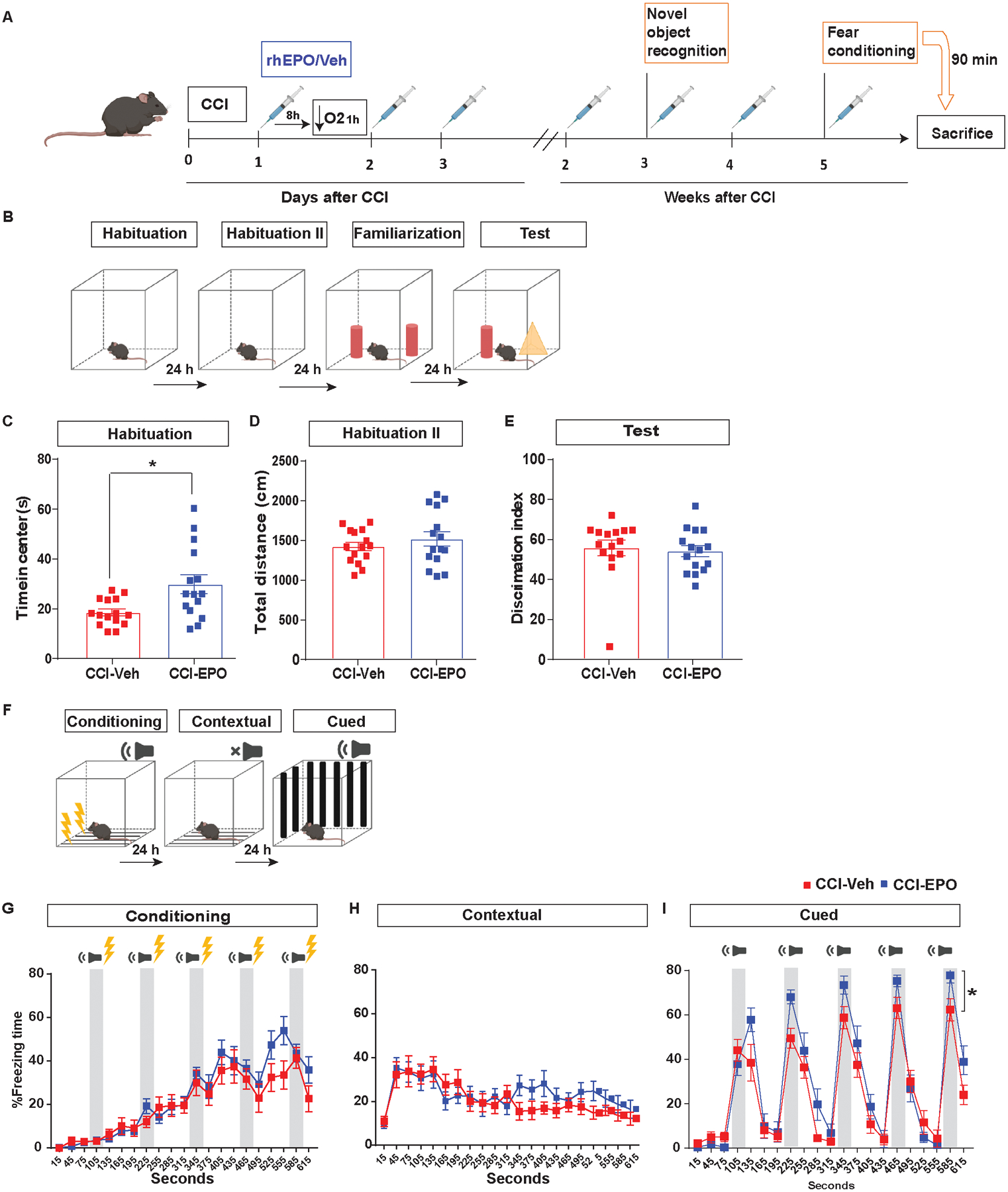
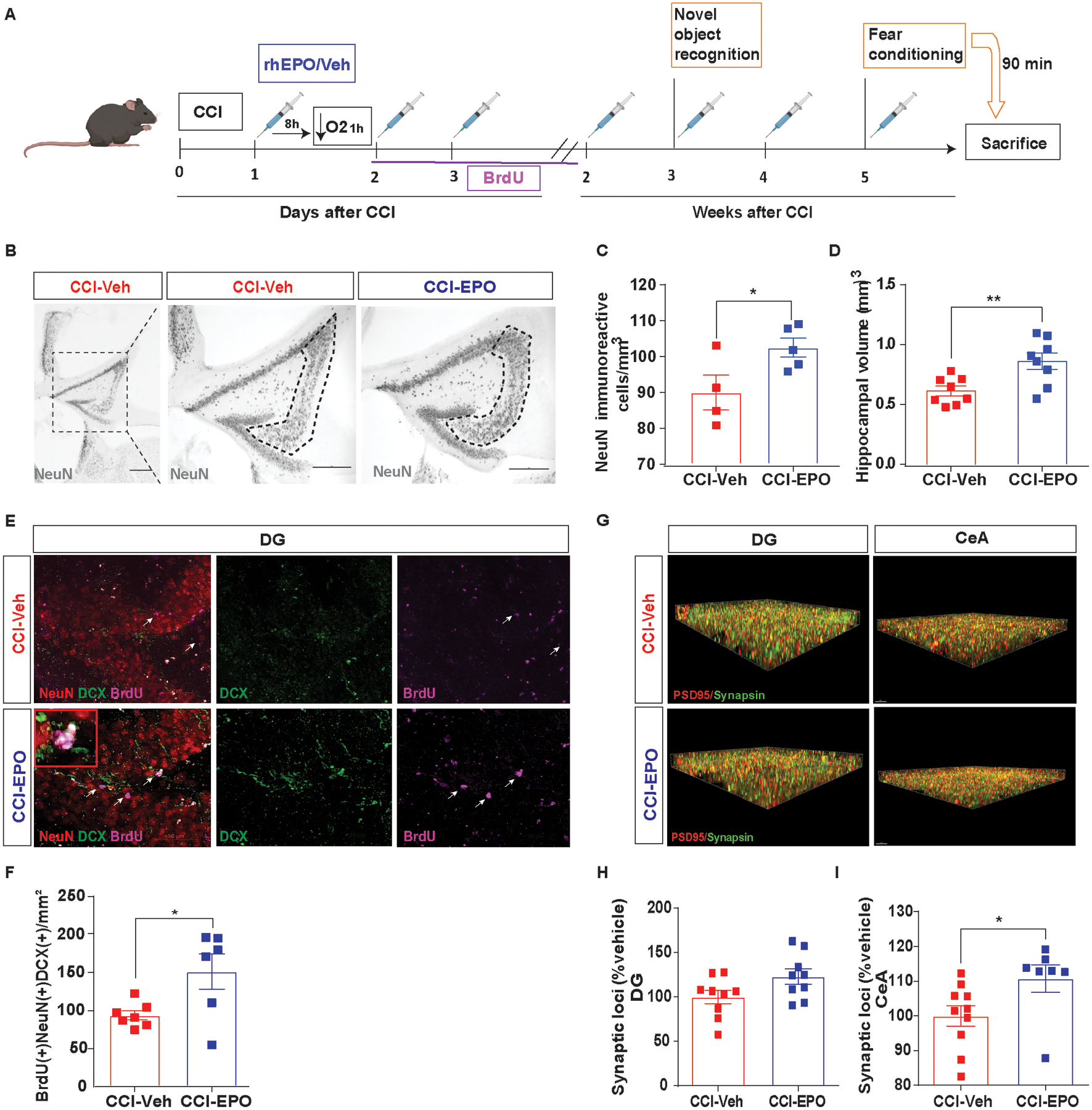
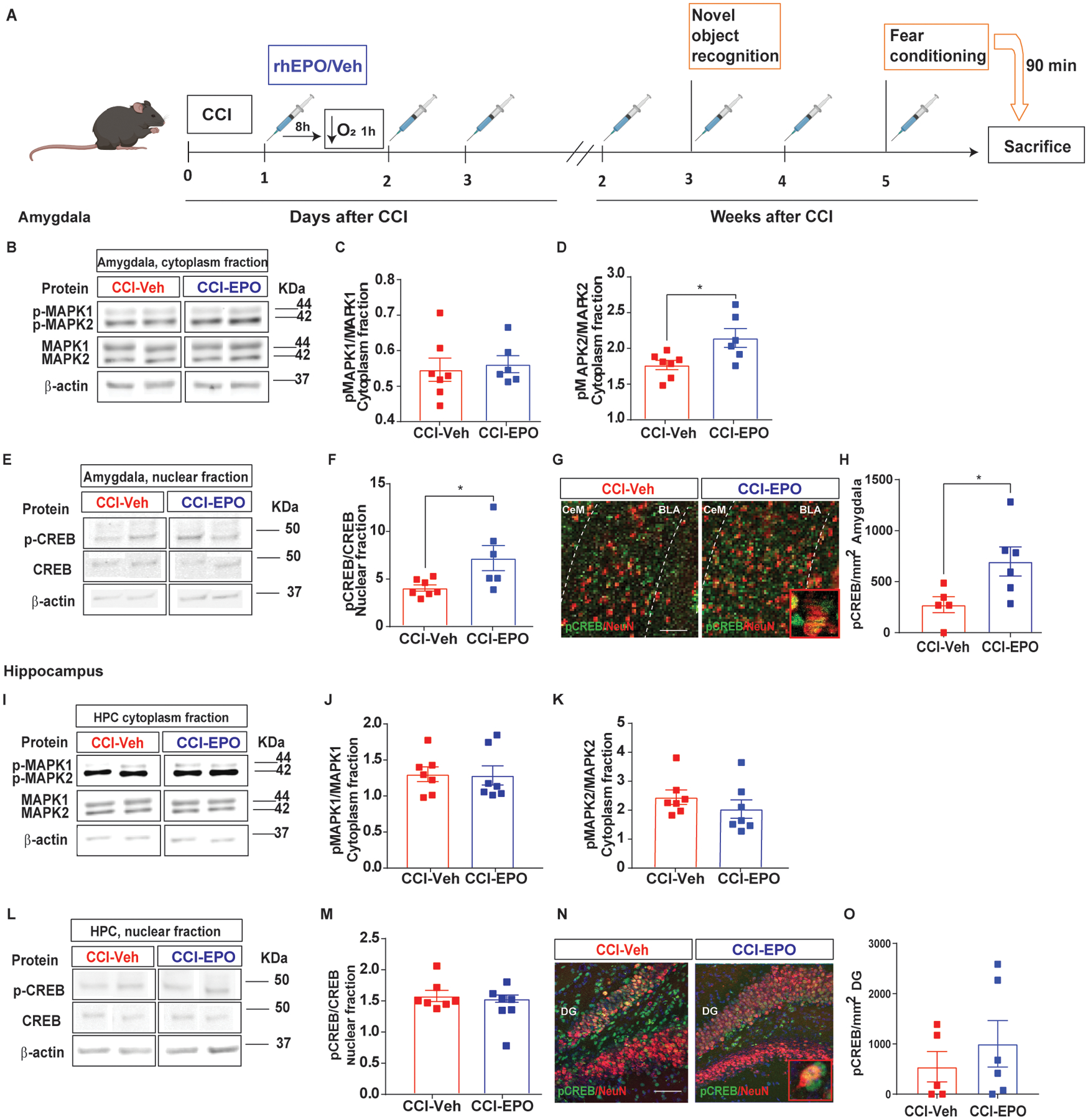
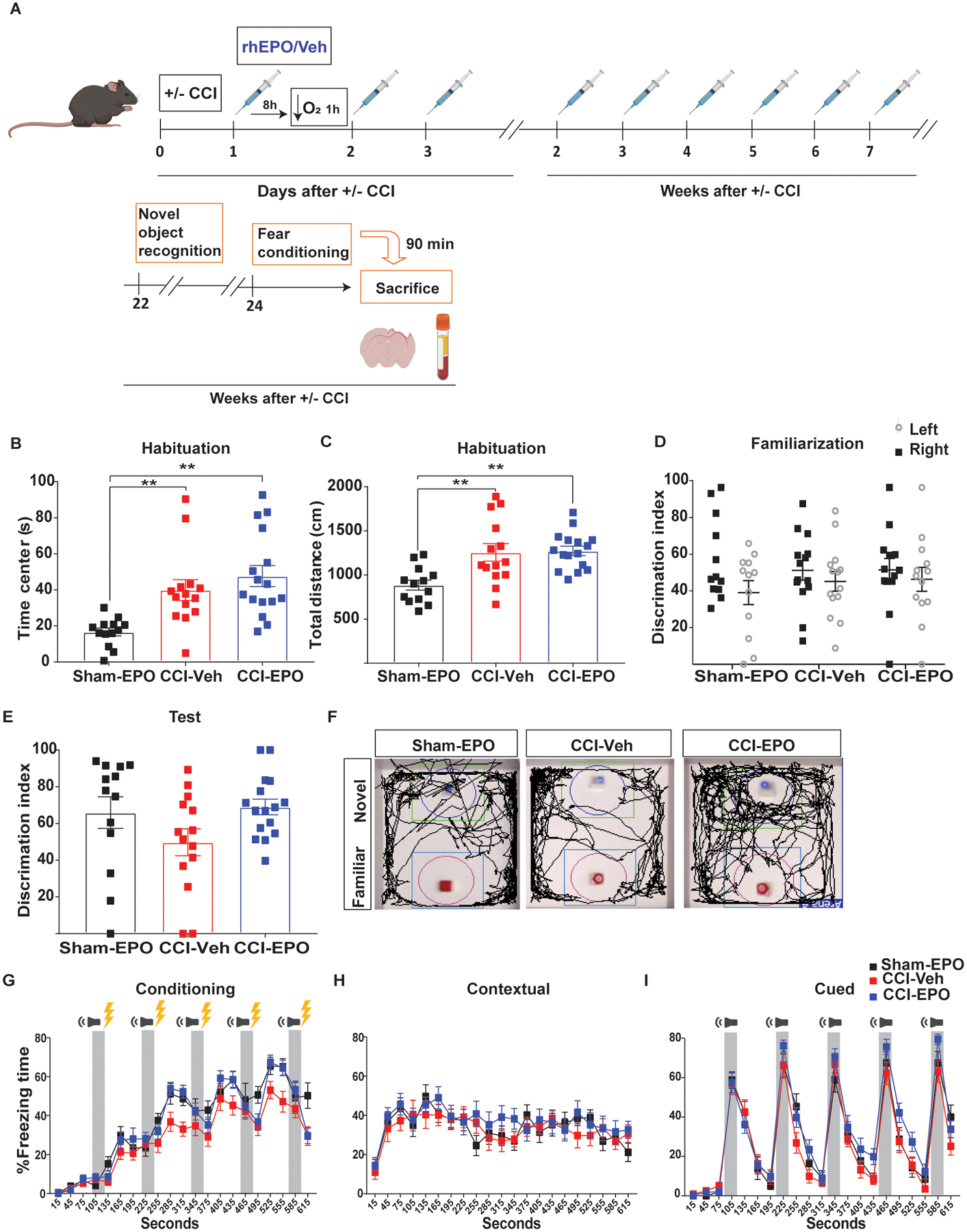
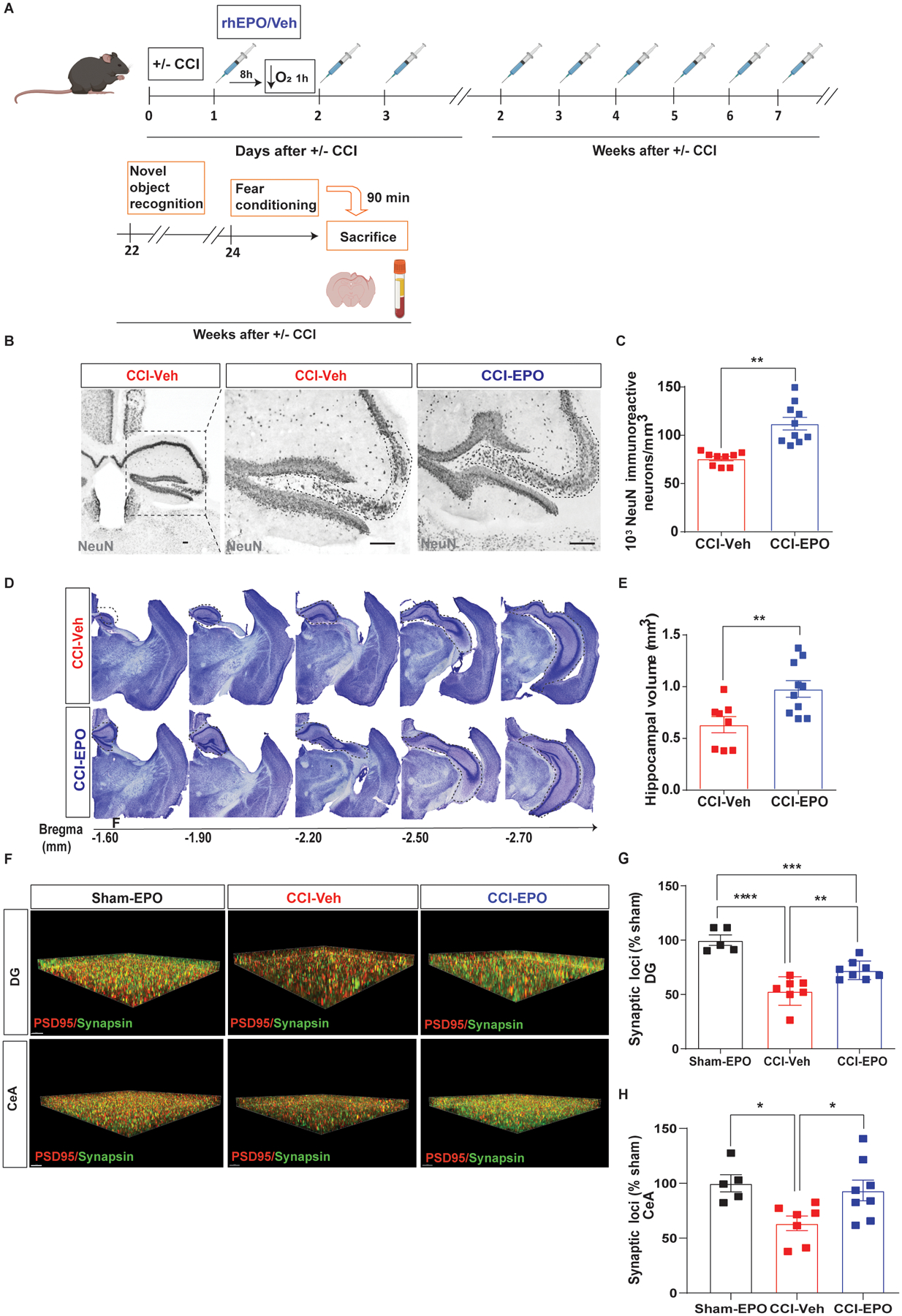
Therapeutic interventions targeting secondary insults, such as delayed hypoxemia, provide a unique opportunity for treatment in severe traumatic brain injury (TBI). Erythropoietin (EPO) is a hypoxia-responsive cytokine with important roles in neurodevelopment, neuroprotection and neuromodulation. We hypothesized that recombinant human erythropoietin (rhEPO) administration would mitigate injury in a combined injury model of TBI and delayed hypoxemia. Utilizing a clinically relevant murine model of TBI and delayed hypoxemia, we characterized how ongoing rhEPO administration influenced neurogenesis, neuroprotection, synaptic density and, behavioral outcomes early after TBI, and the impact on long-lasting outcomes 6 months after injury. We employed novel object recognition (NOR) and fear conditioning to assess long-term memory. At 1-month post-injury, we observed a significant increase in cued-fear memory response in the rhEPO-injured mice compared with vehicle-injured mice. This was associated with neuroprotection and neurogenesis in the hippocampus and mitogen-activated protein kinase (MAPK)/cAMP response element-binding protein (CREB) signaling activation and increased of excitatory synaptic density in the amygdala. Early rhEPO treatment after injury reduced neurodegeneration and increased excitatory synaptic density in the hippocampus and amygdala at 6 months post-injury. However at 6 months post-injury (4 months after discontinuation of rhEPO), we did not observe changes in behavioral assessments nor MAPK/CREB pathway activation. In summary, these data demonstrate that ongoing rhEPO treatment initiated at a clinically feasible time point improves neurological, cognitive, and histological outcomes after TBI in the setting of secondary hypoxemic insults.
Keywords: Erythropoietin; Fear conditioning; Hypoxemia; Neurogenesis; Neuroprotection; Traumatic brain injury.
Copyright © 2022 Elsevier B.V. All rights reserved.
Conflict of interest statement
Declaration of Competing Interest The authors declare that they have no known competing financial interests or personal relationships that could have appeared to influence the work reported in this paper.
Figures
References
-
- Adamcio B, Sargin D, Stradomska A, Medrihan L, Gertler C, Theis F, Zhang M, Muller M, Hassouna I, Hannke K, Sperling S, Radyushkin K, El-Kordi A, Schulze L, Ronnenberg A, Wolf F, Brose N, Rhee JS, Zhang W, Ehrenreich H, 2008. Erythropoietin enhances hippocampal long-term potentiation and memory. BMC Biol. 6, 37. - PMC - PubMed
-
- Arango MF, Bainbridge D, 2008. Magnesium for acute traumatic brain injury. Cochrane Database Syst Rev. CD005400. - PubMed
-
- Brines M, Cerami A, 2005. Emerging biological roles for erythropoietin in the nervous system. Nat Rev Neurosci. 6, 484–94. - PubMed
-
- Celorrio M, Abellanas MA, Rhodes J, Goodwin V, Moritz J, Vadivelu S, Wang L, Rodgers R, Xiao S, Anabayan I, Payne C, Perry AM, Baldridge MT, Aymerich MS, Steed A, Friess SH, 2021a. Gut microbial dysbiosis after traumatic brain injury modulates the immune response and impairs neurogenesis. Acta Neuropathol Commun. 9, 40. - PMC - PubMed
Publication types
MeSH terms
Substances
Grants and funding
LinkOut - more resources
Full Text Sources
Medical
Research Materials
