


Incidence and sociodemographic, living environment and maternal health associations with stillbirth in a tertiary healthcare setting in Kano, Northern Nigeria
- PMID: 36076161
- PMCID: PMC9454147
- DOI: 10.1186/s12884-022-04971-x
Incidence and sociodemographic, living environment and maternal health associations with stillbirth in a tertiary healthcare setting in Kano, Northern Nigeria
Abstract
Background: Almost two million stillbirths occur annually, most occurring in low- and middle-income countries. Nigeria is reported to have one of the highest stillbirth rates on the African continent. The aim was to identify sociodemographic, living environment, and health status factors associated with stillbirth and determine the associations between pregnancy and birth factors and stillbirth in the Murtala Mohammed Specialist Hospital, Kano, Nigeria.
Methods: A three-month single-site prospective observational feasibility study. Demographic and clinical data were collected. We fitted bivariable and multivariable models for stillbirth (yes/no) and three-category livebirth/macerated stillbirth/non-macerated stillbirth outcomes to explore their association with demographic and clinical factors.
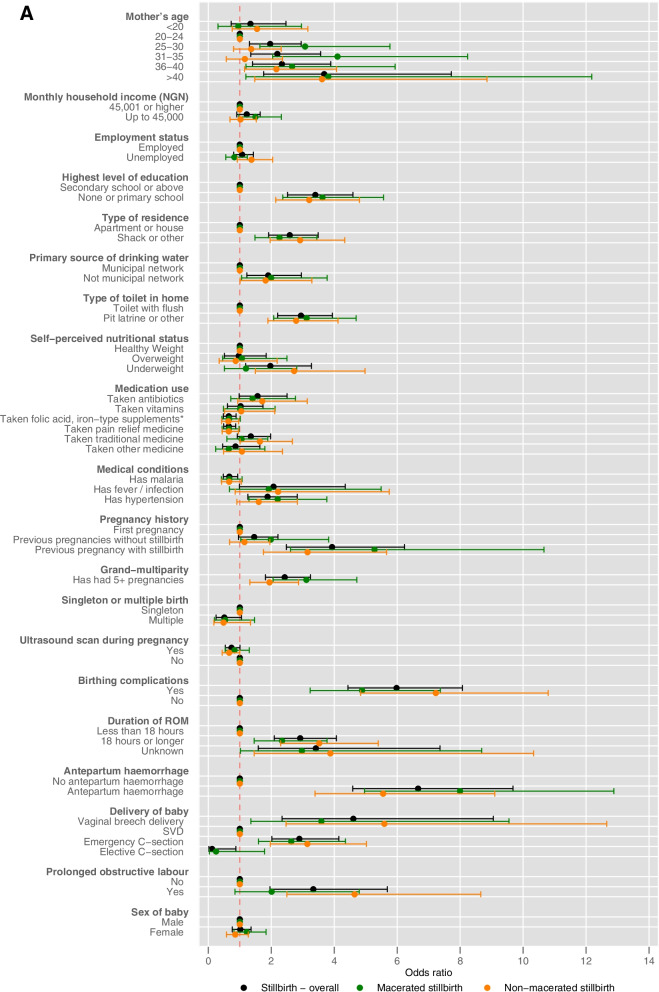
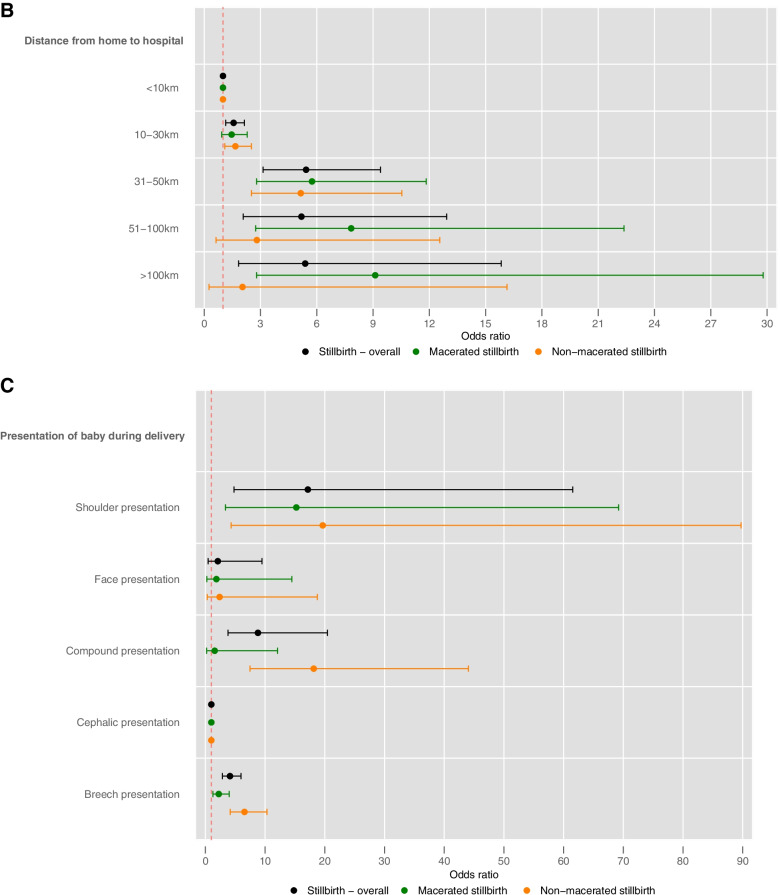
Findings: 1,998 neonates and 1,926 mothers were enrolled. Higher odds of stillbirth were associated with low-levels of maternal education, a further distance to travel to the hospital, living in a shack, maternal hypertension, previous stillbirth, birthing complications, increased duration of labour, antepartum haemorrhage, prolonged or obstructed labour, vaginal breech delivery, emergency caesarean-section, and signs of trauma to the neonate following birth.
Interpretation: This work has obtained data on some factors influencing stillbirth. This in turn will facilitate the development of improved public health interventions to reduce preventable deaths and to progress maternal health within this site.
Keywords: Global health; Mothers; Nigeria; Preventable mortality; Stillbirth; Sub-Saharan Africa.
© 2022. The Author(s).
Conflict of interest statement
The authors declare that the research was conducted in the absence of any commercial or financial relationships that could be construed as a potential conflict of interest.
Figures

References
-
- WHO | Stillbirths. WHO [Internet]. 2016 [cited 2019 Apr 23]; Available from: https://www.who.int/reproductivehealth/topics/maternal_perinatal/stillbi...
-
- Da Silva FT, Gonik B, McMillan M, Keech C, Dellicour S, Bhange S, et al. Stillbirth: Case definition and guidelines for data collection, analysis, and presentation of maternal immunization safety data. Vaccine [Internet]. 2016;34(49):6057–68. Available from: 10.1016/j.vaccine.2016.03.044 - PMC - PubMed
-
- UNICEF. Hidden tragedy: Nigeria accounts for one of the highest stillbirth rates in Africa [Internet]. 2020 [cited 2021 Jul 27]. Available from: https://www.unicef.org/nigeria/stories/hidden-tragedy-nigeria-accounts-o...
-
- WHO. Stillbirth [Internet]. [cited 2019 Nov 7]. Available from: https://www.who.int/health-topics/stillbirth#tab=tab_1
-
- UNICEF. Stillbirths [Internet]. [cited 2021 Feb 8]. Available from: https://data.unicef.org/topic/child-survival/stillbirths/
Publication types
MeSH terms
LinkOut - more resources
Full Text Sources
Medical
