


Current Knowledge and Future Perspectives on Awake Bruxism Assessment: Expert Consensus Recommendations
- PMID: 36079013
- PMCID: PMC9457508
- DOI: 10.3390/jcm11175083
Current Knowledge and Future Perspectives on Awake Bruxism Assessment: Expert Consensus Recommendations
Abstract
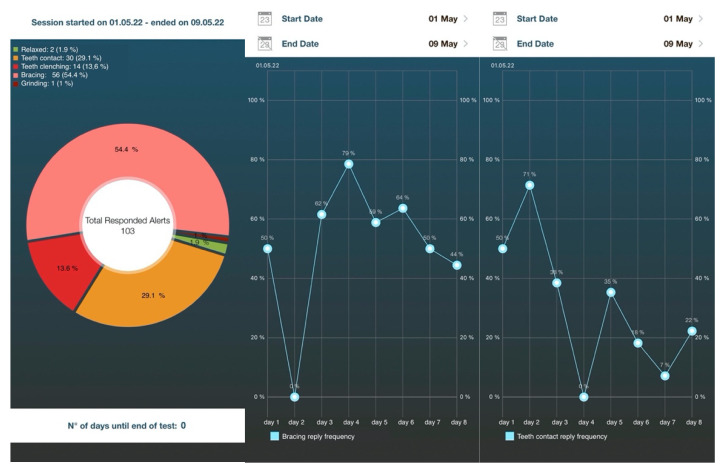
Awake bruxism (AB) is differentiated from sleep bruxism (SB) by the differences in etiology, comorbidities, and consequences related to the different spectrum of muscle activities exerted in relation to the different circadian manifestations. Furthermore, less literature data are available on AB than on SB. The introduction of ecological momentary assessment (EMA) strategies has allowed for collecting valuable data on the frequency of the different activities reported by an individual in his/her natural environment. This strategy has been further improved with the recent use of smartphone technologies. Recent studies have described an average frequency of AB behaviors, within the range of 23-40% for otherwise healthy young adults. An association between AB and some psychological traits has emerged, and the findings have indicated that patients with musculoskeletal symptoms (e.g., temporomandibular joint and/or muscle pain, muscle stiffness, and fatigue) report higher AB frequencies. Preliminary data suggest that muscle bracing and teeth contact are the most commonly reported behaviors, while teeth clenching is much less frequently reported than commonly believed previously. Report of teeth grinding during wakefulness is almost absent. This paper has critically reviewed the currently available approaches for the assessment of AB. In addition, some future perspectives and suggestions for further research have been provided.
Keywords: awake bruxism; bruxism; ecological momentary assessment; electromyography; masticatory muscle activity; self report; sleep bruxism; temporomandibular disorders.
Conflict of interest statement
A.B. took part as non-paid advisor to the development of the BruxApp software. Other Authors do not have conflict of interests concerning this article.
Figures
References
-
- Lobbezoo F., Ahlberg J., Glaros A.G., Kato T., Koyano K., Lavigne G.J., de Leeuw R., Manfredini D., Svensson P., Winocur E. Bruxism defined and graded: An international consensus. J. Oral Rehabil. 2013;40:2–4. - PubMed
-
- Manfredini D., De Laat A., Winocur E., Ahlberg J. Why not stop looking at bruxism as a black/white condition? Aetiology could be unrelated to clinical consequences. J. Oral Rehabil. 2016;43:799–801. - PubMed
LinkOut - more resources
Full Text Sources
Research Materials
