


You Are What You Eat… But Do You Eat What You Are? The Role of Identity in Eating Behaviors-A Scoping Review
- PMID: 36079713
- PMCID: PMC9458161
- DOI: 10.3390/nu14173456
You Are What You Eat… But Do You Eat What You Are? The Role of Identity in Eating Behaviors-A Scoping Review
Abstract
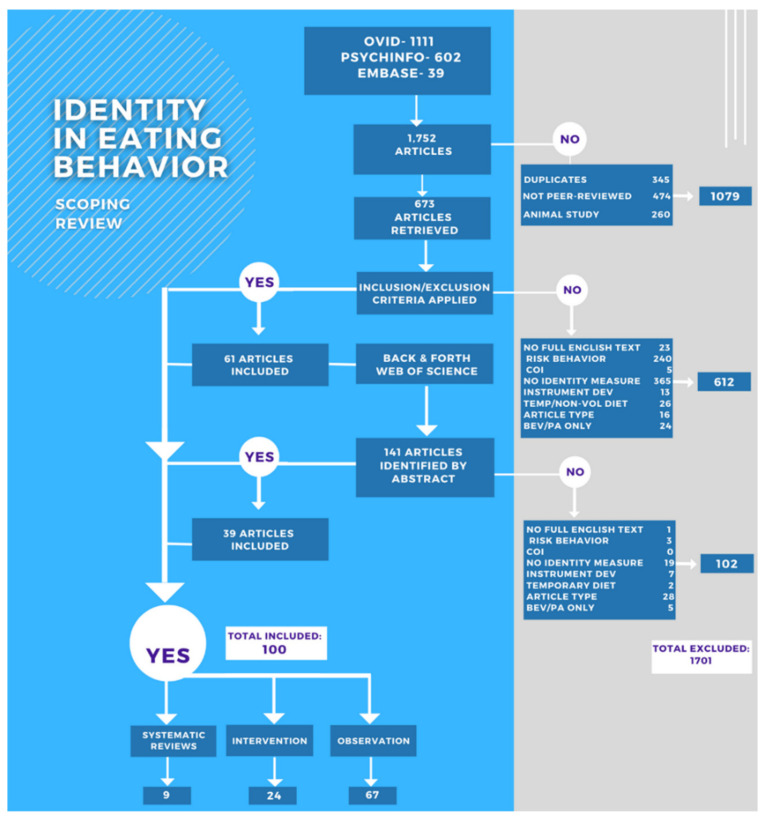
Background: Identity is a major construct in the fields of psychology and anthropology that can relate to both the maintenance of eating behaviors and cultural sensitivity. However, there has not been any systematic effort to understand the role of identity in eating behaviors and the maintenance of eating behaviors, or to address multiple aspects of identity within an individual across scientific disciplines. This scoping review aims to understand and describe existing research relating identity to eating behaviors and to detail the measurement of identity.
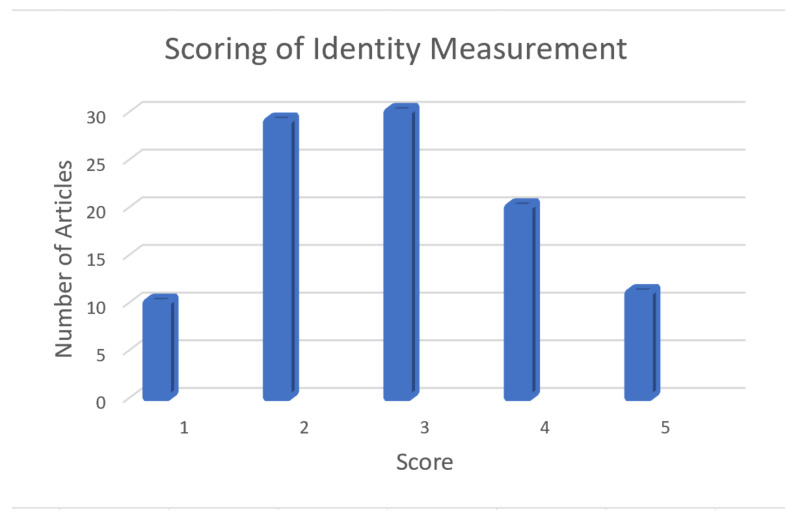
Methods: We conducted a systematic search of Ovid, PsychINFO, Embase, and Web of Science for articles on identity and eating behaviors published between January 1946 and March 2022. We utilized the Preferred Reporting Items for Systematic reviews and Meta-Analyses extension for Scoping Reviews (PRISMA-ScR) checklist, and search methods were developed with the assistance of a research librarian. We rated articles from 1 to 5 based on the depth, complexity, and multi-dimensionality of the identity measurement conducted. Scoring criteria included a review of the number of items directly querying or evaluating identity and the extent of measurement of identity domains.
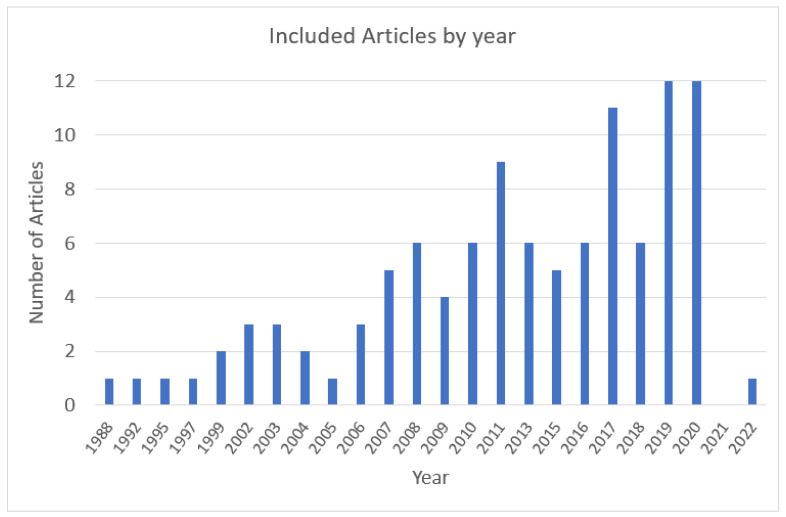
Results: In total, 100 articles were included, examining 10 different identities, 8 identity constructs, 11 eating behaviors, and construct contributions from 26 theories. The mean score of all articles was 2.9 on the scale from 1 to 5. A total of 10 studies scored a "1"; 30 scored a "2", indicating the use of 1-2 basic questions about identity; 31 received a "3" for use of a common but non-complex identity instrument; 19 received a "4", meaning they contained strong evaluation and included multiple types of identity but were lacking in terms of depth of measure and/or the comparison of identity effects to constructs; and 10 scored a "5" for their strong, in-depth measure of identity and inclusion of multiple types. Identity was found to be significantly related to eating behaviors in all but one study.
Conclusion: Identity measurements seldom accounted for complexities such as multiple identities and identity shifting over time. Nonetheless, our findings indicate that multiple aspects of identity reciprocally reinforce behavior and that change maintenance is associated with identity salience and centrality. Identity is underutilized and heterogeneously applied in eating behavior research. The inclusion of identity assessments may lead to better outcomes being obtained within differing cultural, normative, and environmental scenarios.
Keywords: acculturation; behavior; culture; diet; food; identity; psychology; self-concept.
Conflict of interest statement
The authors declare no conflicts of interest.
Figures
References
-
- Roth G.A., Mensah G.A., Johnson C.O., Addolorato G., Ammirati E., Baddour L.M., Barengo N.C., Beaton A.Z., Benjamin E.J., Benziger C.P., et al. Global Burden of Cardiovascular Diseases and Risk Factors, 1990–2019: Update from the GBD 2019 Study. J. Am. Coll. Cardiol. 2020;76:2982–3021. doi: 10.1016/j.jacc.2020.11.010. - DOI - PMC - PubMed
Publication types
MeSH terms
LinkOut - more resources
Full Text Sources
